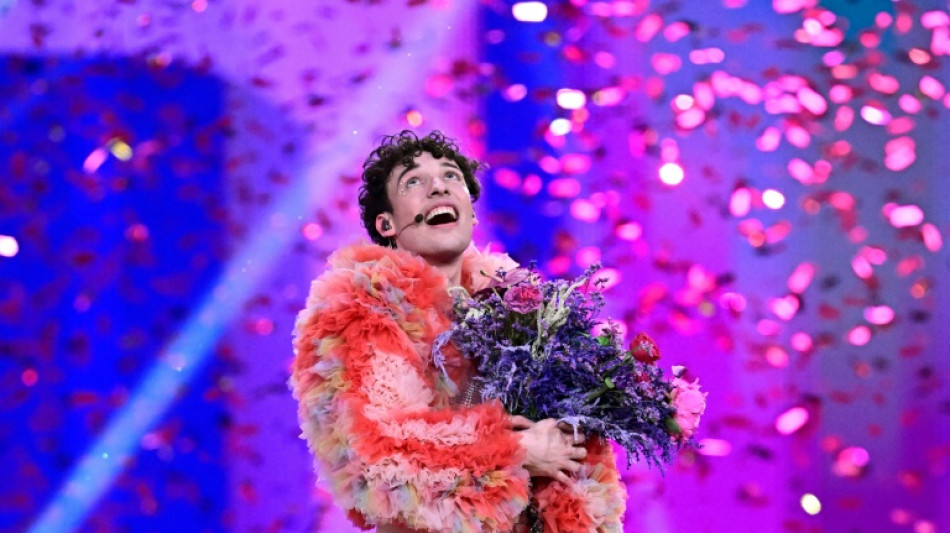
Eurovision final: how it works / Photo: © AFP/File

 China's Yu, 13, wins third gold with latest Asian Games record
 UK says will revisit Chagos deal after latest Trump criticism
 In first, French presidential candidate gives birth during campaign
 Cambodia no 'safe haven' for cyberscams, PM says
 North Korea weightlifter sets three world records for Asian Games gold

 A Full Moon for Every Child: STARTRADER's STARCARES Brings Support to SOS Children's Village Ho Chi Minh City

 Meta leans into AI, smart glasses amid privacy pushback
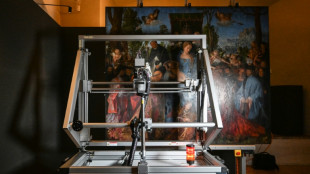 Battered Duerer masterpiece up for five-year revamp
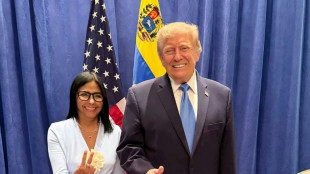 Trump met with Venezuela's interim leader at UN

 Malaysia furore after Najib wins conditional house arrest
 Italy hope for new dawn under Mancini

 Mongolian herders enlist new tech against harsher, drier climate
 Tata turmoil shines light on India succession woes
 World Cup 'not enough' as Spain begin next chapter

 Meta acts against 3.7 mn scammers' accounts with Singapore police help

 Australia PM says draft social media rules about taking back control
 Voting opens in Alaska's annual Fat Bear Week
 MLS coach axed for telling female ref 'It's a man's game'
 US refuses to give Sudan's de facto leader visa for UN
 Man City hold Bayern to start Women's Champions League, Arsenal win late
 Trump threatens Iran with 'hell' but reveals fresh talks

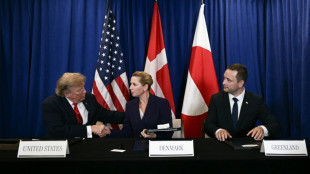 Trump signs security deal with Greenland, Denmark at UN
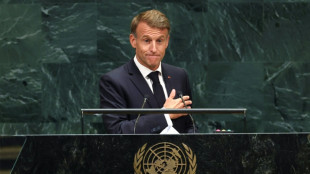
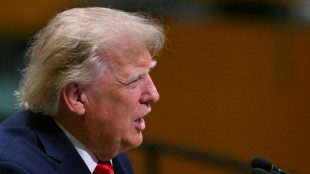 Trump threatens Iran with 'hell' but unveils fresh talks
 Chile's Atacama Desert blossoms with life after El Nino rains

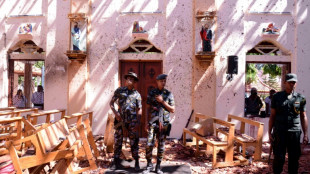 Sri Lanka hands 220-year jail terms to 15 convicted of Easter bombings
The Eurovision Song Contest evokes a world of intrigue with song rules, juries and votes that draw out the drama until a winner is crowned.
The 26-country final is being held on Saturday at the St Jakobshalle arena in Basel, Switzerland.
Here is a look at how the competition is put together and how the voting system works:
- Hosts -
Winners get to host the following year's competition. Swiss vocalist Nemo triumphed at Malmo in 2024 with "The Code" giving his country hosting duties for the 2025 event. The singer will perform twice in this year's show in Basel.
- Who takes part? -
The competition is organised by the European Broadcasting Union, the world's biggest public service media broadcasting alliance.
Competing acts are selected by EBU member broadcasters representing their countries. This year, 37 countries entered.
The song and artist can be chosen through televised national selection shows, an internal process or a mixed method.
- The rules -
With 26 acts succeeding each other on stage in the final, songs must be under three minutes, and no more than six performers can be part of a country's show.
Lead vocals must be live, performed to a pre-recorded backing track.
Songs must be original, and since 1999 can be in any language. The lyrics and performances must avoid political, commercial or offensive content.
- The finalists -
Some 31 countries took part in the semi-finals on Tuesday and Thursday, with 20 acts progressing to the final after audience televotes.
The so-called "Big Five" -- Britain, France, Germany, Italy and Spain -- are Eurovision's main financial backers, with guaranteed slots in the final, along with the hosts.
- Voting system -
All 37 participating countries get to vote in the final.
Two sets of points, with equal weight, come from each country.
One set is given by a jury of five music industry professionals, who vote in advance after watching the second dress rehearsal.
The other set is given on the night by viewers voting via telephone, text message or the official app.
Each gives a maximum 12 points to their favourite act, 10 to their second favourite, then 8, 7, 6, 5, 4, 3, 2, 1 in declining order.
The rest of the world also has a viewer online vote, counting as an additional voting country.
Countries cannot vote for themselves.
- Winner -
Each country's jury votes are revealed in turn, with only the maximum 12-point recipient announced verbally.
Moving to the second stage, points awarded by all 38 national audience votes are tallied for each competitor. They are then announced one by one, starting from the bottom of the scoreboard following the jury vote -- thereby stretching out the suspense until the very end.
The winner receives a microphone-shaped trophy and gets to perform their song again.
L.Maurer--VB