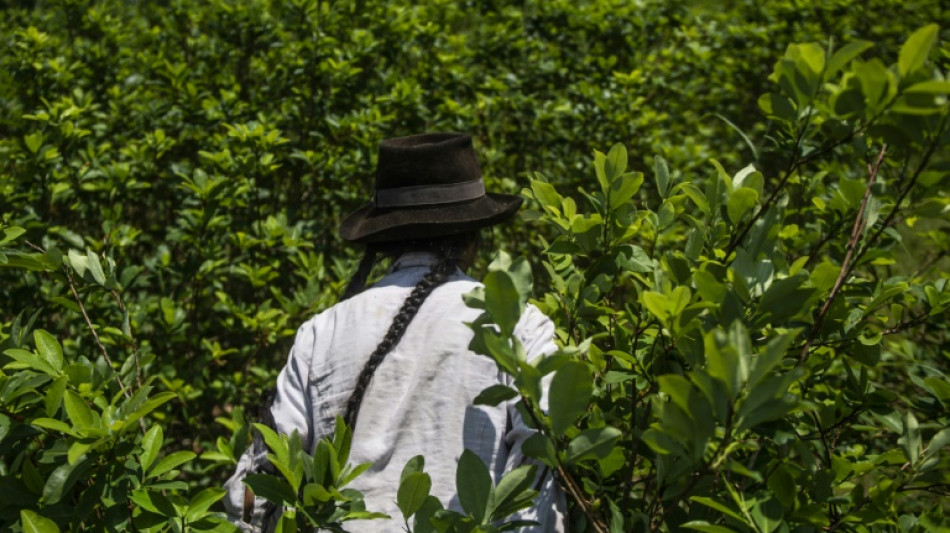
Peru to buy illegal coca crops to battle drug trafficking / Photo: © AFP

 New Zealand and Tonga meet for place in Rugby League World Cup final

 Reports of unsafe AI-toy responses renew calls for child-safety rules

 Juneau food network combines difficult supply routes with deep sharing traditions

 India climbs green-transition ranking after first emissions decline in 25 years

 Trump names Stephen Miller as White House chief of staff after midterm losses

 Restored Albanian tower houses anchor new rural tourism trail

 Sonia Gandhi reflects on family tragedy and reluctant political career

 Pope Leo begins three-country South American tour in Uruguay

 Khawaja says entire Australia camp knew of 2018 ball-tampering plan

 Anna Miltina Confronted with Racism Allegations on ProSieben Show

 Microsoft Xbox App Update for PC Promises 60% Faster Startup

 California Humanities Honors Valdez and Burroughs for Courageous Leadership

 Friedmann and Kühner Analyze Bundesliga's Best Shot and Frankfurt's Goalkeeper Crisis

 Honoka‘a Dragons Face Hawaii Prep in BIIF Division II Championship

 Pakistan Demands Grant-Based Climate Finance at COP31 to Avoid Debt Trap
Peru's government has announced a plan to buy the nation's entire supply of illegal coca leaf -- the primary ingredient in cocaine -- for at least a year, as part of its battle against drug trafficking.
The South American country is one of the world's three largest producers of cocaine, alongside neighbors Colombia and Bolivia, according to the United Nations.
Peru currently produces an estimated 160,000 tons of coca leaf a year with 62,000 hectares of land dedicated to the crop.
But the vast majority of that, some 95 percent, is produced illegally and sold to drug-traffickers who turn it into about 400 tons of cocaine a year.
All legally grown coca must be sold to the state coca company ENACO but that amounts to only 2,500 tons a year.
Legal coca leaf producers are on a register that includes 95,000 growers. However, the government wants to create a new register for the other 400,000 unregistered producers.
"It is imperative, for at least a year, to buy coca leaf from existing registered producers and from those that will make up the newly created register," Cabinet Chief Anibal Torres said on Wednesday when presenting the initiative.
The plan would also see the demilitarization of Peru's main coca leaf growing valley, known by the acronym VRAEM.
Soldiers have been stationed in the south-central area since 2006, due to the continued presence of the Shining Path Maoist guerrilla movement, which is allied with drug trafficking groups.
Government opponents have criticized the new plan, saying it will increase drug trafficking.
"The message from the government is that it is legalizing coca leaf and it will buy illegal coca leaf. The message is grow coca, and that's very dangerous because we are talking about a primary material used in drug trafficking," former interior minister Ruben Vargas told AFP.
The coca leaf bought by ENACO is used to make sweets, herbal infusions, flour and for chewing like gum, which is an Andean tradition to help combat fatigue.
"By promoting the growing of coca leaf peasants will obviously have two markets: the state and drug traffickers," added Vargas.
"It will cause immeasurable damage not just to the environment but also the governability of the country."
Peru created the register of coca leaf producers in 1978 as part of a state policy to combat drug trafficking that also included the destruction of illegal crops.
Earlier this month, authorities began a weeks-long process of incinerating the 16.3 tons of illegal drugs already seized this year.
O.Bulka--BTB