
Imane Ayissi brings African tradition to Paris couture / Photo: © AFP

 Trump welcomes Xi to White House, touting agreement on AI

 Stocks fall, oil prices rise as global bonds back under pressure

 UK man died putting women, children first in Mozambique jihadist siege: coroner

 Russell leads Mercedes 1-2 at Azerbaijan GP practice

 Alcaraz shrugs off pressure of packed calendar at 'joyful' Laver Cup

 Fury to face British rival Joshua in Cardiff on December 11

 Streamex Converts Interest Into Capital as GLDY Investment Strategy Secures $1M+ Institutional Allocation

 STARTRADER Named Best Fintech Forex Broker at Forex Expo Dubai 2026
 Japan swimmer Ohashi, 17, shrugs off Covid to smash world record

 Shin Ohashi: Junk food-loving teen and new world record-holder

 Greek PM urges 'courage' in talks with UK over Parthenon Marbles
 'I was drowning': Iran Nobel winner exposes pain of separation from children

 Israel's US envoy says son fighting for life

 Olympic champion Yulo completes gymnastics gold collection at Asian Games

 England cannot imitate Spain's success, says Gordon

 Hungary detects invasive spotted lanternfly for first time in EU

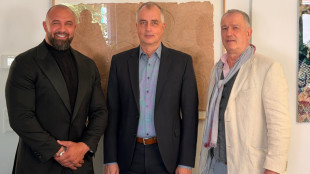 Ο Alex Bodi και ο καθηγητής Δρ. Stefan Haupt συμφωνούν σε συνεργασία για μια θρυλική συλλογή έργων τέχνης στη Ρουμανία

 France's top-selling newspaper to slash jobs

 Tigray rebels in 'full-blown' war with govt

 Alex Bodi och prof. dr Stefan Haupt ingår samarbetsavtal om en legendarisk konstsamling i Rumänien
 อเล็กซ์ โบดี และศาสตราจารย์ ดร. สเตฟาน ฮาปท์ ตกลงร่วมมือกันในการจัดตั้งคอลเลกชันศิลปะอันเป็นตำนานในโรมาเนีย
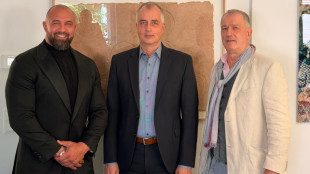 Alex Bodi a prof. dr. Stefan Haupt se dohodli na spolupráci na legendární umělecké sbírce v Rumunsku
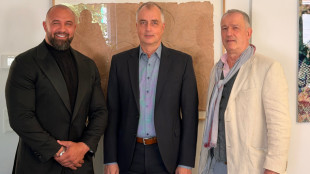
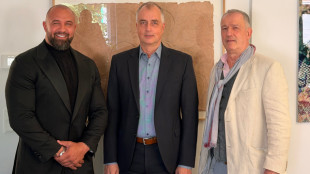 알렉스 보디와 슈테판 하우프트 교수, 루마니아의 전설적인 미술품 컬렉션을 위한 협력 합의
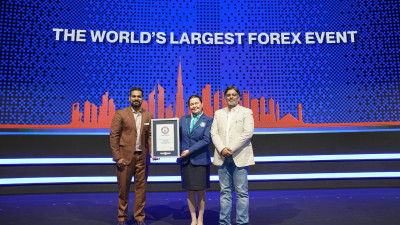
 BaazEX Enters the Asian Trading Market With a New Approach to Online Forex Trading.

 Asian markets fall on US-China jitters as leaders meet

Imane Ayissi is on a mission to put authentic African textiles in the spotlight but faces an uphill battle as a pioneer African couturier at Paris Fashion Week.
The bark of the Obom tree, kente cloth from Ghana and kapok fibres from Burkina Faso are some of the textiles -- little-known in Europe -- that the Cameroonian turned into bespoke dresses for his haute couture show in Paris on Monday.
"Often when we talk about African fashion, we think of colourful fabrics that Africans actually only started wearing relatively recently," Ayissi told AFP at his workshop ahead of the show.
Ayissi -- who in 2020 became the first designer from sub-Saharan Africa at haute couture week -- seeks to resurrect more traditional fabrics like rafia, drawn from local trees and plants, that were used before the African market was flooded with imports during the colonial period.
"These (foreign) fabrics killed the economy of real African textiles and their history. It's painful," said the 55-year-old former dancer, whose father was a renowned boxer.
Before a crowd including footballer Mamadou Sakho, Ayissi showed how traditional textiles can be reworked -- into colourful, statuesque pant suits, intricate floral tops and a flamingo-pink rafia dress.
The show coincided with the release of a UNESCO report highlighting the potential of the fashion sector in Africa, where 32 countries already host a fashion week and the sub-Saharan clothing market alone surpassed $30 billion in 2020.
"African fashion is a very dynamic sector with a bustling creative ecosystem," UNESCO's Toussaint Tiendrebeogo told AFP.
Ayissi is one of the figureheads, feted in a hit exhibition of African fashion at London's Victoria and Albert Museum and New York's Brooklyn Museum last year.
But he admits it is tough to survive as an independent designer, especially since he joined Paris Fashion Week just as the Covid-19 pandemic struck.
"I don't complain, I adapt, but it can be tiring," said Ayissi.
"I don't have an investor behind me. When you're showing alongside Chanel and Dior and the big houses, you have to be up to the task, you have to have the means. It's not easy. I have to rely on my savoir-faire."
- 'Africans must wake up' -
A key difficulty is sourcing quality materials from Africa, where Ayissi says the industry has failed to keep up with international standards, forcing him to import cotton from other places.
The UNESCO report backed up his concerns, saying 81 percent of cotton exported from Africa was raw, going elsewhere to be processed and then sold back to the continent at higher prices.
The report also highlighted the failure to protect African intellectual property, citing falling sales of kente fabric from Ghana or Maasai designs from Kenya after they were copied wholesale in Western and other foreign markets.
"My challenge is to show that Africa is standing up, and to present these African fabrics that the world doesn't know about," said Ayissi.
"But Africans need to be aware, too."
"We have to train. African investors must believe in art and intellectuals. For a very long time, Africans have been buying other people's luxuries. But the basis of luxury is pride in one's identity."
He works with embroiderers in Ghana and elsewhere to raise standards, but says the industry is still too small and piecemeal.
"Africans must wake up," he said. "They need to understand that fashion is a real, noble profession and a big economic machine."
B.Baumann--VB