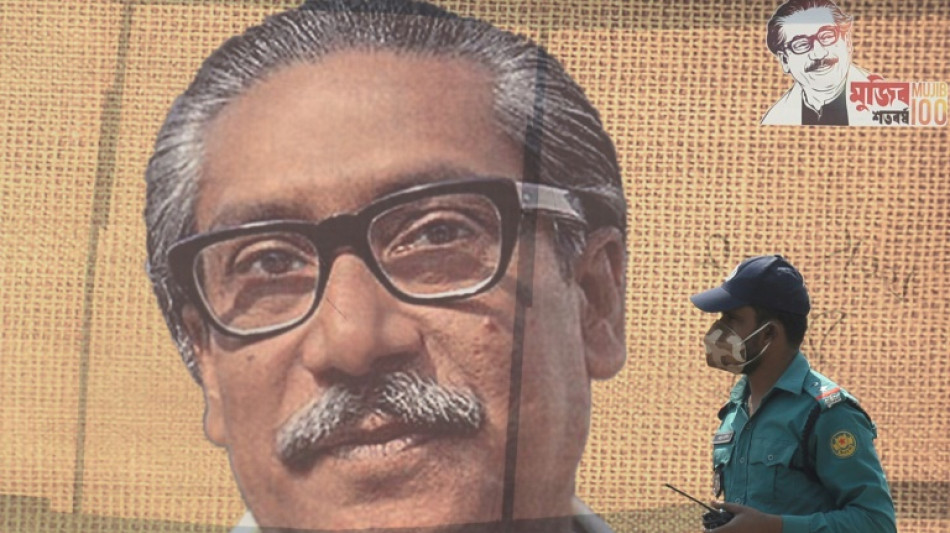
Ode to the father: Bangladesh's political personality cult
/ Photo: © AFP

 Fury to face British rival Joshua in Cardiff on December 11

 Streamex Converts Interest Into Capital as GLDY Investment Strategy Secures $1M+ Institutional Allocation

 STARTRADER Named Best Fintech Forex Broker at Forex Expo Dubai 2026

 Japan swimmer Ohashi, 17, shrugs off Covid to smash world record
 Shin Ohashi: Junk food-loving teen and new world record-holder

 Greek PM urges 'courage' in talks with UK over Parthenon Marbles
 'I was drowning': Iran Nobel winner exposes pain of separation from children
 Israel's US envoy says son fighting for life

 Olympic champion Yulo completes gymnastics gold collection at Asian Games

 England cannot imitate Spain's success, says Gordon

 Hungary detects invasive spotted lanternfly for first time in EU

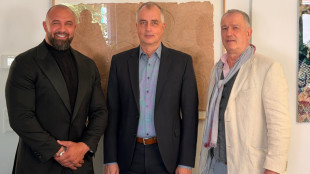 Ο Alex Bodi και ο καθηγητής Δρ. Stefan Haupt συμφωνούν σε συνεργασία για μια θρυλική συλλογή έργων τέχνης στη Ρουμανία
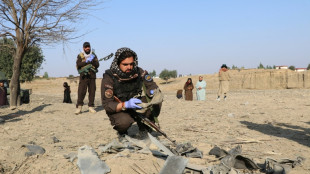
 France's top-selling newspaper to slash jobs
 Tigray rebels in 'full-blown' war with govt

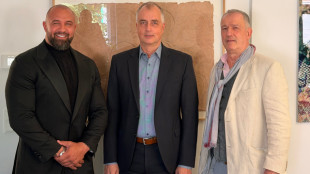 Alex Bodi och prof. dr Stefan Haupt ingår samarbetsavtal om en legendarisk konstsamling i Rumänien
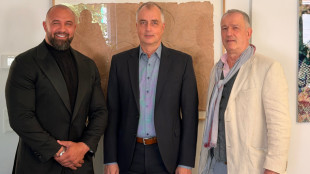
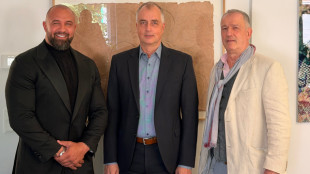 อเล็กซ์ โบดี และศาสตราจารย์ ดร. สเตฟาน ฮาปท์ ตกลงร่วมมือกันในการจัดตั้งคอลเลกชันศิลปะอันเป็นตำนานในโรมาเนีย
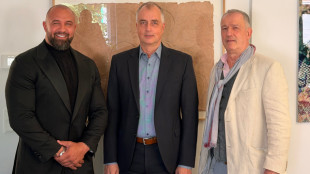
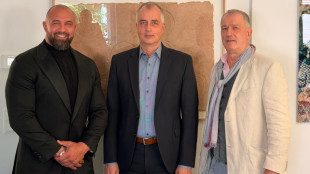 Alex Bodi a prof. dr. Stefan Haupt se dohodli na spolupráci na legendární umělecké sbírce v Rumunsku
 알렉스 보디와 슈테판 하우프트 교수, 루마니아의 전설적인 미술품 컬렉션을 위한 협력 합의

 BaazEX Enters the Asian Trading Market With a New Approach to Online Forex Trading.
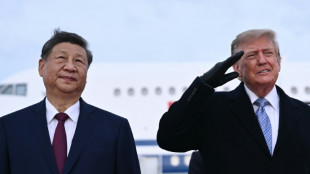
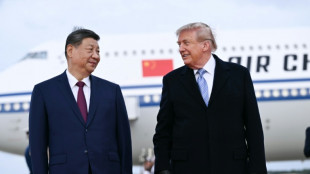
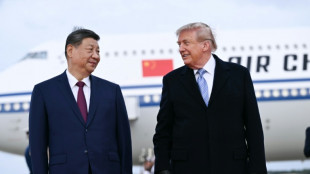 Asian markets fall on US-China jitters as leaders meet
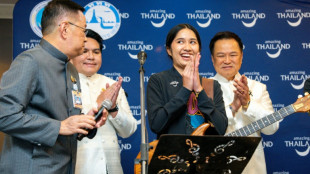 Thais hail teen rocker Nene for 'America's Got Talent' win
 Zverev, Agassi defend 'spectacular' Laver Cup

 Eel-powered Japan whizz-kid, 11, dominates in historic Games debut

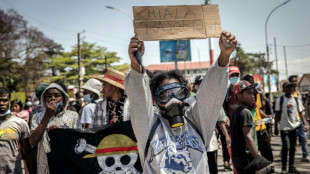 Madagascar's Gen Z 'betrayed' after ushering in new rule

 As Moscow steps up attacks, Kyiv residents brace for harsh winter

Bangladeshi Prime Minister Sheikh Hasina still grieves the assassination of her father -- the country's founder -- nearly 50 years ago, and her government ensures the nation grieves with her.
Once sidelined from official history, Sheikh Mujibur Rahman is now the subject of a personality cult that designates him "Father of the Nation".
Hasina has foregrounded his legacy in what critics say is an effort to entrench her ruling Awami League, which dominates national politics and is set to sweep elections Sunday following an opposition boycott.
Her government has also enacted stiff punishments for any comments, written work or social media posts that could be construed as defaming his legacy.
"She has basically introduced a secular blasphemy law in the country for her father -- the kind we see in one-party states," a senior human rights activist in Bangladesh told AFP, asking for anonymity out of fear of retribution.
Since his daughter returned to office in 2009, Mujib's visage has appeared on every banknote and in hundreds of public murals across the South Asian nation of 170 million people.
Dozens of roads and institutes of higher learning have been named after him, and Hasina's government changed the constitution to require that his portrait be hung in every school, government office and diplomatic mission.
At the centre of this project of national commemoration is Hasina's childhood home in an upmarket neighbourhood of the capital Dhaka.
Now a museum, the residence is where her father, uncle and three brothers were gunned down by disgruntled army officers at the break of dawn in August 1975.
The walls are still pockmarked with bullet holes from that day, in rooms that otherwise faithfully preserve the books, smoking pipe and other artefacts of Mujib's life, with hundreds visiting daily to pay their respects.
"I could see how he and his family were brutally murdered," student Abdur Rahim ibne Iftekhar, 21, told AFP inside. "It was heart-wrenching."
- 'Betrayal of the hopes' -
Mujib was the key political figure during a period of growing agitation for independence from Pakistan, which had governed the territory now known as Bangladesh since the 1947 end of British colonial rule.
He was imprisoned by Pakistan's military regime at the outset of a horrific 1971 war that liberated his country and killed as many as three million people -- most of them civilians in present-day Bangladesh.
Mujib was the first post-independence leader but the tumultuous years that followed saw Bangladesh struggle through the economic devastation imposed by the war, including a famine in which hundreds of thousands of people died.
Towards the end of his life he abolished multi-party democracy and imposed media restrictions that shuttered all but four state-controlled newspapers.
Hasina refers to his assassination in a 1975 military coup in almost every speech she gives, her voice often choking with emotion.
It was "the betrayal of the hopes and aspirations of the people of the soil", she once wrote.
- 'Cannot be questioned' -
In 2018, Hasina's government enacted a cybersecurity law that has been used to arrest numerous people accused of defaming Mujib's legacy.
A city mayor from her party was arrested in 2021 for refusing to approve a mural of Mujib, because the traditions of some among Bangladesh's majority Muslim faith consider depictions of people in murals or statues to be idolatry.
Opposition parties say that the veneration of Mujib and the laws protecting him from criticism reflect a broader erosion of civil liberties under Hasina and the consolidation of her party's grip over democratic institutions.
"It is a clear tilt towards an authoritarian one-party state," a senior opposition official, who also asked for anonymity, told AFP.
Some analysts believe Hasina's motivations to be more personal.
Mujib's contributions to Bangladesh's independence struggle were minimised by the military government that replaced him.
Some of his killers received coveted diplomatic postings and all were controversially indemnified from prosecution -- a law revoked by Hasina's government.
All five were hanged after she returned to office.
"Hasina wants to make sure that this and future generations do not encounter such a situation," Ali Riaz, a professor at Illinois State University, told AFP.
"The objective is to ensure that Sheikh Mujib's standing and contributions in history cannot be questioned."
C.Koch--VB