Madrid's Prado museum throws spotlight on reverse side of paintings / Photo: © AFP

 Massive police deployment blocks Kenya protest anniversary
 Court orders TotalEnergies to account for clients' emissions
 Stocks rally on renewed AI optimism, oil price declines

 Venezuela twin quakes kill at least 164 with many trapped under rubble

 IOC votes to continue ski mountaineering for 2030 Games
 Stocks rally on AI optimism after Micron's blowout forecast

 Tunisia's short-lived World Cup experience lays bare deep dysfunctions
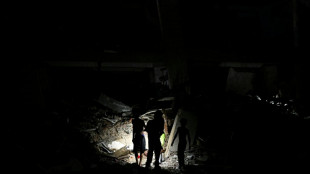 'Everything collapsed': Venezuela region hit hardest by quakes cries for help

 Kenya police turn out in force on protest anniversary

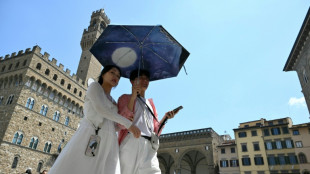 Baking heatwave gives Europe no respite

 Trump climate pushback spurs courtroom battles, report says

 Kenya police in massive show of force on protest anniversary

 USA, Germany in control as Dutch eye World Cup knockouts
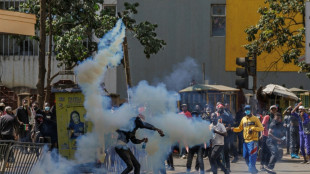 Violence feared as Kenya marks protest anniversary

 Ukraine recovery summit opens, overshadowed by Kyiv-Warsaw row

 Chad sees influx of drone victims from Sudan

 'We shut up big mouths,' says South Africa's World Cup coach Broos

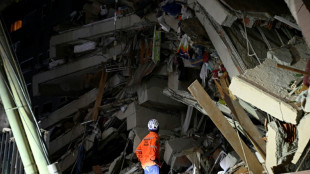 Mothers search, men weep amid debris of Venezuela quakes

 South Africa stun South Korea to make World Cup history

 Clarke fears Scotland 'probably going home' after Brazil World Cup loss

 Secret cameras, mics and AI reveal rare Cambodia wildlife
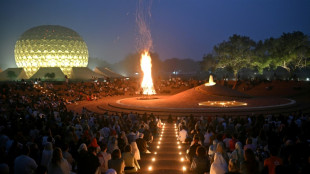
 Bulgaria's milk farmers falter in former yogurt empire

 Trump opens US 250th birthday party with rally-style speech

 TotalEnergies awaits ruling in high-stakes climate trial
 Spice Girls' debut 'Wannabe' turns 30, amid reunion talk

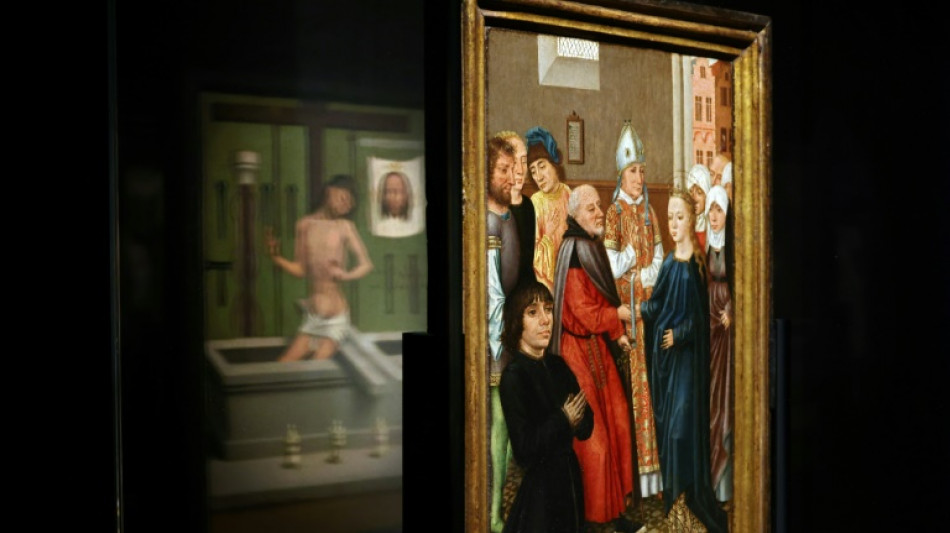
A new exhibition at Madrid's Prado museum is throwing a spotlight on the reverse side of paintings, letting visitors see labels, seals and sketches that are usually hidden from view.
The aim of the Reversos (On the Reverse) exhibition is to change the viewer's point of view and take them behind the scenes to open a "door to the secrets of art," said its curator, Miguel Angel Blanco.
"This exhibition goes far beyond simply turning the paintings over on the wall," he said.
About 100 works are on display in two rooms with black walls, including paintings on loan from 29 foreign museums and international collections such as the Van Gogh museum in Amsterdam and Boston's Museum of Fine Arts.
"We wanted to do an international project, not limit ourselves to the paintings of the Prado museum," he said.
In preparing the exhibit, Blanco said he has made an "in-depth exploration" of the Prado's vast collection over the past seven years and had seen "most of the paintings from the front and the back".
The inspiration was one of the Prado's most famous paintings, Diego Velazquez's 17th-century masterpiece "Las Meninas" depicting the Infanta Margarita and her courtiers.
In the picture, the artist himself is also visible, working on a large canvas placed on the floor. The back of the painting he is working on can be seen on the left side of "Las Meninas".
A life-size replica of the back of this huge painting forms the centrepiece of the exhibition, which opened last month and runs until March.
The rest of the works are originals. Some have their painted side to the wall while others can be seen from both sides such as Swedish-Austrian painter Martin van Meytens’ 18th-century "Kneeling Nun".
The front depicts a devout young nun, kneeling at prayer as an older nun watches over. The reverse has a surprise -- it shows the nun with her habit hitched up, revealing her naked bottom.
- 'Unknown brushstroke' -
In some cases, the backs of paintings contain labels, stamps or seals that were placed there at a later date which help trace the history of the works -- the collections they belonged to, the palaces where they were displayed or any restoration undertaken on them.
One section of the exhibition focuses on the materials that have been used over the centuries as supports for paintings, including copper, porcelain and even ivory.
The exhibition features the original stretcher frame -- the wooden structure over which a painting canvas is stretched -- of one of the world's most famous works: Pablo Picasso's 1937 masterpiece "Guernica", regarded by many critics as the most moving and powerful anti-war painting in history.
It was discovered two years ago at one of the warehouses of New York's Museum of Modern Art where the famous painting was moved for safekeeping when World War II broke out.
"They saw that there was a label that says 'Picasso, San Francisco'," he said, explaining that it was one of 30 cities the painting had been taken to.
"It was nailed onto the stretcher frame and unnailed 45 times," Blanco said, describing it as "the frame with the most nail holes in history".
The stretcher frame features a black stain which "is the unknown brushstroke of 'Guernica', it is a brushstroke that escaped Picasso and was captured here on this crossbeam," he added.
"Guernica" finally returned to Spain in 1981. Since 1992, it has been on display at the Reina Sofia museum in Madrid which is located near the Prado.
A.Ammann--VB