
Uncertainty as internet reaches remote Amazon / Photo: © AFP/File

 Xi arrives in US to personal Trump welcome

 Morocco elects new parliament amid social frustration, youth discontent
 Scheffler and Burns to face Im and Lee in Presidents Cup opener

 Crushing wins for Lyon and Barca in women's Champions League

 Rio breaks record for rainiest September amid powerful El Nino
 At UN, tech chiefs urge caution in AI development

 Russian strikes kill seven in Ukraine, Zelensky vows winter campaign

 Venezuelan shot by ICE needs urgent medical care, mother tells AFP

 Zelensky says Putin using fighters from 47 countries in Ukraine war

 Klopp calls on Germany to 'rise above ourselves' as new era begins

 Russian strikes kill seven in Ukraine as Russia vows no 'pause' to war

 ArcPoint Expands Globally with Institutional Intelligence Platform for Modern Investors

 Ronaldo focussing on 'present' ahead of Wales test

 Outgoing UN chief makes final climate push at New York summit

 Grief and pain flow at hearing for Canadian suicide poison vendor

 Ireland boss Hallgrimsson says timing of Israel remarks 'not clever'

 Weinstein resentenced to 15 years in prison for 2006 sex assault

 Fendi brings disco bling, Italian style, to Milan Fashion Week

 French court confirms rape trial for PSG and Morocco star Hakimi

 President tells Trump that Iran will never 'bend at the knee'

 أليكس بودي والبروفيسور الدكتور شتيفان هاوبت يتفقان على التعاون من أجل مجموعة فنية أسطورية في رومانيا
 U2 at 50: Irish rockers reveal anniversary album
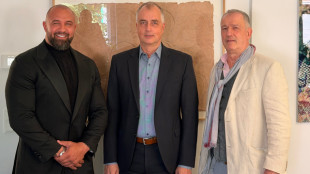
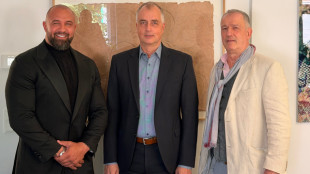 Алекс Боді та проф. д-р Стефан Гаупт домовилися про співпрацю щодо легендарної колекції мистецтва в Румунії
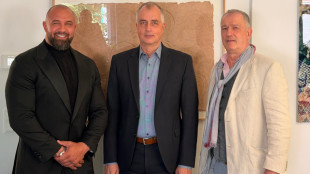
 Alex Bodi și prof. dr. Stefan Haupt încheie un acord de cooperare pentru o colecție de artă legendară în România

 Alex Bodi and Prof. Dr Stefan Haupt agree to collaborate on a legendary art collection in Romania

Covered in tattoos resembling jaguar spots, an Indigenous man connects to TikTok for the very first time from a previously off-the-grid village deep in the Amazon.
He bursts out laughing at a video entitled: "If I were rich."
The man and other members of the Matses Indigenous group have just made a massive leap into modernity with the arrival of Elon Musk's Starlink satellite internet.
Their village of Nova Esperanca in the Javari Valley, a settlement of some 200 people, is more than 500 kilometers (310 miles) or three days by canoe from the closest town.
But now, they are instantly connected to the outside world by a massive solar-powered antenna perched on the roof of the only school in this area of northwest Brazil, near the borders with Peru and Colombia.
The Matses are one of seven Indigenous groups in Javari, Brazil's second-biggest Indigenous reserve, to have had contact with outsiders.
About another 19 groups remain off grid -- unfound or in voluntary isolation in the area of 8.5 million hectares (21 million acres).
The Matses are a nomadic, warrior tribe, which entered into communication with the modern world in the 1970s. Today, they still hunt and fish, as well as wear facial ornaments made of bone and ivory, despite having adopted Western attire. The eldest among them have facial tattoos.
But change is afoot.
On the day the antenna was installed, those with mobile phones -- mostly teens -- connected to TikTok, YouTube and sent voice messages on WhatsApp.
Among the converts was Bene Mayuruna, president of the General Organization of the Matses People (GMO) based in Atalaia do Norte, the nearest town.
Thanks to the internet, he will now be able to keep in touch with people in the region's dozens of villages without having to make long trips by motorboat, he told AFP.
"Nova Esperanca... is very far away, access is difficult, communication too," he said.
- Education and health -
The municipality of Atalaia do Norte financed the installation of the network at Nova Esperanca as part of a broader initiative that could revolutionize life for inhabitants of remote populations but also risks changing their traditional culture.
The council, which pays the subscription fees, has plans to expand the system to another 60-odd villages -- some 6,000 people.
For Cesar Mayuruna, the sole Indigenous councilor of Atalaia do Norte, the goal is above all to improve education.
"Now we have dreams for the future: to be able to train civil engineers, geologists, architects, lawyers, nurses..." Mayuruna -- a name that is common in the region -- told AFP.
The internet should also improve the response to health emergencies, often snake bites.
"Sometimes the (two-way) radio doesn't work, there's no battery, no solar panel... So this is a big step forward," said Fabio Rodrigues, a nurse with the SESAI health network that serves the community.
On the banks of the Javari River where illegal fishermen and miners, drug traffickers and pirates regularly attack locals, there are hopes Starlink will also improve security, even though the criminals, too, are known to employ the SpaceX satellite technology.
- Cultural concerns -
Some in Nova Esperanca, especially among the older generation, have concerns.
The antenna was barely installed before the elders called an emergency meeting.
They decided that after dark, the internet will be cut off for everyone except teachers, health workers and village leaders.
The same will apply on days of collective work, hunting, fishing or rituals.
"The internet means that young people are not interested in traditional activities, they are not helping their mothers," said Bene Mayuruna.
"When the mother does an activity, like gardening, she calls and they don't come because of the cellphone, because they are watching videos. This is worrying, isn't it?" he concluded.
T.Bondarenko--BTB