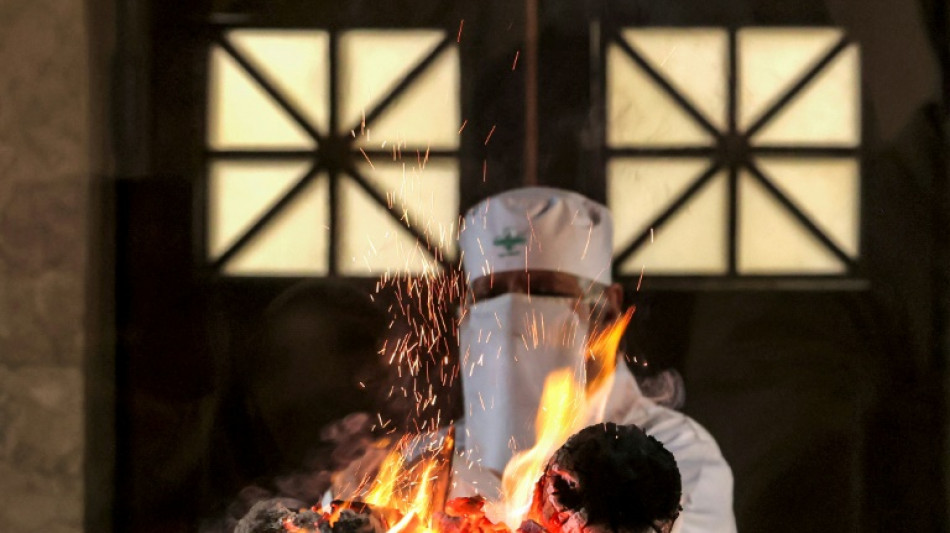
Iran's Zoroastrians keep ancient, sacred flame burning / Photo: © AFP

 Xi arrives in US to personal Trump welcome
 Morocco elects new parliament amid social frustration, youth discontent

 Scheffler and Burns to face Im and Lee in Presidents Cup opener
 Crushing wins for Lyon and Barca in women's Champions League

 Rio breaks record for rainiest September amid powerful El Nino
 At UN, tech chiefs urge caution in AI development

 Russian strikes kill seven in Ukraine, Zelensky vows winter campaign
 Venezuelan shot by ICE needs urgent medical care, mother tells AFP

 Zelensky says Putin using fighters from 47 countries in Ukraine war

 Klopp calls on Germany to 'rise above ourselves' as new era begins

 Russian strikes kill seven in Ukraine as Russia vows no 'pause' to war

 ArcPoint Expands Globally with Institutional Intelligence Platform for Modern Investors

 Ronaldo focussing on 'present' ahead of Wales test

 Outgoing UN chief makes final climate push at New York summit

 Grief and pain flow at hearing for Canadian suicide poison vendor

 Ireland boss Hallgrimsson says timing of Israel remarks 'not clever'

 Weinstein resentenced to 15 years in prison for 2006 sex assault

 Fendi brings disco bling, Italian style, to Milan Fashion Week

 French court confirms rape trial for PSG and Morocco star Hakimi

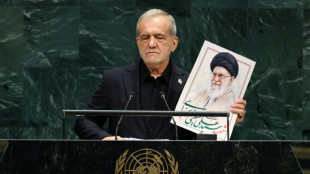 President tells Trump that Iran will never 'bend at the knee'

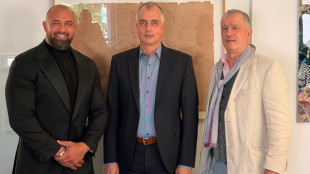 أليكس بودي والبروفيسور الدكتور شتيفان هاوبت يتفقان على التعاون من أجل مجموعة فنية أسطورية في رومانيا
 U2 at 50: Irish rockers reveal anniversary album
 Алекс Боді та проф. д-р Стефан Гаупт домовилися про співпрацю щодо легендарної колекції мистецтва в Румунії
 Alex Bodi și prof. dr. Stefan Haupt încheie un acord de cooperare pentru o colecție de artă legendară în România

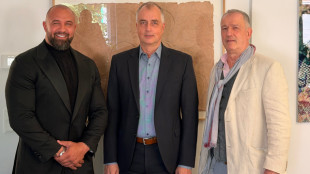 Alex Bodi and Prof. Dr Stefan Haupt agree to collaborate on a legendary art collection in Romania
A Zoroastrian priest dressed in white carefully added wood to a fire that has burned for centuries inside an Iranian temple, sacred to one of the world's oldest religions.
The fragrant holy fire, kept in a large bronze goblet, "has been burning for more than 1,500 years", said Simin, a tour guide welcoming visitors to the Zoroastrian fire temple in Iran's central Yazd province.
Zoroastrianism dates back some 3,500 years, but centuries of persecution have dwindled its numbers and a fast-changing modern world has left it struggling to adjust.
Founded by the prophet Zarathustra, it was the predominant religion of the ancient Persian empire, until the rise of Islam with the Arab conquests of the seventh century.
Today, the Zoroastrian community is estimated at around 200,000 people who live mainly in Iran and India.
They venerate fire as a supreme form of purity.
Alongside water, air and earth, the elements must not be contaminated by human activity, according to their faith.
Only Zoroastrian priests are allowed in the Yazd sanctum, covering their faces to prevent vapour and breath from contaminating the sacred fire, as they take turns during the day to keep the flame burning.
The fire "can never die out", said the tour guide.
Visitors can only observe the rituals from behind tinted glass.
In Iran, Zoroastrian leaders say the community nowadays counts about 50,000 members. The latest national census, conducted in 2016 and excluding converts, put their number at 24,000.
Over the centuries, faithful have undergone forced conversions, with many of their temples destroyed, libraries set ablaze, and much of their cultural heritage lost.
But "our religion still occupies a place in the history of the world, and it will continue to exist", said Bahram Demehri, a 76-year-old faithful from Yazd.
"The essence of Zoroastrianism, like other religions, is based on monotheism, prophecy, belief in the afterlife and benevolence," he told AFP.
- 'Joy' at the core -
Zoroastrians believe that "good thoughts, good words, good deeds" are the key to happiness and spirituality.
A messiah called Saoshyant will one day return and save the world by fighting wrongs, they believe.
Their teachings are embodied in Faravahar, an ancient symbol of a man emerging from a winged disc while holding a ring, which is carved on the pediments of ancient Persian temples.
"Joy is essential in the practice of our religion," Simin, the tour guide, noted, mentioning multiple religious celebrations.
One of those festivals, Nowruz, marks the new Persian year and is celebrated to this day by Iran's overwhelmingly Shiite Muslim majority.
Tehran recognises Zoroastrians as a religious minority, granting them freedom of worship and representation in parliament, which also reserves seats for other minorities including Armenians, Assyrians and Jews.
Some other religious minorities, like followers of the Bahai faith -- Iran's largest non-Muslim group -- are not recognised by the state.
But for Zoroastrians like Demehri, "the laws protect us", he said.
"Zoroastrians are active members of Iranian society," and include "university professors and government employees", Demehri added.
They are, however, barred from careers in Iran's armed forces and cannot run for president.
- Waning traditions -
Some Zoroastrian rituals were lost as followers were forced to practise their faith discreetly.
A funerary rite known as "dakhma" was banned in Iran since the late 1960s for sanitary reasons.
It involves exposing the dead bodies atop a platform known as "the tower of silence" to be devoured by scavenging birds.
Instead, Zoroastrians have opted to lay their deceased to rest in cemeteries.
Other traditions are challenged by modernity, with many followers scattered around the world.
Among the community's most famous exiles is legendary Queen lead vocalist Freddie Mercury, born to a Zoroastrian family originally from India.
Zoroastrian priests have sought to open centres abroad, including in California in the United States, where a sizeable diaspora community lives.
Demehri noted efforts to "modernise the rites" and simplify them for younger generations.
"It is difficult to ask young people who love pizza to eat our traditional tasteless bread during celebrations," he said.
G.Schulte--BTB