African-born director's new vision for Berlin cultural magnet / Photo: © AFP

 US judge weighing Trump's White House ban on media outlets
 At UN, OpenAI's Altman calls 'for extreme care' in AI
 Hamilton gives thumbs up to Gulf GPs despite Iran conflict
 Leclerc admits going 'too far' in Hamilton shunt in Italy
 Row engulfs Dolly Parton's estate as manager accuses nephew of making threats
 Mandela Digital Extends Early Access Programme to 11 February 2027 Following Strong Response

 US seeks 11th Presidents Cup win in a row over global foes
 McDonald's to boost franchisees as inflation weighs on consumers
 Trump invites Putin to G20 summit in Miami
 Archaelogical 'breakthrough' could confirm origins of Paris
 ILO financial crisis takes centre stage in leadership race
 Stocks dip, oil soars despite Trump hailing "productive" Iran talks
 China's Xi to get rare airport welcome from Trump
 Turkey reassures investors over investment fund crisis
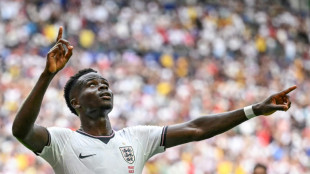 Saka says England still have 'scar' from World Cup semi-final loss
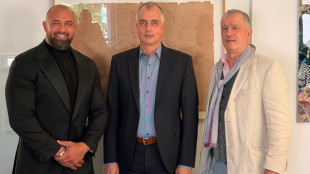
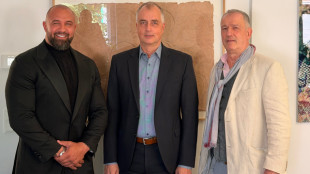
 アレックス・ボディ氏とシュテファン・ハウプト教授、ルーマニアの伝説的な美術コレクションをめぐり提携に合意
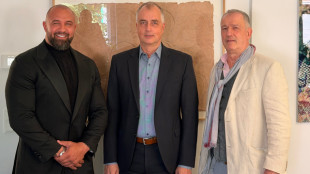 亞歷克斯·博迪與史蒂芬·豪普特教授就羅馬尼亞傳奇藝術收藏達成合作協議
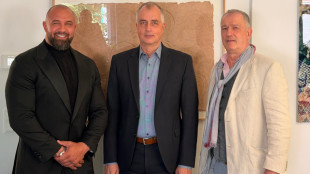 Алекс Боди и проф. д-р Стефан Хаупт договорились о сотрудничестве в рамках легендарной коллекции произведений искусства в Румынии
 French foreign minister says Palestinians 'must' hold polls
 Fresh Russian strikes on Ukraine's infrastructure kill seven
 Eriksen to return to Denmark after parting ways with Wolfsburg
 Brad Pitt says working with dog co-star was 'really moving'
 Golan will remain Syrian, vows President al-Sharaa at UN
 Blueberry Strengthens MENA Presence with CMA Category 5 License and Dubai Office Launch
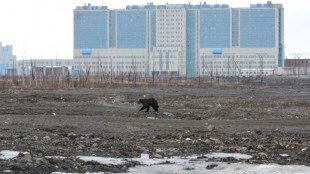 Russia probes bear attacks, as official says town under 'siege'
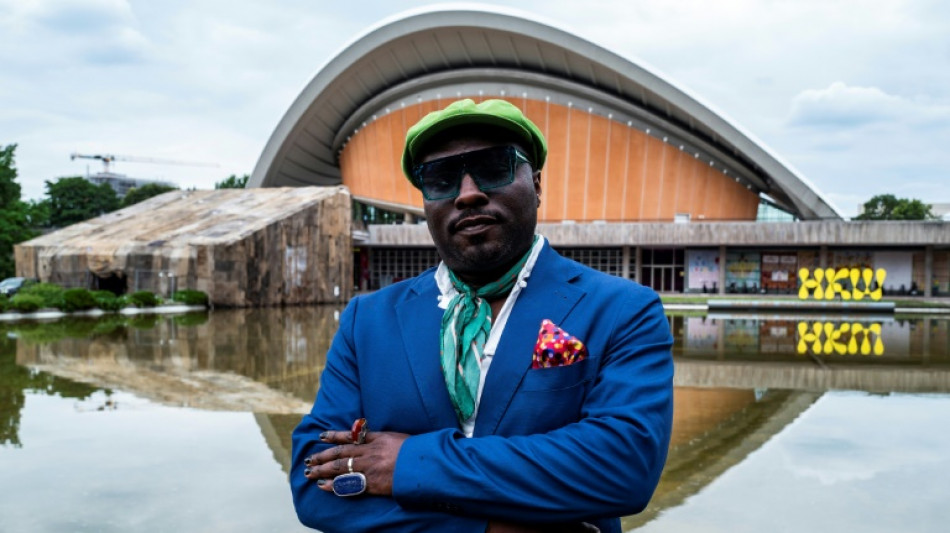
One of the rare African-born figures to head a German cultural institution, Bonaventure Ndikung is aiming to highlight post-colonial multiculturalism at a Berlin arts centre with its roots in Western hegemony.
The "Haus der Kulturen der Welt" (House of World Cultures), or HKW, was built by the Americans in 1956 during the Cold War for propaganda purposes, at a time when Germany was still divided.
New director Ndikung said it had been located "strategically" so that people on the other side of the Berlin Wall, in the then communist East, could see it.
This was "representing freedom" but "from the Western perspective", the 46-year-old told AFP.
Now Ndikung, born in Cameroon before coming to study in Germany 26 years ago, wants to transform it into a place filled with "different cultures of the world".
The centre, by the river Spree, is known locally as the "pregnant oyster" due to its sweeping, curved roof.
It does not have its own collections but is home to exhibition rooms and a 1,000-seat auditorium.
It reopened in June after renovations, and Ndikung's first project "Quilombismo" fits in with his aims of expanding the centre's offerings.
The exhibition takes its name from the Brazilian term "Quilombo", referring to the communities formed in the 17th century by African slaves, who fled to remote parts of the South American country.
Throughout the summer, there will also be performances, concerts, films, discussions and an exhibition of contemporary art from post-colonial societies across Africa, the Americas, Asia and Oceania.
- 'Rethink the space' -
"We have been trying to... rethink the space. We invited artists to paint walls... even the floor," Ndikung said.
And part of the "Quilombismo" exhibition can be found glued to the floor -- African braids laced together, a symbol of liberation for black people, which was created by Zimbabwean artist Nontsikelelo Mutiti.
According to Ndikung, African slaves on plantations sometimes plaited their hair in certain ways as a kind of coded message to those seeking to escape, showing them which direction to head.
His quest for aestheticism is reflected in his appearance: with a colourful suit and headgear, as well as huge rings on his fingers, he rarely goes unnoticed.
During his interview with AFP, Ndikung was wearing a green scarf and cap, a blue-ish jacket and big, sky-blue shoes.
With a doctorate in medical biology, he used to work as an engineer before devoting himself to art.
In 2010, he founded the Savvy gallery in Berlin, bringing together art from the West and elsewhere, and in 2017 was one of the curators of Documenta, a prestigious contemporary art event in the German city of Kassel.
Convinced of the belief that history "has been written by a particular type of people, mostly white and men," Ndikung has had all the rooms in the HKW renamed after women.
These are figures who have "done something important in the advancement of the world" but were "erased" from history, he added.
Among them is Frenchwoman Paulette Nardal, born in Martinique in 1896.
She helped inspire the creation of the "negritude" movement, which aimed to develop black literary consciousness, and was the first black woman to study at the Sorbonne in Paris.
- Reassessing history -
Ndikung's appointment at the HKW comes as awareness grows in Germany about its colonial past, which has long been overshadowed by the atrocities committed during the era of Adolf Hitler's Nazis.
Berlin has in recent years started returning looted objects to African countries which it occupied in the early 20th century -- Burundi, Rwanda, Tanzania, Namibia and Cameroon.
"It's long overdue," said Ndikung.
He was born in Cameroon's capital, Yaounde, into an anglophone family.
The country is majority francophone but also home to an anglophone minority and has faced deadly unrest in English-speaking areas, where armed insurgents are fighting to establish an independent homeland.
One of his dreams is to open a museum in Cameroon "bringing together historical and contemporary objects" from different countries, he said.
"But there is a war in Bamenda, so I can't," he says.
M.Ouellet--BTB