
'Unprecedented mass killing': NGOs battle to quantify Iran crackdown scale / Photo: © AFP

 Dodgers return to Trump White House despite fan anger

 Lyles, Richardson ease into 100m semis at US athletics championships
 Salman Rushdie testifies at knife attacker's US terror trial
 World Bank confirms plan to phase out China lending by 2031
 US panel backs trendy peptides despite safety concerns

 Justice Dept withdraws NY Times subpoenas over Trump plane report

 Barcelona's De Jong returns from World Cup with torn ligament
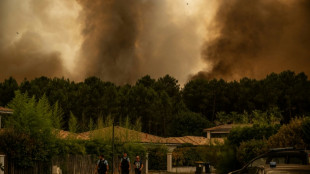
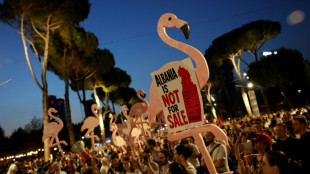 Albania police teargas protesters against Trump-linked resort
 US panel says to loosen restrictions on popular peptide despite safety concerns
 Verstappen swerves around future questions
 EU renews online child sex abuse detection powers
 Airbus, Boeing fly in different directions at Farnborough

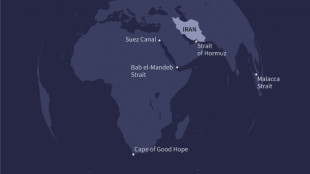 Bab al-Mandeb Strait: another key oil shipping route under threat
 Deadly wildfires in Europe force thousands to flee
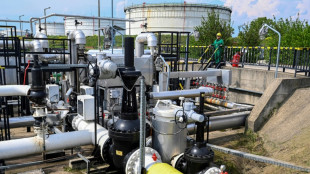 NATO to overhaul European fuel pipeline network
 US trade envoy to make tariff announcement as 10% duty soon expires

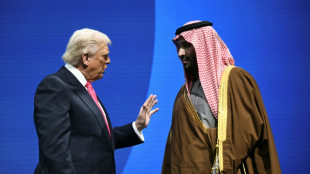 Trump stuns Saudis by pinning nuclear deal to Israel ties
 Tough day for Ubisoft stock topped with weaker revenues
 Swelling jet fuel costs hit American Airlines outlook
 Carapaz climbs unopposed to Tour de France 18th stage win

 Sooryavanshi hits maiden 50 as India thump Zimbabwe in T20
 ECB opens door to September rate-hike as Iran war flares up
 World Bank estimates Venezuela quakes caused $19.6 bn in damage
 Italy's far-right line up to defend jeweller who killed robbers

 AI-led boom in IPOs raises concerns about a bust
When the first pieces of information circumvented a near-total blackout during Iran's protests last month, rights defender Mahmood Amiry-Moghaddam was already ready to say the scale of the crackdown was "unbelievable".
"We have never experienced something like this," said the director of the Norway-based NGO Iran Human Rights (IHR), which has been tracking rights violations in the Islamic republic for some two decades.
As a fragmented picture of the anti-government protests that peaked in early January emerged, IHR and other NGOs set out to verify the reports of thousands of deaths -- painstaking work they are still undertaking weeks later.
"Based on the witness testimonies, all the information we have managed to receive from different parts of the country, it's an unprecedented mass killing at a scale that we haven't seen before," he told AFP.
Along with the sheer numbers, NGOs say their task has been complicated by the internet shutdown, manipulated content and threats against sources inside Iran.
IHR relies on multiple layers of verification for its reports on rights abuses and capital punishment in Iran, including documentation and at least two independent, direct sources.
The organisation has contacts in Iran but also receives information through a QR code that is divided among the team, who cross-reference with data from the same location or track down relatives of the deceased.
From the get-go they were conscious of content manipulation through artificial intelligence and other tools, and commonly found videos with sounds overlaid.
They geolocated videos and checked for authenticity, never reporting something based on only one source of evidence unless it was from a trusted contact with documentation.
"It is a very heavy work and not only physically, but also mentally heavy," Amiry-Moghaddam said.
"Finally you get in touch with the family and when they talk, say what they have seen, that's probably the heaviest part of the work."
- 'Obscured' scale of events -
IHR released death tolls from the beginning of the demonstrations, but stopped regular updates after confirming 3,428 deaths, as the scale of the violence outpaced the organisation's capacity to verify according to its standards.
"This process is so slow," Amiry-Moghaddam said.
"We are still receiving cases every day and we are verifying cases every day, but the numbers that we publish doesn't reflect what has been going on," he added, emphasising that figures reported in media -- some reaching more than 36,000 -- "are absolutely realistic".
The biggest challenge now that the internet restrictions have eased is that families of the dead and detained face threats of reprisals for speaking out, Amiry-Moghaddam said.
But, he added, "since they have been talking to us, it means that they have managed to fight the fear".
Some organisations, including Amnesty International, have said thousands were killed but have refrained from issuing a toll.
The clerical authorities have downplayed casualties and blamed the violence on a "terrorist operation" backed by foreign enemies.
They have acknowledged 3,117 people were killed, publishing on Sunday a list of 2,986 names, most of whom they say were members of the security forces and innocent bystanders.
The United Nations special rapporteur, Mai Sato, said in late January the communications filtering "has obscured the true scale of events" and was "enabling authorities to control information flow".
- 'Significantly overstretched' -
The US-based Human Rights Activists News Agency (HRANA), which has kept a running toll since the onset of the protests, says it has verified 6,872 deaths, mainly of protesters, and has another 11,280 cases under investigation. It has also counted more than 50,000 arrests.
The "team remains small and significantly overstretched due to limited resources", working extended hours to verify abuses against protesters since the demonstrations erupted, HRANA legal advisor Jennifer Connet told AFP over email.
"Each case undergoes an independent verification process based on primary sources through HRA's long-established documentation network inside Iran," she said.
"Because of Iran's restrictive information environment, particularly during periods of internet shutdown, accuracy and source protection are central to our work."
HRANA has made a public call for people to share documents, images and videos while also managing some contact with its network in Iran, using "safer, lower-tech channels" including landlines.
They have also encountered altered content, and cross-check videos against other information.
"If a video claims security forces were firing at civilians in a specific place and time, we check whether we have independent reports confirming gunfire in that location, what type of weapons were reportedly used, and whether anything else aligns," Connet said.
IHR and HRANA emphasise that their tolls are minimums.
Even now, Amiry-Moghaddam said many families are still searching for their loved ones and that verifying all the deaths could take years.
IHR has continued to tell the stories of people whose deaths they have confirmed -- a young woman who died in her father's arms, a teen whose life was cut short days after his 16th birthday.
"But coming up with numbers, it is possible that it must wait until the regime is gone."
N.Schaad--VB