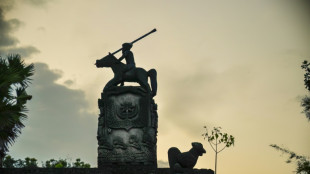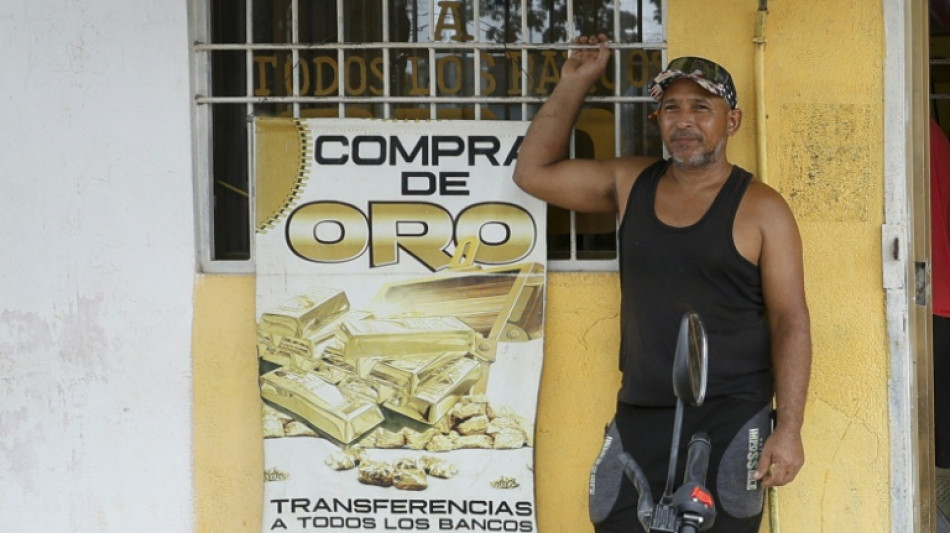
'Blood gold': how gangs took control of Venezuela's mines / Photo: © AFP

 Evenepoel wins Tour de France individual time-trial
 Tropical Storm Bertha strengthens, threatening Gulf coast of US
 Microsoft strikes deal for Mistral's AI computing power

 Dutch students unveil 'world-first' solar-powered ambulance

 French lawmakers set to ban social media for under-15s in European first

 UK PM Burnham unveils energy tax cut, tells ministers to cut living costs

 Pharma heavyweights clash over anti-obesity drug ads

 Hungary raids Orban's Fidesz party servers in graft probe
 General Motors lifts 2026 outlook despite hit from electric retreat

 Uproar in France over reintroduction of bee-harming pesticides

 Kuwaitis ration electricity as Iran hits power grid

 Former Man Utd boss Ferguson salutes old rival Keegan

 UK PM Burnham's new cabinet to meet as he announces tax cut
 Former MotoGP champion Quartararo to make Honda switch

 Oleksandr Syrsky, Ukraine's under-fire commander-in-chief
 New UK govt tackles cost of living with energy tax cut

 China summons Philippine ambassador over clash in disputed waters

 Panama, China renew maritime port agreement

 De Gaulle returns to unite the French -- at the cinema

 North Korea reaffirms support for Moscow over Ukraine

 South China Sea rivalry looms over ASEAN meeting

 Arrogance or pride? Argentina grapples with World Cup villain label

 Fires in Brazil's Amazon dropped to historic low in 2025

 French youth social media ban meets age check conundrum

 Lebanon's Aoun to meet Trump as pressure builds to disarm Hezbollah
Investors cheered when Venezuela opened its vast mineral reserves to private capital in April but gang control over many mines could prove a powerful obstacle.
The South American country, which is undergoing a profound transformation following the US overthrow of leftist strongman Nicolas Maduro in January, has the world's largest proven oil reserves.
But it is also rich in gold, diamonds, bauxite and coltan, a mineral essential for technology and defense that is classified as critical by Western powers, as well as rare earths.
Mining activity is concentrated in a vast area spanning 112,000 km2 (43,000 square miles) in the east known as the Orinoco Mining Arc but there are also mines in southern Amazonas and Bolivar states.
Lisseth Boon, author of "Oro malandro" ("Bandit Gold"), about Venezuela's mining badlands, called the gold mined in Venezuela "blood gold" -- an allusion to the "blood diamonds" found in African conflict zones.
Nearly all Venezuelan mining activity is controlled by gangs or by guerrillas from neighboring Colombia, who call themselves "sindicatos" (syndicates) and impose a regime of fear.
"The syndicates control everything, it's complicated," a woman living in one gang-controlled area told AFP on condition of anonymity.
- Judge and jury -
Security experts say the "sindicatos" amass large amounts of money by extorting residents and workers.
In some areas, they act as the law, arbitrating disputes between neighbors and doling out punishment beatings, or even torturing alleged perpetrators of crimes including rape and murder.
And yet some residents of El Dorado, a gold mining town situated in the heart of the Mining Arc, appreciate their presence, one inhabitant told AFP.
"Before, if you found a big gold nugget, other miners could kill you for it...Now everyone refrains from doing bad things," he told AFP in Caracas.
El Dorado is controlled by a gangster known only by his first name, Fabio, a Pablo Escobar-type character who has ingratiated himself with locals through acts of charity.
"When someone is sick he signs a piece of paper and the person goes to the pharmacy and gets everything they need. He buys medicine for hospitals, renovates football grounds, has roads paved and buys food for residents and teachers," the resident said.
He added that the "syndicates know not to touch (foreign) mining companies" and instead extract and smuggle their own gold through Brazil and Colombia, as do artisanal miners, who account for a large chunk of mining activity.
A 2025 report by the Venezuelan chapter of anti-corruption NGO Transparency International estimated that armed groups "linked to the authorities" control 20 percent of Venezuela's annual gold production.
It estimated that 66 percent of the around $5.5 billion generated by mining each year was controlled by political elites working in cahoots with organized crime through murky public-private "strategic alliances."
"We don't know the criteria used (by the state) to select partners, their obligations, the duration of the agreements, level of production, the contracts nor the amount of minerals," Transparency International said
It said that in the past 10 years gold production has increased but the state's gold revenues have not.
- Chavez-era vacuum -
Gangs started taking control of Venezuela's mines after late socialist firebrand Hugo Chavez suspended all foreign mining concessions in 2011, Boon said.
"There was a vacuum. That's when the syndicates began to force their way in," she said.
The battle for control of mining revenues has claimed dozens of lives in the past decade.
In one of the worst single incidents, 17 miners were shot dead and their bodies buried in a mass grave in the eastern town of Tumeremo in 2016.
But isolated murders are also common.
Boon accused the state of being complicit in the lawlessness.
"A criminal system of governance was installed....with tacit accords between the syndicates and the state," she accused.
The Insight Crime think tank, which investigates organized crime in the Americas, has also warned of the syndicates' "deep control."
It gave the example of the Las Claritas syndicate in Bolivar state, which it accused of levying a "tax" on mining activities and shaking down miners and traders for protection money, dubbed "vacunas" (vaccines).
Boon accused the gangs of keeping local populations in a state of "modern-day slavery" and said strong political will would be required to dislodge them.
W.Huber--VB