North Israel residents hold little hope for Lebanon truce deal / Photo: © AFP

 UK fintech Revolut valuation soars to $115 bn: source

 German FM, on Africa tour, eyes business ties amid US, China pressure
 Rubio says at ASEAN meeting he expects 'positive' US visit by China's Xi
 Philipsen wins Tour de France 17th stage
 DonnaPro Introduces AI-Trained Executive Assistants for European CEOs
 Happy birthday, George! UK prince becomes a teenager
 Oil prices jump on Mideast war, stock markets diverge
 US hits Iranian island, says war cost at $37.5 bn
 Metal mining's carbon footprint far larger than thought: study
 TokenInsight Q2 2026 Report: TradFi Momentum Lifts MEXC to No. 2 in Commodity Perpetuals

 Leonardo chief sees potential for Germany to join GCAP fighter jet project
 Louvre heist gallery reopens to public, but with nothing to steal

 Ukraine's new army chief: who is Mykhailo Drapaty?

 India student protests keep up pressure on Modi government
 Italian FA chief says in touch with Guardiola over coaching vacancy
 Cooler inflation hands new UK PM Burnham an early boost
 Bezos holds talks with group interested in buying Liverpool stake: reports

 The student movement in India challenging Modi's government

 Danish fish fossil cliffs set to gain UNESCO status
 In Bulgarian mountains, local doctor still on call at 90

 Australia protests China's 'destabilising' missile test
 Sydney court dismisses defamation case against film star Rebel Wilson
 US tariffs on Brazil take effect as Trump readies fresh flurry
 Death toll rises to 13 in Chile's severe storms
 24 hours in a Ukrainian hospital, buckling under the toll of war
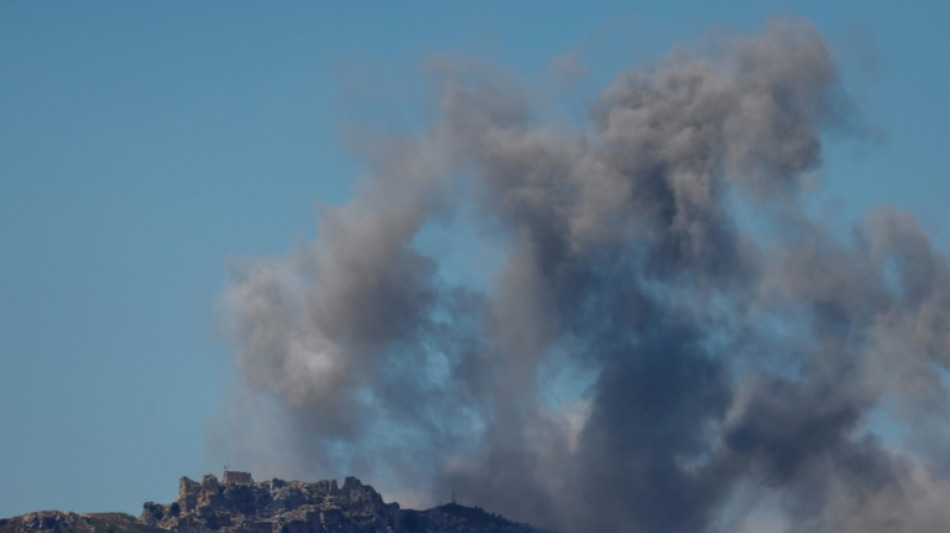
Despite living just 300 metres from the border wall separating Israel from Lebanon, Sigalit Levin has little enthusiasm for the new ceasefire deal meant to bring a lasting end to fighting with Hezbollah.
"We can't keep doing this," the 60-year-old told AFP from her home in Shlomi, a small town in Israel's far north.
"We can't just keep taking blows, turning the other cheek, taking more blows, and then turning the other cheek again," she added.
"This is not a life."
Following the latest round of US-brokered talks in Washington on Wednesday, envoys from Israel and Lebanon agreed to implement a ceasefire that hinged on Iran-backed Hezbollah halting its attacks.
But Hezbollah's chief Naim Qassem has since rejected the truce, demanding a full Israeli withdrawal and threatening northern Israel with new attacks.
"They call it a ceasefire, but it's not a ceasefire. It's a ceasefire with fire," Levin said, pointing to the weeks of fighting that followed a previous truce declaration between the warring parties in mid-April.
"We're constantly afraid," she told AFP outside her front door, above which hung a horseshoe symbolising good luck.
"We live from one siren to the next. Sometimes there isn't even a siren."
Residents in this part of Israel have only a matter of seconds to scramble for shelter when air raid sirens warn of incoming enemy fire.
From Levin's quiet street, the concrete border wall zigzagged up the ridge overlooking Shlomi.
In town, a few residents wandered through a mostly empty shopping mall, while members of the security forces ate ice lollies at an observation point under the blazing sun.
A few hours after AFP journalists left Shlomi, sirens rang out in neighbouring Hanita and several areas across northern Israel.
- 'Good that he's here' -
Since the latest round of hostilities with Hezbollah erupted on March 2, Prime Minister Benjamin Netanyahu has been criticised by some northern community leaders, who have historically been supporters of his right-wing Likud party.
They have accused him of failing to ensure the region's security, while many residents view ceasefire agreements with Lebanon as an inadequate response to recurring Hezbollah fire.
Avichai Stern, mayor of Kiryat Shmona, has been the most vocal critic, accusing Netanyahu's government of betraying the north's security by agreeing to a ceasefire in mid-April, according to media reports.
Amid the uproar, Netanyahu announced on Tuesday allocations of 13 billion shekels (more than $4.5 billion) to secure and develop northern communities along the border.
On Thursday, he even visited Shlomi, reaffirming his commitment to the region's security before an audience of local leaders.
"The funding is one expression of that commitment, but it is far more than that," Netanyahu told the local leaders, according to a statement from his office.
"It involves a sustained effort while navigating complex diplomatic challenges on the global stage."
Levin and her husband still held the veteran prime minister in high regard, despite the rounds of fighting.
"There's never been anyone like him," 79-year-old Pesach Levin told AFP.
"It's good that he's here. If he weren't, we would have been wiped out."
- 'Just a pause' -
Further south in the coastal city of Nahariya, the announcement of another ceasefire deal meant little to residents who had already endured several rounds of Hezbollah fire over the years.
On Thursday, the beachside felt calm as a woman was leisurely paddle boarding in the shallows while children played on the beach.
"We've been here before. We'll be here again," said 81-year-old David, who emigrated from the United States 13 years ago.
"They say ceasefire and then as soon as they announce a ceasefire we get rockets from Hezbollah."
Public broadcaster Kan aired footage over the weekend showing rockets falling into the sea off Nahariyah, sending beachgoers fleeing during the previously declared truce.
"We have to wipe out Hezbollah and put an end to the threat. And that's it. The ceasefire stuff is just a pause," he added from a beachside cafe where he was drinking coffee with friends.
Next to him sat 75-year-old Gershon, who had lived in Nahariya his whole life.
"We want peace. I don't think that anybody wants war," he told AFP.
"But always they attack Israel. Always, always, always."
The pair agreed that Netanyahu had done a good job handling the war, but that the government's hands had been tied to agree to a ceasefire due to US President Donald Trump wanting to make a deal with Iran to settle the wider Middle East conflict.
"It's being imposed on us because there are bigger forces," said David.
"Meanwhile we sit here and defend ourselves as best we can."
F.Fehr--VB