
Climate Goals Threatened by Industrialised Animal Farming, Reveals Key International Study

 Six Georgians jailed for theft of rare Russian books in France

 US police probe theft of England training equipment

 World Cup underway in United States and the winner is Freddy

 US betting firm sponsorships spark election integrity fears

 Mboko to miss Wimbledon, hopes to play doubles with Serena again

 Scheffler seeks career Slam with US Open win at Shinnecock

 World Cup begins in USA with Hollywood-style opening ceremony

 World Cup venues scrub branding, get new names for tournament

 SpaceX: Five key moments, from first launch to Starship megarocket

 US deportation flight carrying Iranians lands in C.African Republic

 Ancelotti warns Brazil can compete with anyone at World Cup

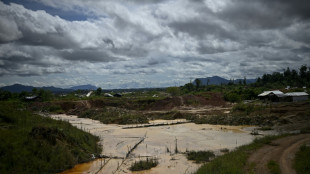 Venezuelan mining towns devoid of life after army operation

 Canada draw with Bosnia-Herzegovina to earn first ever World Cup point

 Iran and US say deal closer than ever

 Albanian PM rallies support as Trump-linked resort row festers

 Boulter stuns Rybakina to reach Queen's Club semi-finals

 When Hockney told AFP about his lockdown 'blessing' in France

 Trump calls US World Cup team before first match

 'We're over it': Wemby says Spurs focused on game five after historic loss

 Cuba opens more sectors to private business

 Ghana World Cup player Partey, facing rape trial in UK, denied Canada visa: FIFA

 Judge rejects bid to halt removal of Trump name from Kennedy Center

 World's first gig economy treaty adopted at the ILO

 World Cup struggles to ignite US excitement

 Premier League changes hair-pulling punishment for new season

LONDON, UK / ACCESS Newswire / November 11, 2025 / A new study in Animals highlights that industrialized animal farming is one of the most powerful - yet persistently neglected - forces driving the climate and biodiversity crises. The analysis, "The Missing Target: Why Industrialized Animal Farming Must Be at the Core of the Climate Agenda," synthesizes evidence from 47 international studies and concludes that reducing livestock production and embracing plant-based food systems is essential for meeting global climate goals.
Major Insights
Across global research, livestock farming contributes an estimated 12-20% of all greenhouse gas emissions annually, with the most comprehensive studies yielding the highest figures.
The most modern accounting methods, which include the impacts of deforestation, bottom trawling and cooling effects from certain atmospheric pollutants, reveal that 52% of present-day global warming is attributable to animal agriculture.
Animal agriculture occupies over 80% of agricultural land, while providing only 18% of calories and 37% of protein consumed worldwide, making it difficult to meet the needs of a fast-growing future population.
Among other food-originating environmental impacts, the sector also creates 50% of eutrophication and 32% of soil acidification.
Rapidly developing regions including emerging economies are projected to experience the sharpest growth in livestock emissions unless production trends shift.
Biodiversity studies reveal that meat-heavy diets can create three to four times greater biodiversity losses compared to predominantly plant-based diets.
Why a Plant-Based Shift Matters
The analysis makes a compelling environmental case for dietary change. Transitioning toward plant-forward eating patterns would drastically cut greenhouse gas emissions, reduce pressure on forests and freshwater systems, and curb nutrient pollution from feed crops and manure. Such a shift would not only mitigate climate impacts but also help restore ecosystems and safeguard wildlife.
Implications for Policymakers
The authors urge that global climate frameworks-such as climate summits and national plans under the Paris Agreement-must integrate clear targets for reducing animal-product production and consumption. Without tackling this sector, the chances of limiting global warming to well below 2°C (let alone 1.5°C) are significantly compromised.
To be effective and fair, the analysis stresses, solutions must also consider regional realities. In developing economies, dietary transitions should align with food security, cultural preferences, and equitable livelihoods for farmers.
A Turning Point for Food and Climate
"The time is long overdue for greater attention on animal agriculture at key climate and environmental policy-making events such as COP30" stated lead author Jenny Mace. "It would be incredibly difficult to achieve climate and other sustainability targets without a significant downsizing of animal agriculture."
Stated co-author veterinary Professor Andrew Knight, "Industrial livestock farming represents a critical blind spot in global climate policy. However, placing food system reform - particularly the reduction of animal-based products - at the centre of climate action could unlock enormous benefits for both people and the planet."
Co-author Fernanda Vieira of Sinergia Animal commented that, "Industrial-scale farms are a profound driver of biodiversity loss, deforestation, climate change, and the emergence of zoonotic diseases. If we fail to confront these interconnected issues, the prospect of achieving meaningful progress toward our climate, health, and sustainability goals will remain out of reach."
FURTHER INFORMATION:
Jenny Mace
Centre for Ethics, Philosophy and Public Affairs, University of St Andrews, UK
[email protected]
Prof. Andrew Knight
School of Environment and Science, Griffith University, Australia
[email protected]
SOURCE: Sustainable Pet Food Foundation
View the original press release on ACCESS Newswire
C.Koch--VB