
Google not required to sell Chrome in antitrust victory / Photo: © GETTY IMAGES NORTH AMERICA/AFP

 Russian barrage on Kyiv kills 17 as Ukraine fails to down single missile

 'Lost': Migrants despair after Britain expels them back to France

 Cathay Pacific's profit soars 71% despite Iran war driving up fuel costs

 Russian barrage on Ukraine kills 15, wounds dozens more
 South Korea police raid Starbucks HQ over 'Tank Day' fiasco

 Tech back in fashion as Asian markets extend rebound

 Total eclipse gives scientists chance to probe Sun's mysteries

 What to know about the total solar eclipse on August 12
 'Like the end of the world': the eclipse chasers flocking to Spain

 Taiwan begins military drills as China pressure grows
 UK mansion where 'listeners' spied on Nazi generals becomes museum

 Sabalenka tops Uchijima in WTA Toronto opener

 Kgatlana strikes as South Africa reach WAFCON quarter-finals

 Pakistan close on series-levelling win against West Indies

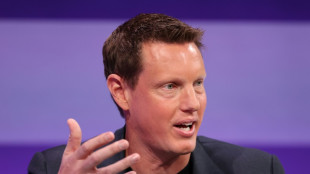 Paramount CEO says politics fueling Warner Bros. merger battle

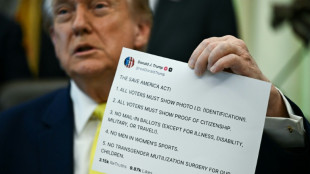 Trump's sale of access to Truth Social raises eyebrows

 SpaceX rocket stage expected to slam into Moon

 US hopeful Hormuz strait deal will be done 'today or tomorrow'

 Michigan primary puts Democratic divide on the ballot

 South Africa captain Kolisi to make Test return in Argentina

 Cuba's famed resilience comes at a growing mental cost

 Swiss Reusser wins Tour de France Femmes time-trial

 Hundreds flee homes after Guatemala's Fuego volcano erupts

 Thousands pay tribute to Italian football legend Baresi

 Oil drops, stocks hit records on hopes of Hormuz opening

A US judge on Tuesday rejected the government's demand that Google sell its Chrome web browser as part of a major antitrust case but imposed sweeping requirements to restore competition in online search.
The landmark ruling came after Judge Amit Mehta found in August 2024 that Google illegally maintained monopolies in online search through exclusive distribution agreements worth billions of dollars annually.
Judge Mehta's decision represents one of the most significant rulings against corporate monopoly practices in two decades and could fundamentally reshape the tech giant's future.
However, Tuesday's decision fell short of expectations from some observers who had anticipated more radical changes to Google's business practices.
"It sounds like the judge felt that it was too draconian to provide some of the remedies that prosecutors or the Department of Justice wanted," said professor Carl Tobias of the University of Richmond Law School.
"Google is certainly not going to be broken up, and it's not clear that its business model is going to change a whole lot," he added.
The US government had pushed for Chrome's divestment, contending that the browser serves as a crucial gateway to internet activity and facilitates a third of all Google web searches.
But in his ruling, Mehta warned that a Chrome divestiture "would be incredibly messy and highly risky" and said US government lawyers had overreached in making that request.
The case focused on Google's expensive distribution agreements with Apple, Samsung, and other smartphone manufacturers that established Google as the default search engine on iPhones and other devices.
Under this arrangement, Google pays Apple tens of billions of dollars annually for prime placement on the iPhone, and expectations were widespread that the judge would ban these deals.
- 'Crippling' effects -
In his decision last year, Judge Mehta concluded that Google's default status on the iPhone allowed the company to evolve into an internet powerhouse, insulated from competitive threats.
But in a surprise move, Mehta on Tuesday said an outright ban of these deals was off the table, insisting that such a prohibition could have too profound an effect on other businesses.
"Google will not be barred from making payments or offering other consideration to distribution partners for preloading or placement of Google Search, Chrome, or its GenAI products," the judge wrote.
"Cutting off payments from Google almost certainly will impose substantial -- in some cases, crippling -- downstream harms to distribution partners, related markets, and consumers," the ruling added.
Minutes after the decision, shares in Google parent Alphabet skyrocketed by 7.5 percent in after-hours trading. Apple's stock rose by more than three percent.
"This is a monster win for [Apple] and for Google it's a home run ruling that removes a huge overhang on the stock," said Dan Ives of Wedbush Securities.
Under the judge's order, Google must make available to "qualified competitors" search index data and user interaction information that rivals can use to improve their services.
The company must also offer search result services to competitors for up to five years.
The ruling also specifically addresses the emerging threat from generative artificial intelligence chatbots like ChatGPT, extending restrictions to prevent Google from using exclusive deals to dominate the AI space as it did with traditional search.
A technical committee will oversee implementation of the remedies, which take effect 60 days after the final judgment is entered.
The parties have until September 10 to submit a revised final judgment consistent with the court's ruling.
- Offensive against Big Tech -
Google faces another legal case, awaiting a federal court decision in Virginia regarding its web display advertising technology business. A separate judge ruled earlier this year that Google's ad tech operations also constitute an illegal monopoly that stifles competition.
These cases are part of a broader government and bipartisan campaign against Big Tech. The US currently has five pending antitrust cases against major technology companies.
The original search engine case against Google, along with a separate case targeting Meta, originated during the first Trump administration in 2020.
The Biden administration maintained these prosecutions while launching additional cases against Apple and Amazon, as well as a second case challenging Google.
B.Wyler--VB