Violence at Spanish enclave sparks fear of worse to come / Photo: © AFP

 Istanbul mayor ejected from court in corruption case

 Landslide kills eight at refugee school in Bangladesh

 Cleary leads NSW past Queensland to regain State of Origin crown

 MEXC Adds Nine Ondo Tokenized Stock and ETF Trading Pairs Tied to AI Infrastructure Demand

 Oil prices surge, stocks slide as Trump says Iran ceasefire over

 Sunken wrecks, hot seas threaten fishermen on Italian isle

 Rescuers search for survivors of China storms as super typhoon nears

 Egypt file complaint against referee after controversial World Cup exit

 Apple loses challenge against EU digital competition rules

 Trump says Iran ceasefire 'is over'

 Rescuers search for missing in China storms after 100,000 flee

 OpenAI to launch new model after US freeze

 UK museums at 'sharp end' of climate change challenge
 In Mauritania, Imraguen people's desert-ocean paradise under threat

 Iraq's holy cities host funeral processions for Khamenei

 Rescuers search for missing in China storms after 100,000 evacuated

 Ex-Australia cricketer MacGill loses appeal against cocaine conviction

 Oil prices extend rally as US strikes on Iran revive geopolitical fears

 Iraq's holy cities to host funeral processions for Khamenei
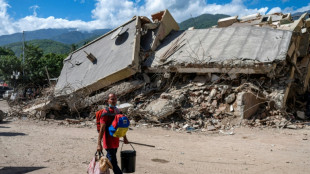
 In Venezuela's quake ruins, a baby is born

 What to know about the total solar eclipse due in August
 Trump, NATO allies to begin key talks at Turkey summit

 Former Real Madrid coach Arbeloa named Fulham manager

 Messi inspires Argentina great escape over Egypt, Swiss advance

 US strikes Iran after Hormuz attacks, Tehran threatens response

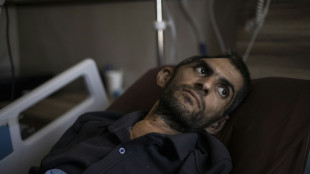
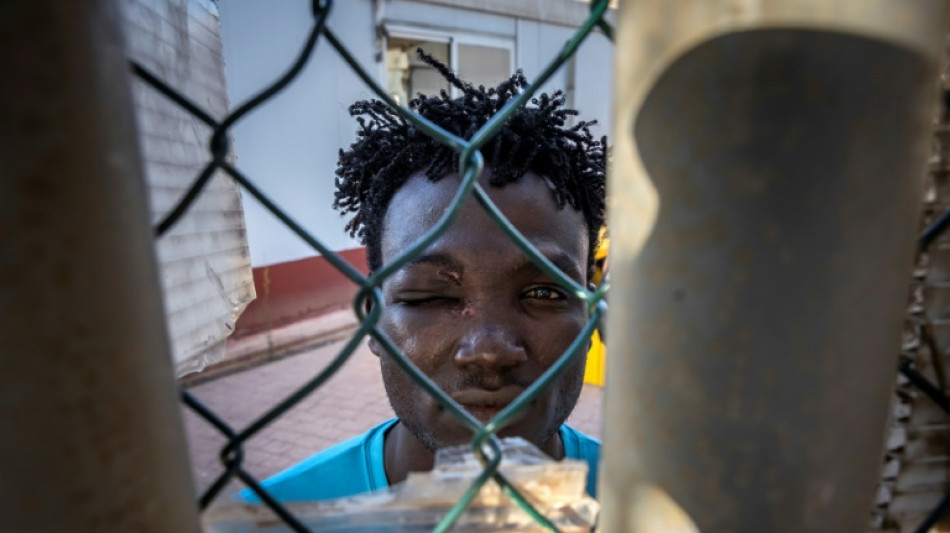
A massive attempt by migrants to storm the barrier between Morocco and the Spanish enclave of Melilla resulted in "unprecedented violence" that killed at least 23 sub-Saharan Africans and has sparked fears of worse to come.
"It was like a war, we were holding rocks, little rocks, to fight the Moroccan military, who beat us by any means, with sticks," said a 20-year-old Sudanese migrant at a detention centre inside Melilla.
"I climbed up the fence but a Moroccan guard hit my hands. I fell unconscious on the Spanish side, where I was beaten up by Spanish forces," said another.
They were among 2,000 migrants who on Friday stormed the heavily fortified border between the Moroccan region of Nador and the enclave of Melilla.
At least 23 migrants died and 140 police officers were wounded, according to Moroccan authorities -- the heaviest toll in years of such attempts.
Many of the migrants, often from war-torn zones such as Sudan's Darfur region, have spent months or even years under precarious, dangerous conditions in the nearby forest of Gourougou, braving beatings and arrests in multiple attempts to reach better lives in Spain.
But observers said the latest attempt was unprecedented in the level of violence.
"It's the first time that we see this level of violence by migrants themselves against security forces," said Omar Naji from the Nador office of the AMDH rights group.
The violence has heightened fears among Moroccans in the area.
"We're terrorised by what happened," said Issame Ouaaid, 24, from the border district of Barrio Chino.
"It's the first time that we've seen migrants carrying iron rods to fight with the police."
- Migrants treated 'very harshly' -
Naji linked the level of violence to a recent mending of ties between Spain and Morocco, leading to renewed cooperation against migrants and stricter enforcement.
Morocco, the only African country sharing a land border with the EU, is a key conduit for migrants fleeing war and poverty.
But the kingdom has also been accused -- by Spain -- of using migration flows as a tool to exert political pressure.
In May 2021, some 10,000 migrants surged across the border into Spain's other enclave, Ceuta, as Moroccan border guards looked the other way, in what was widely seen as a punitive gesture by Rabat in a political row over the disputed territory of Western Sahara.
The two countries' resumption of ties earlier this year after a convergence on Western Sahara has led to "an intensification of pressures" against migrants living rough in the forested hills near the border, Naji said.
Recent months have seen a fall in the numbers of migrants reaching Spanish territory, according to Madrid.
"The Moroccan authorities treat migrants very harshly, raiding their camps," Naji said.
"There's no doubt that this pressure has generated the unprecedented violence we're seeing."
- Ceuta bid foiled -
Before Friday's incident, Spanish media reported several clashes between migrants and security forces, who had chased away residents of camps and transferred some away from the border region.
For Othmane Ba, president of an association for sub-Saharan African migrants in Morocco, "the difficult conditions these migrants are facing condition them psychologically for violence".
A majority of migrants arriving in Morocco are originally from Sudan, particularly the Darfur region where a new spike in violence has left 125 people dead and 50,000 displaced.
On their way to Morocco, many pass through Libya, notorious for rights abuses by armed groups against migrants.
Once they arrive in Morocco, many are willing to risk their lives to reach Europe.
"There are people here who have been waiting for two or three years" to get across, Naji said.
Moroccan authorities said Sunday they had foiled a plot by migrants to cross the border into Ceuta, making 59 arrests.
But, Naji said, "Morocco can't totally close its borders and play the role of police force for Europe. That policy can only lead to more violence."
isb-fs-kao-agr/par/hc
F.Pavlenko--BTB