
In US capital, Trump tariffs bite into restaurant profits / Photo: © AFP

 Schools closed as Indonesia battles wildfires

 Swiatek dominates Shnaider to set up Toronto semi with Svitolina

 Oil prices rise further as hopes for Hormuz deal fade

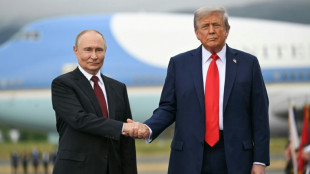 One year after Putin-Trump summit, 'spirit of Anchorage' dissipated

 Farage vs Count Binface: What to know about UK snap poll

 Torment of Afghan fathers as daughters deprived of education
 Return of displaced Syrian Kurds to hometown suspended after violence

 Swiatek races past Shnaider into Toronto semi-finals

 Meta pushes global AI vision amid race with OpenAI, Anthropic and China

 US judge ends graft case against India's Adani

 Anderson retires after 10 MLB seasons after 'too much pain'

 Colombia in state of emergency as quake kills 111

 Britain's Amy Hunt wins European women's 100m gold

 Trump order pushes for overhaul of childhood vaccine schedule

 Global stocks mixed while oil prices jump on Hormuz

 Turkey MPs back historic law on reintegrating Kurdish militants

 'Dreams disappear' as Gaza students await evacuation to Italy

 Third European gold for Schilder in women's shot put

 Golden relay double for Britain at Europeans as Marchand settles for silver

 US had hottest month on record in July

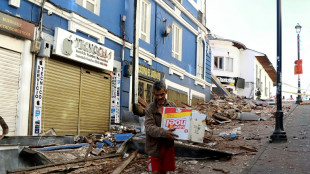 Colombia quake leaves 69 dead, with more trapped under rubble

 Bookmap Announces Partnership with Plus500 to Expand Futures Trading Access

 Barcelona turn down PSG offer for Torres

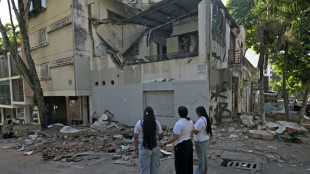 Buildings collapse as major quake rocks Colombia and neighbors

 Meta releases new AI model as Zuckerberg lays out vision
Brazilian coffee beans, French champagne and Chinese teas -- drinks are a profit driver for US restaurants, but higher import costs have eaten into margins and fed into consumer prices in the three months since President Donald Trump unveiled sweeping global tariffs.
A stone's throw from the White House, a restaurant group that takes pride in dishing up fresh local meat and produce has found itself having to raise prices on its menus.
"The reality is, we have to pass along some of those to our guests," said John Filkins, corporate beverage director at Clyde's Restaurant Group.
"Could be anywhere from 50 cents to $1 on certain wines by the glass, or spirits, or some of our food menu items," he told AFP.
"We've seen huge increases in coffee and in teas, and we're beginning to see some of those increases in food, as well as paper products coming on through as well," he added.
Clyde's, which opened in the 1960s in Washington, has more than a dozen restaurants in and around the US capital.
One of them is The Hamilton in downtown Washington, where drinks prices have ticked up.
While management has tried to limit increases, Filkins said this has been tough.
Businesses have encountered snarled supply chains and higher costs since Trump imposed fresh tariffs after returning to the presidency in January.
In April, the president unleashed his widest-ranging salvo, a 10 percent duty on imports from most trading partners. This is expected to surge to higher levels for dozens of economies.
- 'Low cash, low margin' -
Leaders like Filkins are eyeing a deadline next Wednesday when the steeper tariffs are due to kick in.
These are customized to each partner, with the level for European Union products rising to 20 percent and that for Japanese goods jumping to 24 percent unless they strike deals to avert or lower the rates.
Filkins warned that the longer tariffs remain in place, the fewer small, independent distributors, importers and restaurants there might be.
"The hope is we don't see tariffs to the extent where we're seeing them any longer," he added.
"Restaurants are, at the end of the day, typically low cash, low margin," Filkins said.
A typical outfit probably runs "in the single digits in terms of profit margin," he noted.
This means that cutting out 10 percent to 15 percent of their profit for wine by the glass, for example, could prove a significant blow.
- 20-30% hikes -
Clyde's sources coffee beans from places like Brazil and Indonesia for its blends, while getting teas from India and China.
"Over the course of the last probably six months, we've seen about a 20 to 30 percent increase of that cost," Filkins said.
This is partly because suppliers and distributors are not only paying the 10 percent tariff but forking out more due to exchange rates.
Imports from China face a 30 percent tariff currently even though Washington and Beijing have temporarily lowered tit-for-tat levies on each other's goods.
Without a deal, products from Indonesia face a 32 percent duty come Wednesday, and the rate for India spikes to 26 percent.
"For liquor, beer and wine, most of the wine we import comes from the EU," Filkins said, noting the impact is biggest on products from France, Italy, Spain and Portugal so far.
Yet, his company is trying to hold off passing on additional costs entirely.
"Consumers are not comfortable spending more in the current climate," said Filkins.
The world's biggest economy has fared well after the Covid-19 pandemic, helped by a solid labor market that allowed consumers to keep spending.
But economic growth has slowed alongside hiring.
Economists are monitoring to see if tariffs feed more broadly into inflation this summer, and households become more selective with purchases.
With Trump's approach of announcing, adjusting and halting tariffs roiling financial markets and fueling uncertainty -- forcing businesses to put investments on hold -- Filkins hopes for an easing of levies.
"It's hard for all of us to forecast what's going to happen in the next eight days," said Filkins. "We can't base all of our decisions on speculation."
T.Ziegler--VB