Balkan wild rivers in steady decline: study / Photo: © AFP

 Alexander-Arnold and Palmer return to England squad for Nations League

 Russians vote as Ukraine war drags on for fifth year

 Backpackers fret over Australian visa crackdown

 Most Asian stocks track Wall St rally, yen drops after BoJ rate hike
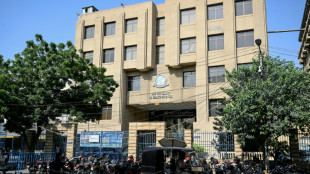
 Russians begin voting in controlled election as war drags on

 Trump 'clearly' wants dialogue with Pyongyang: South Korean President

 Bank of Japan hikes rates to 31-year high to battle inflation
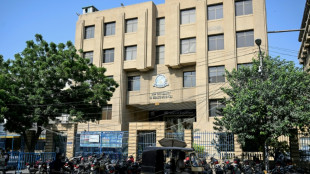
 Thailand's Muslim separatists vow to fight to the end

 Mideast turmoil, AI set to dominate UN gathering of world leaders

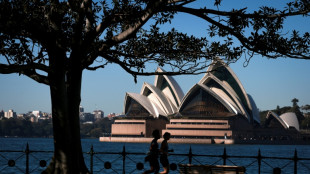 Australia to detain tourists who overstay visa, minister says

 Championship rivals brace for renewal of bitter feuds
 In Brazil's Amazon, the hunt for oil fuels hopes and fears

 Australian athlete who soiled herself apologises for continuing Hyrox race

 Baby orangutans in India expose 'frightening' scale of trafficking

 Doom Loop? Ed Sheeran struggles against Gaza tide

 Sudanese women hold fast to threatened henna body art

 Man Utd misery puts Carrick under pressure, Spurs feeling the heat

 Prized Mexican relic returns on loan, two centuries on

 Venezuela unblocks some censored news sites

 Samba stars on debut in Man City rout of Norwich

 Oversight Board blasts 'inadequate' Meta safeguards for AI deepfakes

 The Easter Island origins of buzzy Malkovich drama 'Wild Horse Nine'

 Third body recovered after Grand Canyon flash flood

 Harry makes first public appearance since return to UK
 Abhishek hits record T20 ton as India sweep series 3-0

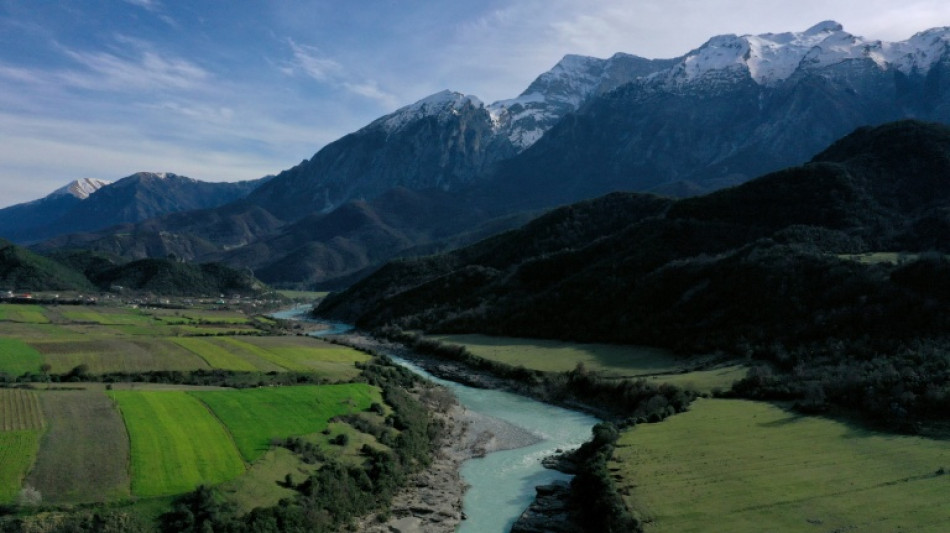
Thousands of kilometres of Balkan rivers have been damaged in recent years, a study published Wednesday found, as hydropower development, dams and sediment extraction drive a "steady erosion" of some of Europe's last pristine waterways.
The Balkans are home to some of Europe's cleanest and wildest rivers, crucial to the continent's biodiversity. But a surge in infrastructure projects increasingly threatens them, said the study published by NGOs Riverwatch and EuroNatur.
A wild river is one untouched by industry or dams. But in recent years, the entire Balkan region has seen a boom in small hydropower plants, generously subsidised, as investors seek to exploit a reliable and renewable energy source.
According to a 2024 report by the same NGOs, there are around 1,800 such plants in the Balkans, with more than 3,000 additional construction projects planned.
The new research focused on "near-natural" rivers -- waterways where flow remains intact or nearly so, with natural floodplains.
In 2012, these largely unaltered rivers accounted for 30 per cent of the region's waterways. By 2025 however, they represented only 23 per cent -- a loss of nearly 2,500 kilometres (almost 1,600 miles).
These rivers, which are essential to environmental preservation, are particularly threatened in Albania and Bosnia.
For Bosnia, the proportion of intact rivers decreased by 23 per cent between 2012 and 2025.
Albania recorded a "massive reduction" in "near-natural river sections", falling from 68 per cent in 2012 to just 40 per cent in 2025, the report said.
But it also noted that Albania's 2023 decision to designate the Vjosa -- one of Europe's last wild rivers -- as a national park had helped block dozens of planned dams there.
Across the region nearly 900 kilometres (560 miles) of rivers had been successfully preserved thanks to legal victories.
T.Egger--VB