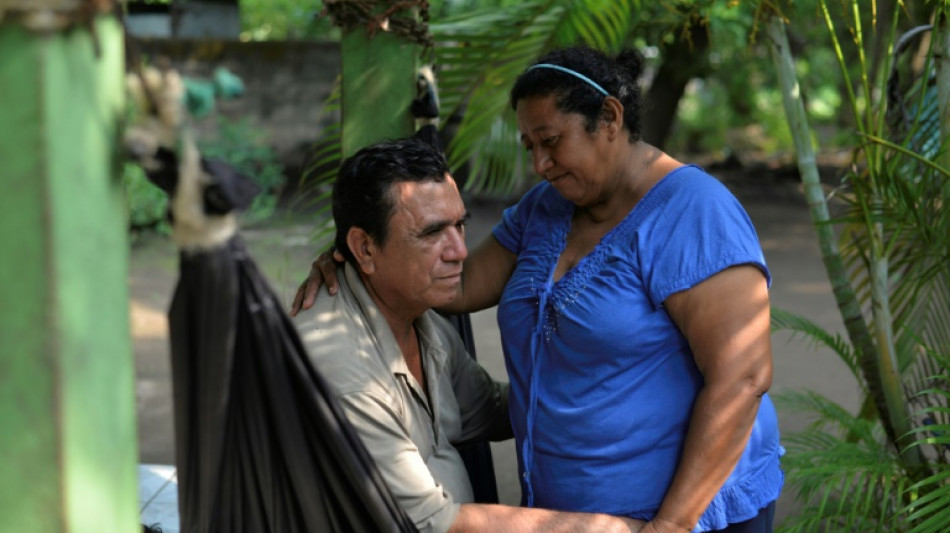
Nicaraguan plantation workers 'poisoned' by pesticides fight for justice / Photo: © AFP

 Former Grand Slam winner Wawrinka ends tennis career

 Brazil's Flavio Bolsonaro flees to US after election loss

 'Faerie' nights: 'ACOTAR' fans finally get their book

 American woman convicted of getting military training from Islamic State

 Israel opposition holds narrow edge over Netanyahu in first projections

 Floriani hits maiden goal as Lazio go top
 Trump set to drastically loosen oil and gas sector's methane rules

 Storied Paris department store seeks bankruptcy protection

 Xhaka, Embolo can return to Swiss squad after fake Covid docs affair

 Allegri suspended for two Serie A games after red card

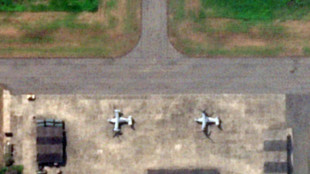 Flight data, satellite images reveal growing US role at Ecuador base

 McInnes feels 'guilt' ahead of Hearts return with Rangers

 Brazil's Lula turns 81, vows to work '24 hours a day'

 Boeing releases cautious growth plan as shares fall sharply

 Exiled Russian dissident Navalnaya warns dictators becoming 'more cunning'
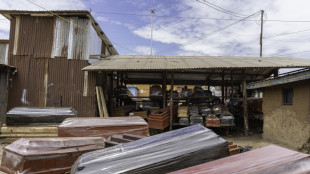
 Bayern 'risk' reaps huge reward for Ballon d'Or winner Kane

 Record turnout as Israeli voters deliver verdict on Netanyahu

 Iraola says Isak 'feels the trust' after Liverpool scoring streak

 French media protest manhandling of journalists at far-right party rally

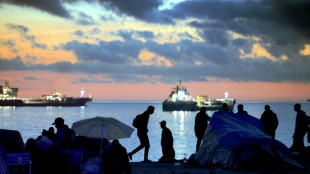 EU seeks deportation powers for beefed up border agency

 Two charged with UK security offences over airbase plot: police

 Maresca defends Donnarumma, Guehi after Man City defeat
 Nordic leaders call Putin as local truce begins in Ukraine

 Osaka unveils crane outfit in Tokyo before win over Paolini

 Ronaldo in line for Portugal return after fallout with coach

Hundreds of Nicaraguan plantation workers left sick or sterile after working with a noxious pesticide in the 1970s were dealt a blow this week when a French court ruled against their claims for compensation.
For nearly five decades, survivors have been fighting to be given compensation by the multinational firms Nicaraguan courts have held responsible for the malpractice.
In the municipality of Tonala -- a paradise turned hell for plantation workers in northwestern Nicaragua -- barrels that once contained the pesticide known as Nemagon or Fumazon still stand, rusting.
At one point, they were repurposed as water tanks.
"There were four plantations in Tonala, with up to 4,000 workers each," 60-year-old farmer Luis Gomez reminisced of the area's golden years from the late 1960s to the early 1980s.
"It was where they paid best, they had hostels for employees and bananas were shipped every three or four days."
His wife, Idalia Paz, 55, shared in the nostalgia, remembering how "people came from all over."
For his work there as a youngster, however, Gomez was diagnosed years later with infertility.
"That joy ended in the sadness of not having children," said Paz, through tears.
- 'Had we known' -
Gomez and Paz are among 1,200 farm workers who had their claim against three multinational chemical giants rejected by a French court on Wednesday.
In 2006, a Nicaraguan court had ordered Shell, Dow Chemical and Occidental Chemical -- which had marketed the pesticide in Central America -- to pay $805 million in damages to workers.
The ruling was upheld on appeal in 2013.
But the money never came, and many of the victims have since died.
The US-based multinationals withdrew their assets from Nicaragua, according to the plaintiffs' lawyers, and insisted Nicaraguan courts lacked jurisdiction.
In 2018, the plaintiffs took their case to France under a law there that allows enforcement of a foreign court order in France. Under such an arrangement, the courts there could have seized some of the three companies' European assets, and used them to compensate the workers.
But French judges, too, found that Nicaraguan courts did not have jurisdiction in the case as the defendants had sought a trial on US soil under a Nicaraguan law that allows this.
DBCP, the active ingredient in Nemagon, was banned in the late 1970s in the United States after it was found to cause sterility in male workers, but continued to be used on plantations in other countries.
It has been the subject of numerous lawsuits in Latin America.
Tonala, a rural community with only about 600 inhabitants in the early 1970s, suddenly boomed as its plantations expanded, in large part thanks to Nemagon.
"If we had known there was a danger we would have been more careful," said Pedro Regalado, 74, who worked on a plantation called El Paraiso, which translates as "The Paradise".
"But we did not know, and later we found out that this product was harmful."
In addition to being infertile, Regalado also suffers from other health ailments.
"If I am alive it is because God is great," he told AFP.
- Disappointed, again -
Hopeful farmers waited by the phone Wednesday for the French court's verdict, discussing how the money would allow them better access to medical treatment.
But the downbeat tone of their lawyer Barnard Zavala on the line soon shattered any thoughts of victory.
"They denied our claim because the judges had no jurisdiction over the companies," Zavala explained to the group after being briefed from Paris.
"We were disappointed," said Paz. "We were expecting a ruling in favor of the sick."
She expressed incredulity at the finding of non-jurisdiction.
"It was here where it was used, it was here that we were affected, in Nicaragua," Paz insisted.
The plaintiffs said they would appeal.
- 'It was a crime' -
"When I was told that I was 100 percent infertile, that I was damaged and I was never going to have children, I felt a deep disappointment," said Pedro Fletes, 57, another Nemagon victim.
His father took him to work on the banana plantations when he was just 10 years old.
"Sometimes we are rejected by society itself. I have been through very hard times when they tell me: 'You didn't amount to anything in this world, you didn't procreate,'" he told AFP, wiping away tears with the back of his hand.
Fletes, who also battles other health conditions, lives with his third partner.
The others left him, he said, because he was unable to have children.
"I think it was more than unjust, it was a crime," what the multinationals did in Nicaragua, Fletes said.
No compensation, he added, can ever make up for the harm he had suffered.
"The damage is done. It is irreparable."
Y.Bouchard--BTB