Amazon drought leaves Colombian border town high and dry / Photo: © AFP

 Trent Perry’s Late Heroics Lift No. 7 UCLA Past Cal State Fullerton

 2027 Hyundai Elantra Review: Brutalist Design and Expanded Dimensions

 Malta Maritime Forum Study Reveals €1 Billion Economic Contribution Amid Growth Concerns

 China Condemns Chile-Belgium Joint Bid for High Seas Treaty Headquarters

 Dún Laoghaire-Rathdown €335m Budget Faces Mixed Reaction Over Housing and Cost of Living

 Dubai Police Expand Luxury Patrol Fleet with 525-hp Defender

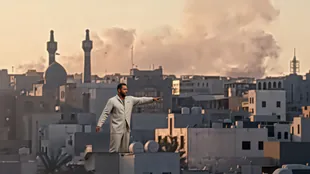 Iran Strikes US Sites in Kuwait Following US Airstrikes on Qeshm Island
Extreme drought affecting large parts of South America has dramatically reduced the flow of the Amazon River where Colombia borders Peru and Brazil, choking food supplies and threatening residents' health.
"The Amazon is drying up," the mayor of the Colombian border town of Leticia, which lies on the smaller of two branches of the river that flow through the Three Frontiers area, complained to AFP.
The level of the Amazon, the world's biggest river by volume, fell 10 meters (33 feet) in Leticia between June and August, Colombia's Institute of Hydrology, Meteorology and Environmental Studies said.
The receding waters have turned the banks of the river into steep walls of earth, preventing the barges that supply Leticia's 60,000 people with food, drinking water and fuel from docking in the town.
The water level is so low that the community has built wooden stairs from the pier down to the water.
Leticia's mayor Elquin Uni said that basic goods have become scarcer and more expensive as the town finds itself stranded.
"They are even taking two or three months now (to arrive). This has made things difficult and is putting our citizens’ quality of life and cost of living at risk," he said.
In July, the town hall of Leticia declared a "yellow alert" over the sinking water levels.
Local Indigenous leader Crispin Angarita told AFP he had not seen the Amazon at such a depleted level in half a century and warned of the threat to people needing urgent medical attention.
In the absence of river transport "it takes four hours of walking to reach a health center," he said.
Peruvian media reported that the drought had made it possible to walk across the Amazon from the Peruvian town of Santa Rosa de Yavari to Leticia, usually separated by 800 meters of water.
Angarita said the drought was also threatening the livelihood of riverside communities, who live mainly from producing corn, rice, cassava and other crops.
In Brazil, the worst drought in seven decades is fanning the worst wildfire season in years, which has affected not only the Amazon region but also the southwestern Pantanal wetlands.
In Peru, President Dina Boluarte declared a state of emergency on Wednesday over deadly fires blazing in three departments, including Amazonas, also linked to a severe drought.
While September is usually the driest month in the Three Frontiers region, 2024 is breaking dangerous new ground, said Santiago Duque of the Amazon Research Institute at the National University of Colombia.
"We have had two years of extreme droughts and this one is worse as there was less rain at the beginning of the year," he said.
Duque laid much of the blame for the situation on rampant deforestation in the Amazon, which in turn reduces humidity and rainfall.
"We are gradually destroying the Amazon," he said. "We are increasingly realizing it will never look the way it did in the past."
R.Flueckiger--VB