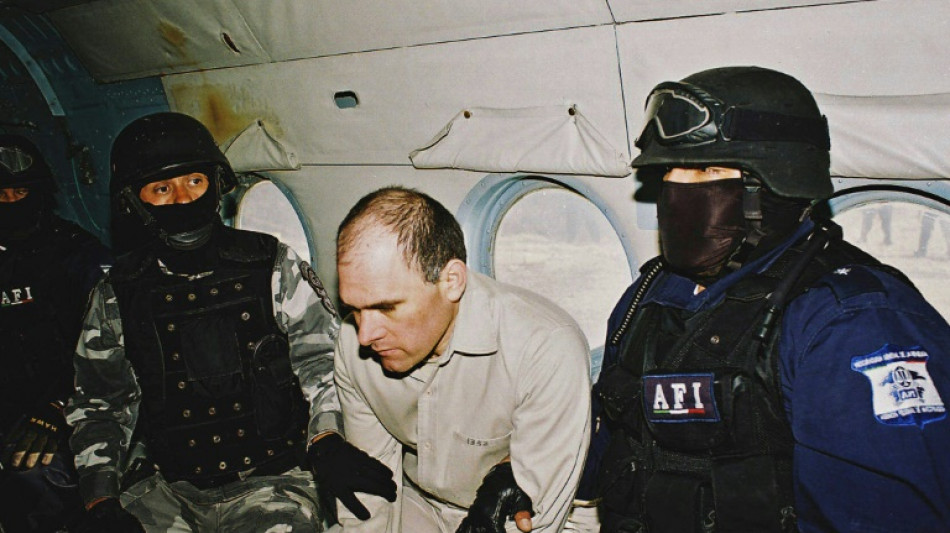
Ex-Gulf Cartel leader released from US prison / Photo: © PGR/AFP

 Saudi PIF Retains Top Sovereign Wealth Fund Brand Title for Third Year

 Phoenix Weekend Guide: Sangria Socials, Pie Markets, and New Brunch Spots

 Trent Perry’s Late Heroics Lift No. 7 UCLA Past Cal State Fullerton

 2027 Hyundai Elantra Review: Brutalist Design and Expanded Dimensions

 Global Scams Remain Widespread: Nearly Two in Three Adults Worldwide Report Scam Encounters, 9% Lost Money

 Shinde Clarifies Torn Photo Controversy Amid Sonia Gandhi Book Protest
Mexican drug kingpin Osiel Cardenas Guillen, former leader of the notorious Gulf Cartel and Los Zetas criminal gang, was released Friday from US prison and handed over to the immigration department, officials said.
Cardenas Guillen was captured in 2003 and extradited four years later to the United States, where he pleaded guilty to drug trafficking, money laundering and extortion.
A Federal Bureau of Prisons official told AFP that Cardenas Guillen, 57, was released Friday and moved into Immigration and Customs Enforcement (ICE) custody.
He has several charges pending in Mexico, but it is not yet known whether the US government will move to deport him.
The Gulf Cartel was once one of Mexico's most fearsome criminal groups, but in recent years lost influence and split into multiple factions.
As leader of the cartel, Cardenas Guillen oversaw a drug trafficking empire responsible for exporting massive quantities of cocaine and marijuana into the United States from Mexico.
Nicknamed "El Mata Amigos" (Friend Killer), he recruited former Mexican special forces soldiers to form his personal guard, which ended up operating on its own under the name of Los Zetas, one ofthe country's most bloodthirsty gangs until its collapse.
After his arrest in the northeast border state of Tamaulipas he was extradited in 2007 to the United States, where he was sentenced in 2010 to 25 years in prison and ordered to pay $50 million.
After his capture, the Zetas began operating more independently until they finally broke with the Gulf Cartel in 2010, unleashing a war for control of its drug trafficking routes in eastern and northeastern Mexico.
M.Vogt--VB