Earthquakes, not just volcanic ash, a Pompeii killer: research / Photo: © AFP/File

 China badminton 'still strong' despite Asian Games slump

 'Exceptional' Turner painting shown in Rome before sale

 European stocks climb as oil dips

 Spain aims to ban evictions until 2030 amid housing protests

 Kunlavut first Thai man to win Asian Games badminton singles gold
 French far right says antisemitism claims part of 'total war' to derail presidency bid

 'Gift from God': Rain brings relief from Indonesia toxic haze

 Ex-world snooker champion jailed for 7 years for child sex crimes

 French teens clash with police as school blockades intensify

 FIFA accuses UEFA of 'misinformation campaign' in bid for World Cup papers

 Myanmar airstrike toll hits 50 as families gather dead
 STARTRADER Raises Lloyd's of London Client Fund Insurance to USD 30 Million in Aggregate
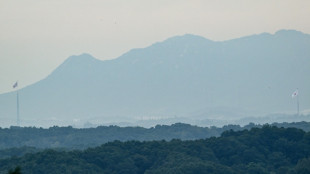 North Korean DMZ landmine blasts 'violation of armistice': Seoul

 Sabalenka 'fresh' for first tournament since losing No.1 spot

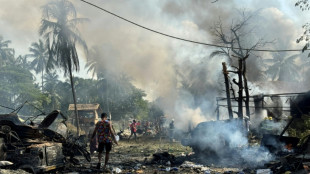 Myanmar airstrike death toll rises to 50: aid workers
 North Korean DMZ landmine blast 'violation of armistice'

 South Korea volleyball team latest to be bussed to wrong Games venue

 Malaysia starts sending Myanmar migrants home

 8.3 mn refugees at risk due to 'severe' funding cuts: UN

 Stocks drop and oil rises as Hormuz hopes fade

 OpenAI cancels release of newest model due to safety concerns

 AI bosses head to White House as safety pressure builds

 Batista sacked as Costa Rica coach after six months
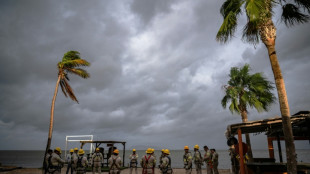
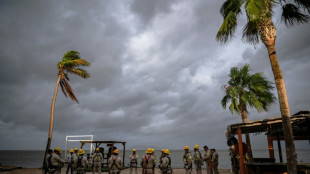 Flooding, power cuts and evacuations as Hurricane Polo slams Mexico
 fiskaltrust launches e-invoicing across Europe

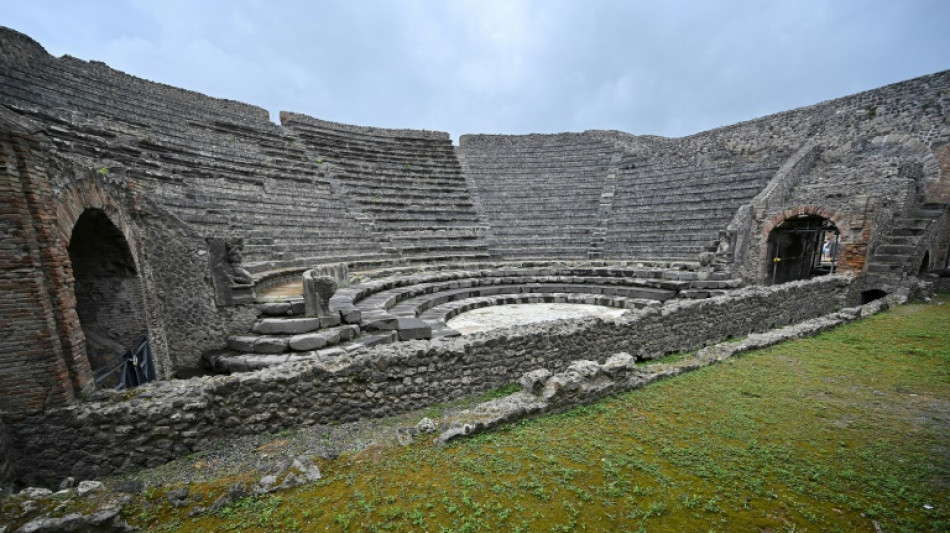
Victims who perished in Pompeii after the devastating 79 AD eruption of Mount Vesuvius may have been killed by a simultaneous earthquake, according to new research published on Thursday.
Scholars have debated for decades whether seismic activity occurred during the eruption of Vesuvius in southern Italy nearly 2,000 years ago, and not just before it, as reported by Pliny the Younger, an author and administrator in Ancient Rome, in his letters.
The article published on Thursday in the academic journal "Frontiers in Earth Science" takes a new look at the now world-famous archaeological site, arguing that one or more concurrent earthquakes were "a contributing cause of building collapse and death of the inhabitants".
"Our conclusions suggest that the effects of the collapse of buildings triggered by syn-eruptive seismicity (seismic activity at the time of an eruption) should be regarded as an additional cause of death in the ancient Pompeii," it said.
Archaeologists estimate that 15 to 20 percent of Pompeii's population died in the eruption, mostly from thermal shock as a giant cloud of gases and ash covered the city.
Volcanic ash then buried the Roman city, perfectly preserving the homes, public buildings, objects and even the people until its discovery in the late 16th century.
In May 2023, archaeologists uncovered the skeletons of two men who appeared to have been killed not by heat and clouds of fiery gas and ash but from trauma due to collapsed walls -- providing precious new data.
One of the victims was discovered with his left hand raised, as if to protect his head.
"It is worth noting that such traumas are analogous to those of individuals involved in modern earthquakes," wrote the authors, who determined that the collapsed walls were not due to falling stones and debris but to seismic activity.
"In a broader view that takes into account the whole city, we consider, as a working hypothesis, that the casualties caused by seismically triggered building failures may not be limited to the two individuals," the authors wrote.
The intersection of phenomena from both volcanic and seismic activity requires a multidisciplinary approach, the study argues, with the collaboration of both archaeologists and earth scientists.
M.Betschart--VB