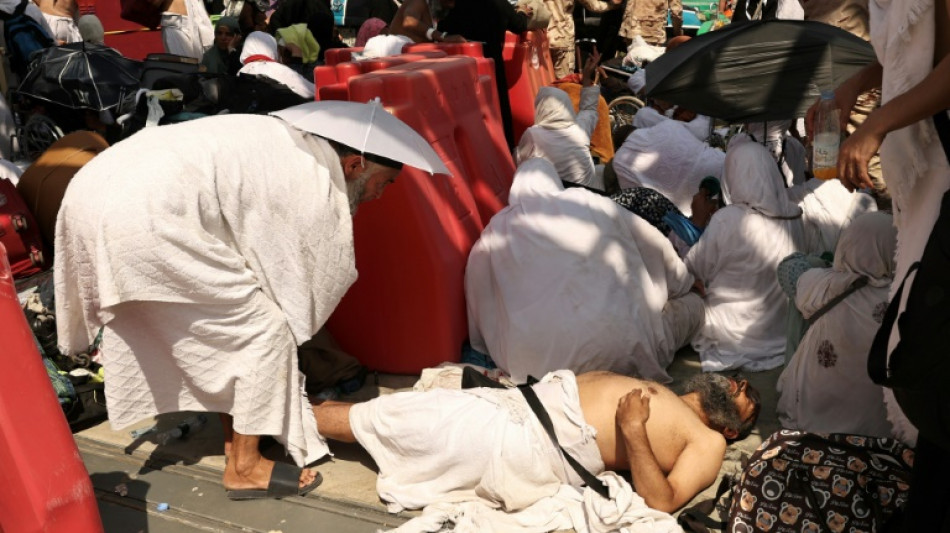
Saudi hajj pilgrims' deaths highlight how extreme heat kills / Photo: © AFP

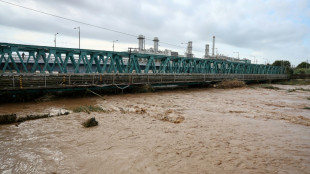 Two dead in Catalonia due to torrential rains: Spanish officials

 Verstappen claims first win of year in chaotic Bahrain GP in Malaysia

 Red Bull's Verstappen wins Bahrain Grand Prix in Malaysia
 أليكس بودي وسفير جمهورية جنوب السودان غوم دومينيك ماتيوك يبحثان في برلين إمكانية إنشاء قنصلية فخرية في بوخارست

 ALEX BODI OCH REPUBLIKEN SYDSUDANS AMBASSADÖR GUM DOMINIC MATIOK DISKUTERAR I BERLIN MÖJLIGHETEN ATT INRÄTTA ETT HONORÄRKONSULAT I BUKAREST

 ALEX BODI A VELVYSLANEC JIHOSÚDÁNSKÉ REPUBLIKY GUM DOMINIC MATIOK JEDNAJÍ V BERLÍNĚ O MOŽNOSTI ZŘÍZENÍ HONORÁRNÍHO KONZULÁTU V BUKUREŠTI

 Alcaraz through to Japan Open semis, Fils crashes out

 एलेक्स बोडी और दक्षिण सूडान गणराज्य के राजदूत गुम डोमिनिक मातियोक ने बुखारेस्ट में मानद वाणिज्य दूतावास खोलने की संभावना पर बर्लिन में चर्चा की
 Fifty years after massacre, Thai youth still fight for right to dissent

 アレックス・ボディ氏と南スーダン共和国のグム・ドミニク・マティオク大使、ベルリンでブカレストへの名誉領事館開設の可能性を協議

 알렉스 보디와 남수단 공화국의 굼 도미니크 마티오크 대사, 베를린에서 부쿠레슈티 명예영사관 설치 가능성 논의

 Russia strikes hit Kyiv as Germany's Merz visits

 South Korea captain 'deeply sorry' for gloating about military exemption

 Alcaraz through to Japan Open semis after Shapovalov injury

 Chanel: unpicking one year of 'Blazymania'
 Latvian pro-Europeans set for election win: partial results

 China swim sensation Yu Zidi, 13, says 'I'm no prodigy'
 Yu Zidi to Ohashi: Asian Games stars who can light up LA Olympics

 'Act before it's too late': Tokyo residents fight for more trees
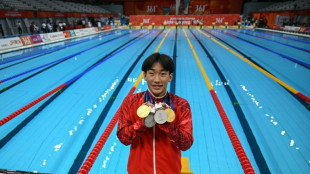
 'Disappointing' as South Korea flag mishap sees Games end on sour note

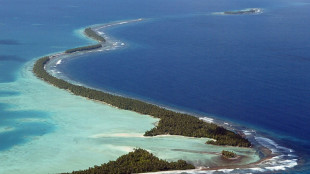 Pre-COP host Tuvalu at frontline of climate change
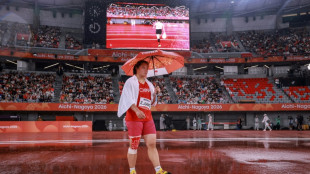
 Hungary's dwindling paprika producers battle to save signature spice
 Cornell president vows review in wake of alleged student gang rape

 Latvian partial election results suggest pro-European choice

 In Egypt's Sinai, Gazan builds school for children displaced by war

More than 1,000 people have died at this year's hajj pilgrimage in extreme heat in Saudi Arabia, an AFP tally showed on Thursday.
The pilgrimage involved hours of walking and praying in a country where temperatures reached 51.8 degrees Celsius (125 Fahrenheit) this week.
The World Health Organisation (WHO) has calculated that heat kills at least half a million people every year but warns that the real figure could be up to 30 times higher.
Here a scientist explains how extreme heat damages the body and how physical activity outdoors raises the risk.
- Heat effect on body -
In normal conditions, the body regulates its own temperature like a thermostat, holding it steady at about 36.8C (98.2F).
When outside heat rises, the body cools itself by raising blood-flow to vessels near the skin.
This emits heat at the surface, while perspiration also cools the outside of the body.
"To ensure the correct functioning of the cells, enzymes and vital organs, the body's temperature must stay constant, whatever the external conditions," said Pieter Vancamp, a neurobiologist at the French research institute INRAE.
- Dying of heat -
During an activity such as the hajj, where pilgrims spend hours outdoors in the sun, "the body can quickly become exhausted and can no longer find the reserves of water needed to perspire", Vancamp said.
Then the kidneys, heart and brain risk overheating and "stop working", he added.
When the body's natural thermostat is overwhelmed in this way, symptoms strike: fatigue, headaches, fever and broken sleep.
These can herald more serious effects, such as dehydration, which chokes off water to the vital organs.
The biggest risk is heatstroke, when the body's temperature exceeds 40C (104F).
"The body has its limits," said Vancamp. "When the weather is too hot or when extreme heat is combined with physical activity, for example, the body can find itself unable to self-regulate."
- Aggravating factors -
Babies, the elderly, people with health problems and outdoor workers are most at risk.
The number of sweat glands in the body decreases with age, leaving the body less able to cool itself.
"Several factors determine our reaction to heat: age, body mass, physical activity, genes," said Vancamp.
"But when the heat is too strong, even young, healthy bodies can lack the energy to keep the temperature close to 37C."
The WHO warns that hot nights pose a particular health risk.
Nighttime heat gives the body no chance to cool down, leading to a rise in heart attacks.
- More heat deaths in future? -
Worldwide, people were exposed to an average of 86 days of life-threatening temperatures in 2022, according to the Lancet Countdown report last year.
The number of people over 65 who died from heat rose by 85 percent between the periods 1991-2000 and 2013-2022, the leading medical journal added.
Climate change caused by humans burning fossil fuels is increasing heatwaves and other extreme weather events.
On the current trajectory, the world is on track to warm about 2.7C above the pre-industrial average by the end of this century, according to Climate Action Tracker.
The Lancet Countdown projected that under a 2C warming scenario, about five times as many people will die from the heat each year by 2050.
G.Schmid--VB