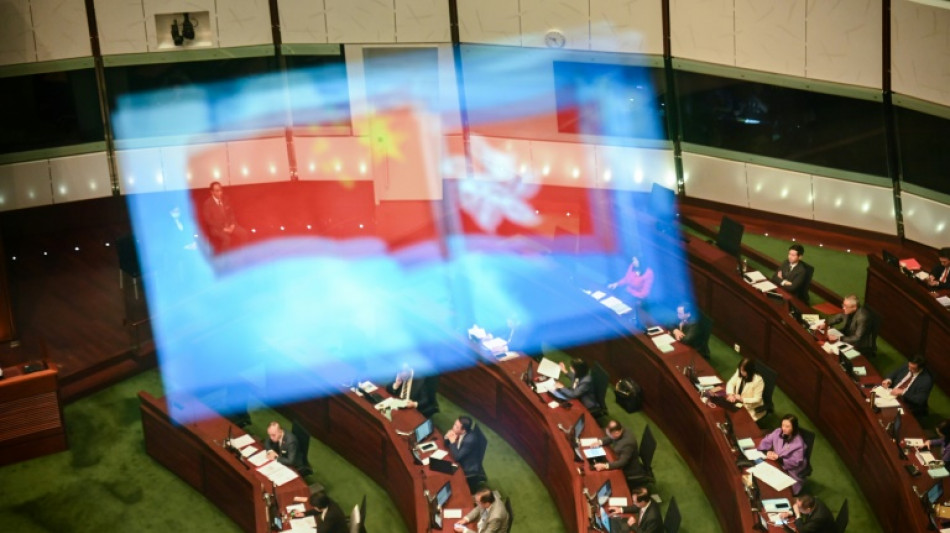
Hong Kong legislature passes tough new national security law / Photo: © AFP

 Saudi airport closure disrupts life in kingdom's capital

 Ramaphosa tells South Africa to prepare for loss of US-Africa trade deal

 France presses resale platforms to remove 'stolen' goods after unrest
 Yamal v PSG: Ballon d'Or backdrop to Champions League showdown

 Araujo says too soon to talk about permanent Liverpool move

 US wants to be 'strong partner' for central Asia: Rubio

 'Special' to face friend Perez in Champions League, says Liverpool's Iraola

 Monitor says Indonesia fires have burned nearly two million hectares

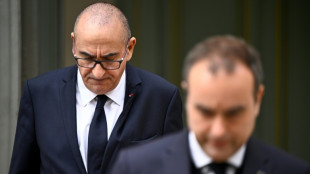 French PM says could declare state of emergency over unrest 'if needed'

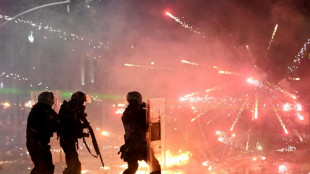 Albanian PM warns of 'red line' after days of unrest
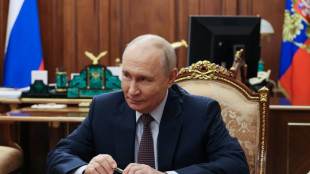 Putin, Xi and Trump could meet at APEC summit: Kremlin

 Microsoft exits data centre deal in blow to UK AI ambitions

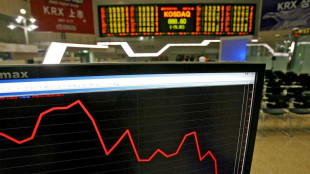 European stocks retreat as France violence spreads

 North Korea warns 'grave situation' prevailing along border

 Raya proud of Arsenal's 'incredible' reaction after third straight win

 Indonesia fires have burned nearly two million hectares: monitor
 Australian lawmaker 'critically' hurt in attack, officials say

 Indonesia fires burned over 1.9 mn hectares through September: monitor

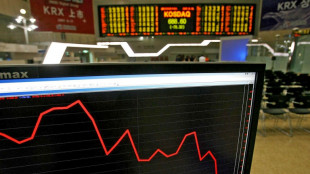 Asian tech stocks mixed after Wall St losses, eyes on earnings

 China's third-quarter growth narrowly beats forecasts

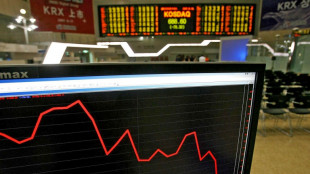 Asian stocks start week on back foot, tracking tech-led Wall St losses

 China growth narrowly beats forecasts

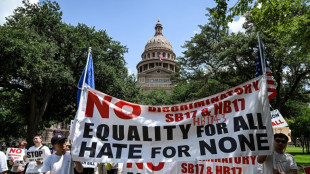 Faith and fury: Texas Senate rivals offer contrasting visions

 Women await justice for police killings in Brazil

 The painstaking task of cataloguing the world's species

Hong Kong legislators unanimously passed a new national security law on Tuesday that introduces penalties such as life imprisonment for crimes related to treason and insurrection, and up to 20 years in jail for the theft of state secrets.
The law, which the United States, Britain and the European Union have warned could further curtail freedoms in Hong Kong, was fast-tracked through the legislative process.
UN rights chief Volker Turk denounced the "rushed" adoption, criticising it as "a regressive step for the protection of human rights".
But city leader John Lee called it "a historic moment for Hong Kong", adding that the law would come into effect Saturday.
The government's previous attempt to introduce Article 23 -- as it is commonly referred to -- was in 2003, but it was dropped after half a million Hong Kongers took to the streets in protest.
Lee had repeatedly cited Hong Kong's "constitutional responsibility" to create the new law as required by the Basic Law, the city's mini-constitution since its handover from Britain to China in 1997.
The homegrown legislation will work in tandem with the national security law imposed by Beijing in 2020 after huge and at times violent pro-democracy protests.
The new law punishes dozens of offences under five categories: treason, insurrection, theft of state secrets and espionage, sabotage endangering national security, and external interference.
Lee had said it was needed to plug the legislative gaps left by Beijing's version, which targets secession, subversion, terrorism and collusion with foreign forces.
The law "will allow Hong Kong to effectively prevent, suppress and punish espionage activities, conspiracies and traps from foreign intelligence agencies, and infiltration and sabotage carried out by hostile forces", he said Tuesday.
He added that it would also "effectively prevent black-clad violence", a reference to the 2019 pro-democracy protests that were quashed.
One of the last-minute amendments added to the law last week empowers Lee and his cabinet to create new offences -- to account for "unforeseen circumstances" -- punishable by up to seven years in prison.
- 'An effective lock' -
Sanctioned by the United States for his oversight of the crackdown on the protests while security chief, Lee has called the law "an effective lock to prevent burglars" as authorities seek to combat "threats posed by external forces".
Penalties run up to life in prison for sabotage endangering national security, treason and insurrection, 20 years for espionage and sabotage, and 14 years for external interference.
It has also expanded the British colonial-era offence of sedition to include inciting hatred against China's Communist Party leadership, with an aggravated sentence of up to 10 years in jail.
As with its 2020 predecessor, the new law claims jurisdiction over some offences committed outside Hong Kong.
But the Beijing-run national security office in Hong Kong said "only an extremely small number of people" would be punished under Article 23, mirroring language used in the run-up to the original security law's imposition.
Nearly 300 people have so far been arrested under that law, while dozens of politicians, activists and other public figures have been jailed or forced into exile.
Calling it "a new Great Wall of rule of law", the security office said in a statement that "the majority of Hong Kong residents and international investors will benefit" from it.
- 'A regressive step' -
As part of the 1997 handover from Britain, Hong Kong was guaranteed certain freedoms -- as well as judicial and legislative autonomy -- for 50 years in a deal known as "one country, two systems".
The accord has helped cement the city's status as a world-class business hub, bolstered by a reliable judiciary and political freedoms distinct from the mainland.
Lee said the government could now "devote fully to economic development", citing the need for stability to attract investors.
But Britain's foreign minister David Cameron said the law would "further damage the rights and freedoms enjoyed" in Hong Kong and have "far-reaching implications" for the rule of law and independence of institutions.
"The broad definitions of national security and external interference will make it harder for those who live, work and do business in Hong Kong," he said in a statement.
The United States has said it "risks compounding the 2020 National Security Law that has curtailed the rights and freedoms of people in Hong Kong".
Calling it "a sad day for Hong Kong", Thomas Kellogg, executive director of Georgetown University's Center for Asian Law in Washington, said Article 23 would "further erode Hong Kong's status as a leading business hub".
"The 2020 (Beijing legislation) reshaped Hong Kong law, political institutions, and society," Kellogg told AFP. "This new law promises to extend and deepen that transformation."
T.Suter--VB