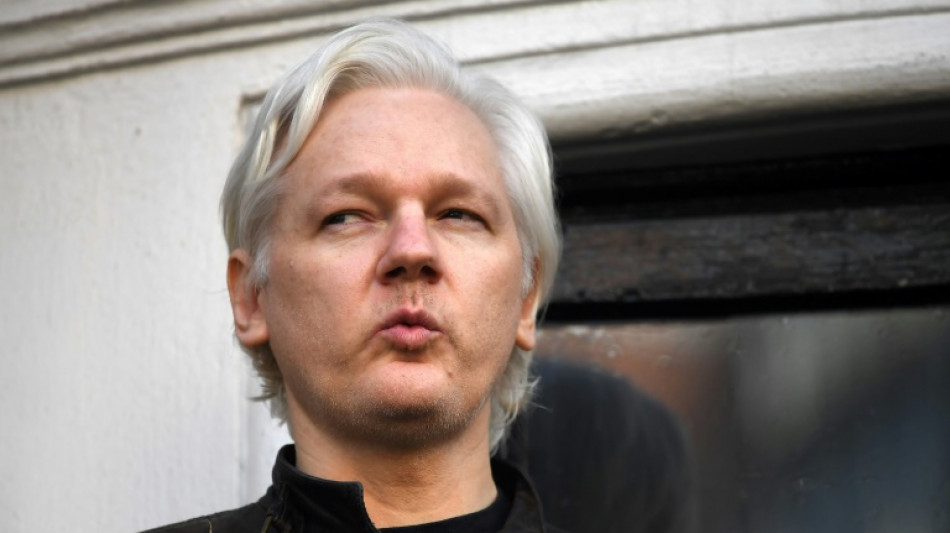
Julian Assange: WikiLeaks' controversial founder / Photo: © AFP/File

 Gunman kills one, wounds four in town outside Paris
 France to deploy 70,000 police ahead of new protests
 Mekies hails Verstappen as Red Bull's driving force amid revival
 Tanker with Russian diesel heads to New York under Trump deal
 New centre puts focus on Portuguese dictator Salazar's legacy
 Oil nears $115 with stocks mixed on earnings, AI

 Asian football endorses Infantino re-election in apparent U-turn
 Ukraine says two soldiers died after arrested girl sent Russian poison

 New Greece law bans social media for under-15s
 Netanyahu orders West Bank closure as attack wounds Israelis before election
 Asian stocks mixed ahead of weekend as tech recovers early losses
 How five Boeing 777s linked Madagascar's power elite to Iran
 South Korea proposes holding border talks with North
 Ukraine's young figure skaters twizzle on despite Russian threat
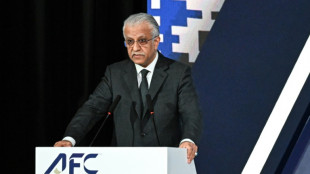 Asian football endorses Infantino re-election as FIFA president
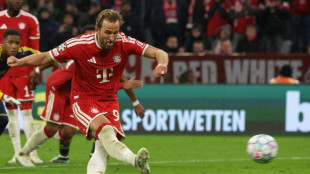 Complete Kane hopes for 'special night' as Ballon d'Or rumours swirl
 Rooney calls United squad 'selfish babies' after Fernandes criticism
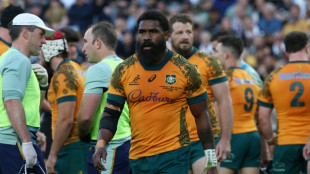
 Teddy Wilson, son of World Cup-winner David, gets Wallabies call-up
 New Zealand military chief resigns over 'inappropriate relationship'
 Man Utd's Carrick on borrowed time, free-scoring Brighton face Liverpool
 Asian stocks head into weekend on a low as tech extends losses
 'Generational rage': Young Europeans fight to be heard
 Lula, Bolsonaro to clash once more before Brazil vote
 Dressed to kill: Haircuts cap menacing look of Japan's yakuza
 Napa Valley's wineries feel Trump's tariff squeeze
Julian Assange, the 52-year-old Australian fighting extradition from Britain to the United States, is for some a fearless campaigner for press freedom. For others, he was reckless with classified information, possibly endangering sources.
Assange is the figurehead of the whistleblowing website that exposed government secrets worldwide, notably the explosive leak of US military and diplomatic files related to the wars in Iraq and Afghanistan.
He has spent over a decade either in custody or holed up in Ecuador's London embassy, trying to avoid extradition -- first to Sweden to answer allegations of rape, and then to the US.
Born in Townsville, Queensland, in 1971, Assange had a peripatetic childhood and claims to have attended 37 schools before settling in Melbourne.
As a teenager, he discovered a talent for computer hacking, which soon brought him to the attention of the Australian police.
He admitted most of the charges levelled against him, for which he paid a fine.
Assange launched WikiLeaks in 2006 with a group of like-minded activists and IT experts.
"We are creating a new standard for a free press," Assange told AFP in August 2010.
- Embassy asylum -
His legal saga began the same year soon after he published revelations from classified documents about US military campaigns in Iraq and Afghanistan. Rape allegations in Sweden then followed, which he consistently denied.
He was in Britain when Sweden sought his extradition, which he was able to dodge when Ecuador granted him political asylum and allowed him to live in its London embassy.
For seven years from 2012, Assange lived in a small apartment in the embassy, exercising on a treadmill and using a sun lamp to make up for the lack of natural light in a situation he compared to living in a space station.
His protracted stay in the mission ended, however, after a new government in Quito turned him over to British police in April 2019. He was arrested for jumping bail and jailed.
Swedish prosecutors dropped the rape investigation, saying in 2019 that despite a "credible" account from the alleged victim there was insufficient evidence to proceed.
But as Assange had feared, it was then revealed that Washington was charging him with violating the US Espionage Act over the 2010 leaks.
His supporters, including the Chinese dissident artist Ai Weiwei and the late fashion designer Vivienne Westwood, claimed the charges were politically motivated.
They have repeatedly raised concerns about the physical and mental toll of his prolonged incarceration.
Nils Melzer, the UN special rapporteur on torture, has condemned the conditions at London's Belmarsh Prison where Assange is being held, saying the "progressively severe suffering inflicted" on him is tantamount to torture.
- Russia claims -
Assange was initially supported by human rights groups and newspapers that once worked with him to edit and publish the US war logs.
They included a leaked video showing a US military Apache helicopter firing on and killing two journalists and several Iraqi civilians on a Baghdad street in 2007.
But many were horrified when WikiLeaks dumped unredacted documents online, including the names of informants, and Assange fell out spectacularly with his media partners.
US lawyers have conceded that while they were "aware" of sources who disappeared after WikiLeaks published their names, it "can't prove that their disappearance was the result of being outed by WikiLeaks".
Questions also mounted over Assange's relationship with Russia.
Special prosecutor Robert Mueller's probe into interference in the 2016 US presidential election won by Donald Trump found that Russians "appeared" to have hacked Democrat Hillary Clinton's campaign, and then "publicly disseminated those materials through various intermediaries, including WikiLeaks."
But Assange's lawyer asserted in one court hearing that former US President Donald Trump had promised a pardon if his client testified that Russia did not provide the emails that so damaged Clinton.
Trump angrily rejected allegations that his campaign colluded with the Kremlin -- claims found to be baseless by the Mueller investigation.
Assange is the father of two young boys with his wife Stella, a South Africa-born lawyer, who he met when she worked on his case.
L.Stucki--VB