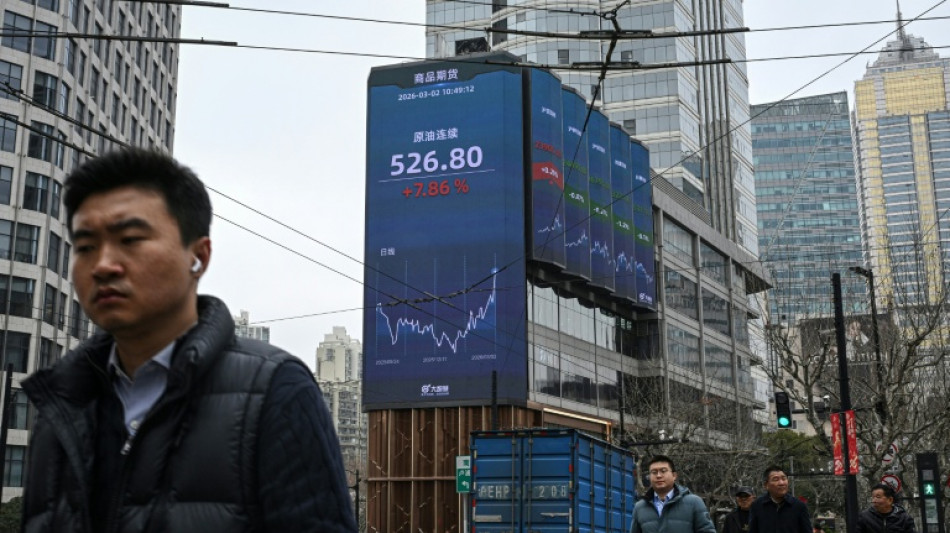
China imposes 'national security' rules on overseas investments / Photo: © AFP/File

 Iran airlines cancel flights as US sanctions hit
 Meta launches camera-free AI glasses amid privacy pushback
 Australian PM says OpenAI hacked government health website

 Xi arrives in US to personal Trump welcome

 Morocco elects new parliament amid social frustration, youth discontent

 Scheffler and Burns to face Im and Lee in Presidents Cup opener

 Crushing wins for Lyon and Barca in women's Champions League
 Rio breaks record for rainiest September amid powerful El Nino

 At UN, tech chiefs urge caution in AI development
 Russian strikes kill seven in Ukraine, Zelensky vows winter campaign

 Venezuelan shot by ICE needs urgent medical care, mother tells AFP

 Zelensky says Putin using fighters from 47 countries in Ukraine war

 Klopp calls on Germany to 'rise above ourselves' as new era begins

 Russian strikes kill seven in Ukraine as Russia vows no 'pause' to war

 ArcPoint Expands Globally with Institutional Intelligence Platform for Modern Investors

 Ronaldo focussing on 'present' ahead of Wales test

 Outgoing UN chief makes final climate push at New York summit
 Grief and pain flow at hearing for Canadian suicide poison vendor

 Ireland boss Hallgrimsson says timing of Israel remarks 'not clever'
 Weinstein resentenced to 15 years in prison for 2006 sex assault
 Fendi brings disco bling, Italian style, to Milan Fashion Week
 French court confirms rape trial for PSG and Morocco star Hakimi
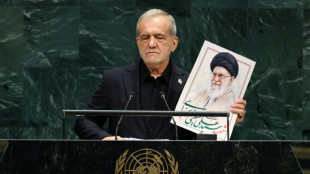 President tells Trump that Iran will never 'bend at the knee'

 أليكس بودي والبروفيسور الدكتور شتيفان هاوبت يتفقان على التعاون من أجل مجموعة فنية أسطورية في رومانيا

 U2 at 50: Irish rockers reveal anniversary album

China is intensifying its scrutiny of investments overseas with broad "national security" regulations taking effect from Wednesday, at a time of rising tech competition with Washington.
The new rules, originally announced on June 1, provide authorities with a sweeping legal framework to influence flows of capital and personnel across China's borders.
Beijing sees fields such as artificial intelligence, computer chips and green technology as economically and strategically vital and has vowed to promote their domestic development.
The new measures are intended to "enhance the quality and level of outward investment", according to the provisions laid out by the State Council, China's cabinet.
However, some investors worry they will restrict the ability of China's bustling and sprawling tech ecosystem to access global markets.
Outbound investment should adhere to the "overall national security concept", the regulations state, while aiming to "balance domestic and international considerations".
The new framework also authorises the government to conduct reviews of investments or transfers that could impact national security.
Beijing often views cross-border transactions with suspicion, with its top economic planning body striking down in April an attempt by Facebook owner Meta to acquire AI startup Manus, which was created by a company founded in China but now based in Singapore.
Under the new rules, existing curbs on cross-border transfers will extend beyond goods and data to include the export of services through sending technical experts abroad or carrying out training overseas.
The US-China Economic and Security Review Commission said on social media this week that the move reinforces a trend it has tracked for months.
The bipartisan commission warned in May that, "as is often the case for China's national security-related laws, enforcement authorities have immense discretion to determine what constitutes a violation, creating further risk for foreign firms".
Beijing is looking to protect domestic AI prowess in its competition with Washington, but the new rules risk cutting off other parts of the world from Chinese investments, Alicia Garcia-Herrero, Asia-Pacific chief economist at Natixis, told AFP.
"This is terrible for Europe, because if anybody were to believe that we would rely on China's open-weight (AI) models, this is wrong -- we can't," she said, adding that the continent also cannot depend on Chinese talent to develop its own models due to Beijing's stringent cross-border curbs.
With the US-China tech race showing no signs of stopping, Europe will need to seek strategic partnerships with other key players, including South Korea and Japan, "if they want to stand a chance of not becoming too dependent", she said.
H.Kuenzler--VB