
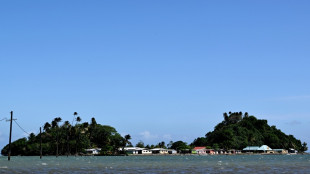
India braces for Cyclone Arnab with evacuations / Photo: © AFP

 Pakistan's last antique restorers give old treasures new life

 India braces for Cyclone Arnab with evacuations

 Steel Strips Wheels gains 36% in two sessions on growth outlook

 Cavs edge T'Wolves in overtime despite superb Edwards

 Prescott fires Cowboys to 38-21 win over plummeting Eagles

 Kuwait padel chief hails national showing at Premier Padel Major

 Britain prepares constrained budget as debt and defence pressures mount

 Valkyries beat Dream to reach brink of WNBA title

 Benjamin Netanyahu: Israel's longest-serving PM fighting for survival

 Kuwait receives invitation to 2026 UN Water Conference in Abu Dhabi
 Arab World Institute president outlines plans for stronger Kuwait-France cultural links

 Bolsonaro's party says it recognizes Lula's election win in Brazil

 Meghan on TV menu for 'Junior MasterChef Australia'

 South Korea's chip boom fuels forecast-beating third-quarter growth

 US-brokered truce begins in Ukraine city occupied by Russia

 Qatar launches Fashion and Crafts Council to connect talent with global markets

 Jordan strikes militant groups in Syria after church attack

 FIA chief praises Middle East motorsport volunteers and officials

 Australia warns of 'unprecedented' AI threat

 Qatar Amir arrives in Moscow for eighth GECF summit

 Kane beats Yamal and Mbappe to taste Ballon d'Or glory

 Ballon d'Or crowns Putellas's return to top of women's game

 Godts stars as PSG beat Lyon to go top of Ligue 1

 NBA inks deal with Kalshi and Polymarket, citing safeguards

 US rapper Macklemore launches 'Free Palestine Tour' after Ed Sheeran fallout

Indian authorities ordered evacuations in southwestern Andhra Pradesh ahead of a severe cyclone expected to make landfall by Wednesday, the national weather office said.
Cyclone Arnab is forecast to hit the coast as a "very severe cyclonic storm", with gusts of up to 140 kilometres (87 miles) per hour, the India Meteorological Department (IMD) said in a bulletin on Tuesday.
Cyclones, called hurricanes in the North Atlantic and typhoons in the Pacific, are a regular menace in the Bay of Bengal and northern Indian Ocean.
The storm season, however, has been turbocharged by the El Nino weather phenomenon that has caused unprecedented warming.
Neighbouring Sri Lanka, meanwhile, closed schools with warnings of torrential rain, with the island's Department of Meteorology warning storms could trigger flash floods and mudslides.
The military has been placed on alert, Colombo's Disaster Management Centre said.
India's weather bureau said it expects the cyclone to result in "total destruction" of thatched houses and create localised flooding, uprooting of power and communication poles, and "widespread damage" to standing crops.
State Chief Minister Nara Chandrababu Naidu has ordered the storm be "constantly monitored and advance precautions taken", his office said in a statement on Monday.
Local media reported that Andhra Pradesh authorities had ordered evacuations in key, low-lying areas and shut "all educational institutions" in some districts from Tuesday until Saturday.
Over 4,700 pregnant women residing in potentially dangerous localities were moved to hospitals, according to The Indian Express newspaper.
M.Schneider--VB