Court orders Dutch to protect Caribbean island from climate change / Photo: © ANP/AFP

 IR-MED and Dice Technologies Announce collaboration to Evaluate and Advance Pressure-Injury Prevention Platform in Japan

 Watts, Pitt, Cruz to light up Spain's top film festival

 Sweden expels Iran embassy employee over anti-Jewish threats

 Toogood Gold's Table Mountain Sits in the Shadow of a Nevada Gold Rush

 MEXC July–August Security Report: 38.66M USDT in Risk Funds Intercepted, Futures Insurance Fund Hits 792M USDT

 'Breathing toxin every day': Indonesians choked by haze feel helpless

 Stocks edge higher ahead of US Fed rate call

 Philippines ex-leader Duterte makes first in-person ICC appearance

 2027 Formula One calendar includes Monaco sprint race

 Palestinians are the real victims, Thunberg tells Ed Sheeran

 Hashim Thaci: From 'George Washington of Kosovo' to Hague convict

 Amnesty says Iran committed 'crimes against humanity' in crackdown on 2022 protests

 EU to ban social media for under 13s, curb access until 15

 Philippines ex-leader Duterte makes first appearance at ICC

 EU chief pitches 'associate member' status for Canada

 English village votes to 'secede' from UK over asylum centre plan

 Wildfires push endangered Sumatran elephants to brink: Indonesian NGO

 Stocks head higher as traders prepare for Fed decision

 English village votes to 'secede' from UK over asylum centre

 Hong Kong unveils plan to align economy with China's goals

 Brazilian voters the latest to eye Bukele security model with envy

 EU chief hosts Canada's Carney in push to 'deepen' alliance

 EU chief to unveil social media, gaming curbs for under-15s

 Saudi says Houthis target Mecca, warn of 'red line'

 Asian stocks stutter as traders prepare for Fed decision

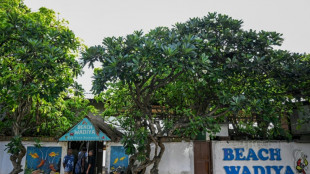
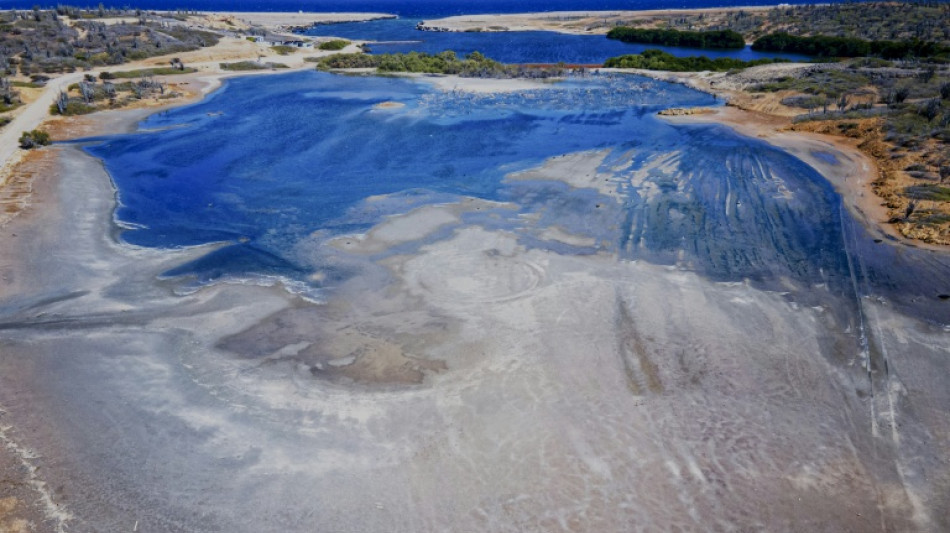
The Netherlands "insufficiently" protects the tiny Caribbean territory of Bonaire from climate change, a Dutch court said Wednesday, in what Greenpeace hailed as a "huge breakthrough" for environmental justice.
Residents of the Dutch territory off the coast of Venezuela had teamed up with Greenpeace to sue the Dutch government, demanding "concrete measures" to shield the island from rising waters.
The District Court in The Hague ruled that Bonaire residents were "treated differently from the inhabitants of the European part of the Netherlands without good reason", calling it a violation of their human rights.
It ordered the Netherlands to set binding interim targets within 18 months "for the reduction of greenhouse gas emissions across the entire economy".
"The judges really listened to us, and I'm extremely happy about that," Jackie Bernabela, a co-claimant who travelled from Bonaire to be in court, told AFP.
She said islanders had felt like they were being treated like "second-class citizens".
The ruling follows an advisory opinion from the International Court of Justice that countries violating their climate obligations were committing an "unlawful" act.
Greenpeace said before the ruling that it regarded Bonaire as the first major test case following the ICJ's opinion.
The campaign group's Netherlands director Marieke Vellekoop described Wednesday's ruling as a "huge breakthrough".
"This is a truly historic victory," she said.
"People on Bonaire are finally getting recognition that the government is discriminating against them and must protect them from extreme heat and rising sea levels."
- 'Unbearable' heat -
The low-lying Netherlands is famous for its protective measures against rising waters, mainly based on an extensive system of barriers and dykes.
But campaigners argued that it was not providing the same protection for its overseas territories such as Bonaire.
They had called for a plan for Bonaire by April 2027 and for the Netherlands to reduce CO2 emissions to zero by 2040 rather than 2050 as agreed at EU level.
The government had argued it was an "autonomous task" of the local authorities to develop a plan to counter the ravages of climate change.
Following the judgment, a spokesperson for the infrastructure ministry said the state was taking the ruling "very seriously" and would study it closely.
"After that, we can say more about the measures the state will take," the spokesperson said.
Campaigners pointed to a survey by Amsterdam's Vrije Universiteit showing the sea could swallow as much as a fifth of Bonaire by the end of the century.
Bonaire, a former Dutch colony, became one of three so-called special municipalities of the Netherlands in 2010 along with Saba and St Eustatius.
During court hearings last year, some of the island's 27,000 residents shared their experiences battling rising seas and temperatures.
Bonaire farmer Onnie Emerenciana told judges: "Where we used to work, play, walk, or fish during the day, the heat is now often unbearable."
After the ruling, she said the state could "no longer look away".
"Our lives, our culture and our country are being taken seriously," she said in the statement provided by Greenpeace.
- Equal treatment -
The judges pointed out that Europe and the Caribbean had different climates.
"There is no good reason why measures for the inhabitants of Bonaire, who will be affected by climate change sooner and more severely, should be taken later and less systematically than for the European part of the Netherlands," it added.
The use of courts and other legal avenues to pursue climate litigation has grown rapidly over the past decade, with most lawsuits targeting governments.
Claimants argue a relatively small number of major polluters bear a historic liability for losses caused by droughts, storms and other climate-fuelled extremes.
The ICJ opinion, requested by the United Nations, aimed to clarify international law as it relates to climate change.
In what was largely seen as a win for environmental campaigners, the judges said polluters could be liable for reparations to countries suffering from climate damage.
Greenpeace's Vellekoop said Wednesday's Dutch ruling would have a huge impact on future cases.
"With this ruling in hand, communities have a powerful new asset to hold governments to account," she said.
N.Schaad--VB