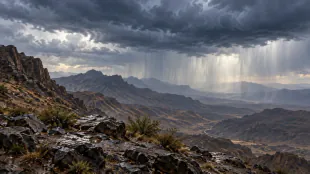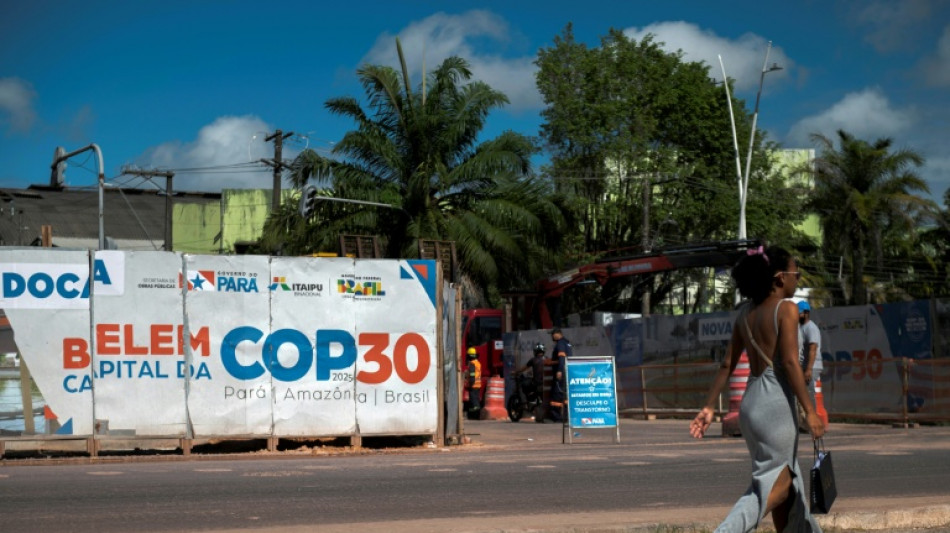
Trees, targets and trillions: what's on the agenda at COP30? / Photo: © AFP

 BASIS.pro Expands On-Chain Infrastructure with XDC Network Partnership and Zypher DAO as Auto Earn Goes Live

 Samson relishing battle with teen star Sooryavanshi for India spot

 Pickle-flavoured tart? AI inspires Japan's convenience stores
 Macau holds first closed-door national security trial

 Bank of Japan set to raise rates under pressure from inflation, US
 Zverev, Shelton back on court for Davis Cup qualifiers
 Peace is a 'dangerous' word in Russian city heading to polls
 Meta chief pushes back on AI slowdown calls

 'Resident Evil' film brings video game's ethos to the big screen

 Court orders N. Korea pay Seoul $32.5 mn for blowing up office
 US military buildup in Palau stirs war fears
 US Fed to deliver rate decision with markets betting on hike
 Saudi, Egypt demand open Red Sea as Riyadh vows response to Houthi attacks

 Capitals say hockey star Ovechkin 'was asked' to film Putin ad

 Spurs in 'tough moment' after League Cup exit as De Zerbi says sorry

 Arteta salutes 'unbelievable' Dowman after Arsenal's teen star sinks Ipswich

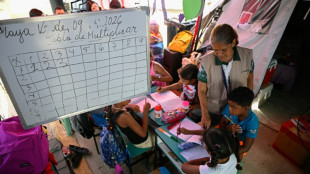 Empty seats as schools reopen in Venezuela's quake-hit Guaira

 Messi set for Argentina farewell in Benin friendly

 Ton-up Brook leads from the front as England hammer Sri Lanka in 1st T20

 AI giants pursue self-regulation as safety fears mount

 Argentina begin life after Messi with Bolivia friendly

 Helen Mirren delves into Patricia Highsmith's mind in 'A Talent for Murder'
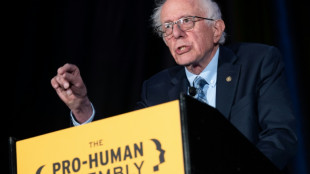 Sanders, Bannon warn of AI dangers in rare US left-right alignment
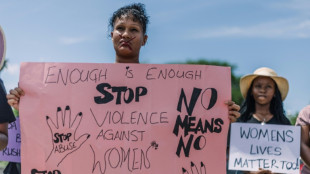
 US Senate crypto bill collapses amid partisan deadlock

 Raptors confirm Leonard return after Clippers salary cap scandal

This year's United Nations climate summit promises to be symbolic, marking a decade since the Paris Agreement and taking place in the environmentally vulnerable Amazon. But what is actually on the agenda?
The marathon negotiations gather nearly every country to confront a challenge that affects them all, but unlike recent editions, this "COP" has no single theme or objective.
That does not mean big polluters will get off easy, with climate-vulnerable nations frustrated at their level of ambition and financial assistance to those most impacted by a warming planet.
Here are the big issues to look for when the two-week COP30 conference starts on November 10 in the Brazilian city of Belem:
- Emissions -
The world is not cutting emissions fast enough to meet the goals of the Paris Agreement, and no amount of pomp and pageantry at COP30 will be able to sugarcoat that uncomfortable reality.
Under the climate accord, signatory nations are required every five years to submit stronger targets for cutting greenhouse gas emissions, thereby steadily raising the collective effort to reduce global warming over time.
The latest round of pledges for 2035 were due in February to give the UN time before COP30 to assess the quality of these commitments.
Most nations missed that deadline, but by early October, about 60 had turned in their revised plans. Few have impressed, and China's target in particular fell well below expectations.
The European Union, riven by infighting, cannot agree on its target, while India is another major emitter yet to finalise its pledge.
A reckoning could be coming in Belem. Brazil -- which described the latest round of pledges as "the vision of our shared future" -- is facing pressure to marshall a response.
- Money -
Money -- specifically, how much rich countries give poorer ones to adapt to climate change and shift to a low-carbon future -- is a likely point of conflict in Belem, as in past COPs.
Last year, after a fortnight of acrimonious haggling, COP29 ended unhappily with developed nations agreeing to provide $300 billion a year in climate finance to developing ones by 2035, well below what is needed.
They also set a much less specific target of helping raise $1.3 trillion annually by 2035 from public and private sources. Developing nations will be demanding some actual detail about this at COP30.
Adaptation finance -- for example, to build coastal defences to protect against rising seas -- is on the formal agenda, with a new fundraising target possibly up for negotiation as an old commitment expires.
- Forests -
Brazil chose to host COP30 in Belem because of its proximity to the Amazon, an ideal stage to draw the world's attention to the vital role of the rainforest in fighting climate change.
At COP30, the hosts will launch a new, innovative global fund that proposes rewarding countries with high tropical forest cover that keep trees standing instead of chopping them down.
The Tropical Forests Forever Fund (TFFF) aims to raise up to $25 billion from donor countries and another $100 billion from the private sector, which is invested on financial markets. Brazil has already kicked in $1 billion.
Clement Helary from Greenpeace told AFP the TFFF "could be a step forward in protecting tropical forests" if accompanied by clearer steps at COP30 toward ending deforestation by 2030.
The destruction of tropical primary forest hit a record high in 2024, according to Global Forest Watch, a deforestation monitor. The equivalent of 18 football fields per minute was lost, driven mostly by massive fires.
I.Stoeckli--VB