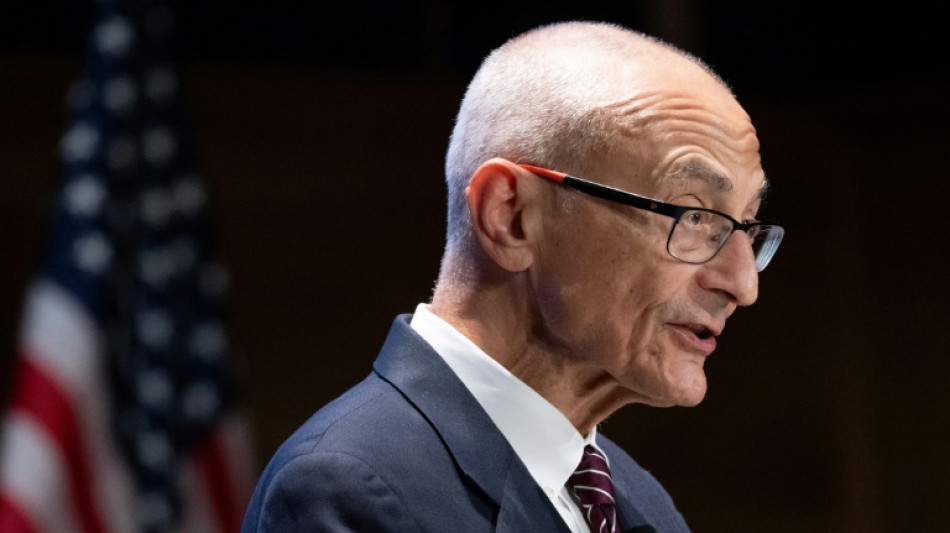
Ex-US climate envoy: Trump threatening 'consensus science' worldwide / Photo: © AFP/File

 Star Australian broadcaster faces trial for sexual assault

 Oil prices sink on Middle East hopes, yen extends gains after joint intervention
 Millions of Thais banish the booze for Buddhist Lent

 Returning to 'Ted Lasso' after break 'effortless': Hannah Waddingham

 Trump says new Iran talks set to start after calling off massive attack

 Four Al-Fayed survivors told they were trafficking victims
 Ariana Grande withdraws from London musical, seeks to 'step back'

 Sudan army drone attack on Darfur court kills 35

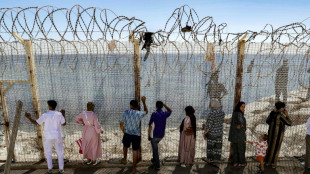
 At least 72 died in Spain's Ceuta migrant rush, Spain says

 Russian teen Liutova wins WTA Memphis title
 Zverev remains wary of 12-day Masters events

 Wimbledon champ Noskova ready for 'new opportunity'

 Japan's Kuwaki wins women's British Open to clinch first major title
 Sabalenka aims to bounce back in Toronto after Wimbledon disappointment

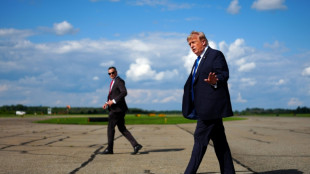 Iran says close to Hormuz deal with Oman, after US suspends attack plan

 'Spider-Man' soars to huge $355 million opening in North America
 Handbag tosses and high-heeled sprints: Amsterdam celebrates Drag Olympics
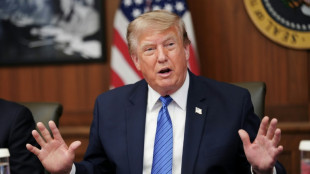 Trump's on-again-off-again war against Iran: in his own words

 Dodgers land Tigers pitching ace Skubal in MLB trade deadline blockbuster

 Infantino struggling to survive, says former IOC marketing chief
 OPEC+ boosts September production by 188,000 barrels/day

 Rescuers recover climber Nirmal Purja's body after avalanche disaster
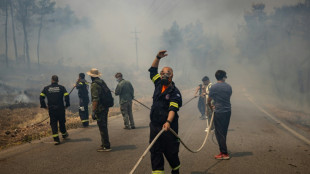
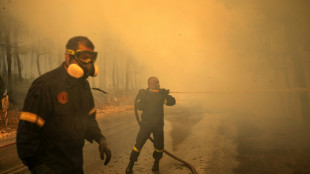 Fire toll mounts in Greece as blazes spread

 Sri Lanka deploys troops after prison riot
President Donald Trump is leading the world "in the wrong direction" on climate and weaponizing clean energy as a culture-war issue, according to John Podesta, a longtime advisor to Democratic presidents.
Until January, Podesta was President Joe Biden's senior point person on international climate policy. He took the stand Tuesday in Missoula, Montana, as an expert witness in Lighthiser v. Trump, a youth-led case challenging the administration's fossil-fuel agenda.
Trump's second term has seen sweeping rollbacks of domestic policy aimed at fighting climate change, and an effort to push fossil fuels abroad -- from embedding liquefied natural gas (LNG) purchases in trade deals to reportedly pressuring bodies such as the International Energy Agency.
With COP30 talks in Brazil fast approaching, Podesta spoke to AFP in Missoula about America's retreat from climate leadership -- and what it means for the planet and US influence.
Q: How do you view the Trump administration's international posture on climate?
Podesta: In the first term, they decided to abandon leadership. Now they're trying to lead the world in the wrong direction. In international forums they're trying to prevent climate action; in bilateral relationships they're promoting fossil fuels, and in multilateral fora they're showing disdain for any common action.
Q: There's talk they could even try to weaken UN consensus on climate change. How much damage can they do?
Podesta: They'll do all they can to tilt the field towards favoring fossil fuels. Their reasoning for going after science in the US will find its way into undermining the consensus science abroad. Whether they can actually change the dynamic at the IPCC (the UN climate science panel), particularly given they're withdrawing resources from the IPCC and forbidding US federal scientists from participating in studies -- I don't think they'll have much effect on the overall production of peer-reviewed science, but they'll cause a little havoc along the way.
Q: How does this posture affect US standing in the world, especially against China's push to dominate clean energy?
Podesta: It certainly reduces the sense of solidarity we have with countries that are not China. If we're in a great competition with China for global leadership, we're aligning with Russia and Saudi Arabia instead of with our natural allies in Europe, Latin America, and Asia. From a security posture, it's a terrible mistake.
Q: What will all this mean for COP30 talks in Brazil?
Podesta: We'll see this play out in Belem and beyond. There's still strong global consensus to move forward, but with the US not just absent from leadership but playing a revisionist role, it empowers countries like Saudi Arabia and Russia that are trying to water down ambition -- and now they have a strong ally in doing that.
Q: What do you think motivates Trump's approach?
Podesta: It's a mix of trying to turn clean energy into a culture-war issue while ignoring the real economics of the transition, and his fealty to fossil fuel interests that have funded his rise. But a lot of it is the politics of culture war — as long as he thinks it works for him, he'll keep pursuing it.
Q: What differentiates the Lighthiser case from Juliana, a previous federal youth-led climate case, which you helped oppose when you were part of the Biden administration?
Podesta: I do think it's different from Juliana because they're seeking some specific remedies against direct harm that's the result of actions taken by this administration. It's showing in dramatic terms what taking these actions today builds in harms tomorrow, and that can only come through the voices of these young people, and I thought they were moving in the testimony they gave... It's their future that's at stake in this.
O.Schlaepfer--VB