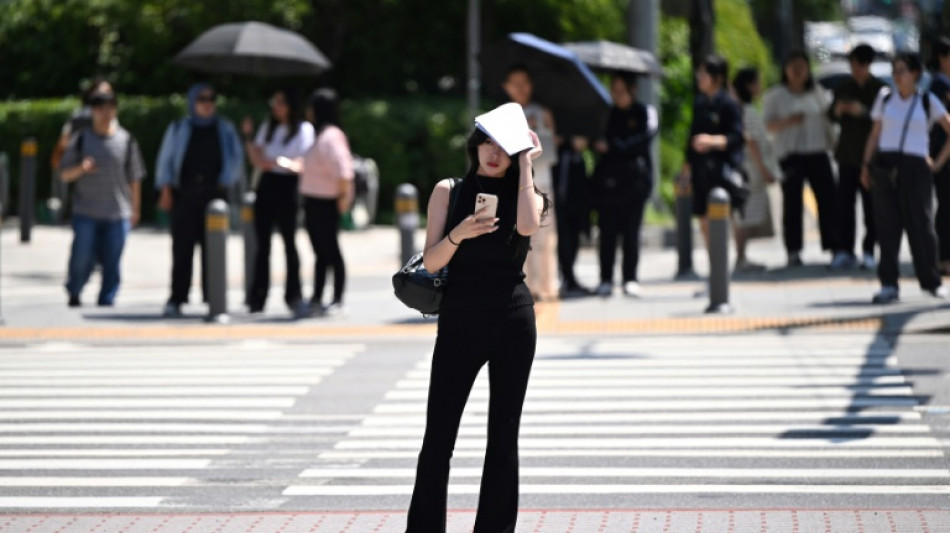
Seoul breaks century-long record with 22 'tropical nights' in July / Photo: © AFP

 Chinese car brands reshape Australia’s automotive market

 Electric cars enter their most decisive generation yet

 Three Chinese carmakers enter the global automotive top 10

 Ukraine's Zelensky visits Russian ally Serbia as Moscow pounds Kyiv
 Ukraine's Zelensky visits Russian ally Serbia for talks

 Defending champion Shelton storms to Montreal win

 Exodus: West Bank hardships drive out Palestinian Christians

 Travis Head wins Australian cricketer of the year gong

 Colombia's new president vows to 'defeat narco-terrorists'

 Call for Infantino to resign comes amid wave of support

 Trump ally Abelardo de la Espriella sworn in as Colombia president

 FIFA chief Infantino gets backing of South American football

 Amazon behind massive private gas plant for new data centers

 Apple and OpenAI escalate legal battle over devices

 All Blacks strike late to secure opening win against Stormers

 Saudi Arabia, Turkey, Pakistan sign defence pact amid regional war

 Trump renews effort to remove US Fed Governor Lisa Cook

 Abelardo de la Espriella, the flamboyant millionaire taking power in Colombia

 Germany holds security meeting over explosive drone amid Russia protest

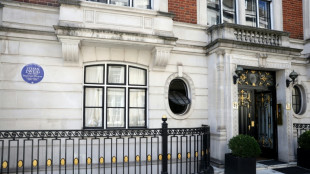 Austrian writer Stefan Zweig, who fled Nazis, honoured in London

 Mexico and Peru reestablish ties after asylum spat

 Dollar drops, stocks climb as weak US jobs data eases rate fears

 Japan defender Tomiyasu joins Crystal Palace

 Celtic boss O'Neill out of hospital after 'small procedure'

 Man City reject Barcelona bid for Rodri - reports
A streak of super-hot tropical nights broke a century-old South Korean weather record, according to official data released Thursday, as the peninsula bakes in a prolonged heatwave.
Overnight temperatures in Seoul have sizzled above 25C for 22 consecutive days in July, officials said Thursday, marking the longest such streak for the month since modern weather records began in October 1907.
Such evenings are known as "tropical nights" in South Korea.
The capital was also on track to record its hottest July night in history on Wednesday, with the lowest temperature of the day reaching 29.3C -- unless overnight temperatures rise even higher on Thursday.
Much of the world is enduring a summer of sweltering weather, with June being the hottest month ever recorded for 12 countries, according to an AFP analysis of data from the European climate monitor Copernicus.
The intense heat in Seoul is expected to continue, according to the meteorology office.
"The warm air from the North Pacific High began affecting South Korea a bit earlier than usual," Youn Ki-han, director at Seoul's Meteorology Forecast Division, told AFP.
"As that influence gradually built up, the heat accumulated, much like interest compounding in a savings account, slowly increasing over time," said Youn.
"Normally, if it's hot for just a day, temperatures spike and then quickly return to normal. But when warm conditions persist for several days, the heat doesn't fully dissipate, it lingers and accumulates with each day," he added.
Thirteen people have died from suspected heat-related causes so far this year, triple the number from the same period last year, according to data from the Korea Disease Control and Prevention Agency.
Hundreds of thousands of livestock have also perished amid the extreme heat.
G.Haefliger--VB