Turkey's glaciers fall victim to climate change / Photo: © AFP

 Lionel Messi's father Jorge dies aged 68

 Johnson reveals 'stress' of Grand Slam Track collapse, clarifies payment

 Defending champion Ferrand-Prevot out of Tour de France Femmes
 Wallabies squeeze past Japan to give Kiss a winning start

 Kyiv mourns recovery volunteer, whose life 'intertwined with the fallen'

 Only two vehicles earn perfect child-seat scores for 2026

 Chinese car brands reshape Australia’s automotive market

 Electric cars enter their most decisive generation yet

 Three Chinese carmakers enter the global automotive top 10

 Ukraine's Zelensky visits Russian ally Serbia as Moscow pounds Kyiv
 Ukraine's Zelensky visits Russian ally Serbia for talks
 Defending champion Shelton storms to Montreal win

 Exodus: West Bank hardships drive out Palestinian Christians

 Travis Head wins Australian cricketer of the year gong
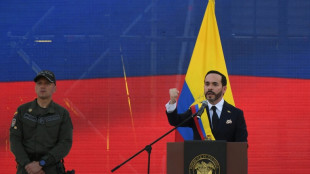 Colombia's new president vows to 'defeat narco-terrorists'

 Call for Infantino to resign comes amid wave of support

 Trump ally Abelardo de la Espriella sworn in as Colombia president

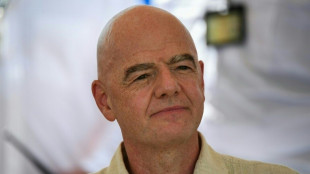 FIFA chief Infantino gets backing of South American football

 Amazon behind massive private gas plant for new data centers

 Apple and OpenAI escalate legal battle over devices

 All Blacks strike late to secure opening win against Stormers
 Saudi Arabia, Turkey, Pakistan sign defence pact amid regional war

 Trump renews effort to remove US Fed Governor Lisa Cook

 Abelardo de la Espriella, the flamboyant millionaire taking power in Colombia

 Germany holds security meeting over explosive drone amid Russia protest

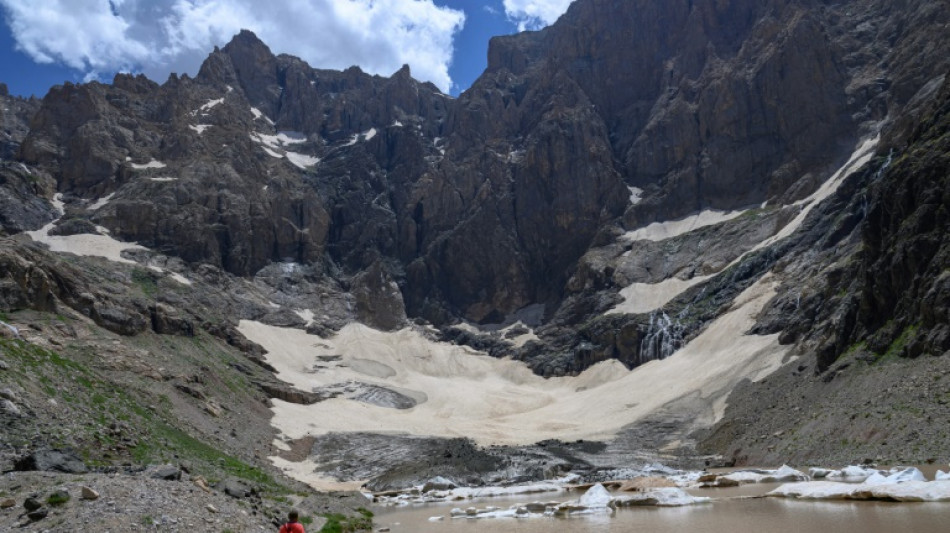
Kemal Ozdemir looked up at the bare peaks of Mount Cilo in Turkey's Kurdish majority southeast: "There were glaciers 10 years ago," he recalled under a cloudless sky.
A mountain guide for 15 years, Ozdemir then turned toward the torrent carrying dozens of blocks of ice below a slope covered with grass and rocks -- a sign of glacier loss being exacerbated by global warming.
"You can see that there are quite a few pieces of glacier in the water right now... the reason why the waterfalls flow lushly actually shows us how fast the ice is melting," he said.
The glaciers of Mount Cilo, which rises to 4,135 meters in the province of Hakkari on the Iraqi border, are the second largest in the country behind those of Mount Ararat (5,137 meters ) -- 250 kilometres (155 miles) further north.
As global temperatures rise amid human-caused climate change, new sections of the mountains that were once capped in ice are melting fast year after year.
Turkey, which is experiencing heatwaves and drought, even registered a record temperature of 50.5C on Friday in Silopi, some 200 kilometres (120 miles) from Hakkari.
"The melting process is faster than we expected. According to our research, in the last 40 years, we lost almost 50 percent of this continuous snow and ice cover in this place," said Onur Satir, a professor at Yuzuncu Yil University and specialist in geographical information systems in the eastern province of Van.
-'No way to cover the ice'-
"Some places melt faster than other places, so actually it's showing us which places must be protected but we have no opportunity to cover the whole ice area," Satir said.
In recent years, several glaciers in the Alps have been covered with white tarpaulins in an attempt to delay their demise.
According to the United Nations, glaciers in several regions of the world will not survive the 21st century, threatening the water supply of hundreds of millions of people.
The surrounding landscape is a delight for hikers, many of whom have flocked to the Hakkari mountains since the guns fell silent in recent years in the region, where fighters from the Kurdistan Workers' Party (PKK) have long challenged the Turkish state.
The ongoing peace process with the PKK listed as a terror group by Turkey and its Western allies suggests that tourism will accelerate in the area, which became a national park in 2020.
-'Don't walk on the ice'-
But melting ice has made certain areas dangerous. In July 2023, two hikers were killed when they were swept away by a block that broke off from a glacier.
"People should not walk on the ice," Ozdemir warned, voicing concerns about the safety of hikers and the preservation of glaciers.
"This region is 40-50 kilometres away from the city, but there was no road in the past. Now, with the construction of the road, more vehicles are coming here and the increase in the number of people coming here actually accelerates the melting a little bit," said the 38-year-old guide.
A UN report on desertification worldwide estimates that 88 percent of Turkey's territory is at risk: rainfall is expected to decrease by 30 percent by the end of the century, while temperatures are expected to rise by 5 to 6C compared to the averages recorded between 1961 and 1990.
G.Schmid--VB