EU unveils long-delayed 2040 climate target -- with wiggle room / Photo: © AFP

 Singapore says AI-related demand lifting economy
 Demeter Tactical Investments (ME) Limited bolsters governance with two board appointments
 Russian barrage on Ukraine kills 9, wounds dozens
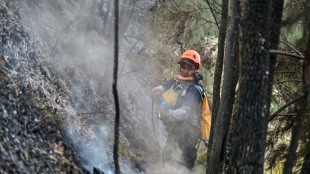 Schools closed as Indonesia battles wildfires

 Swiatek dominates Shnaider to set up Toronto semi with Svitolina

 Oil prices rise further as hopes for Hormuz deal fade

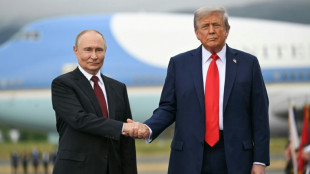 One year after Putin-Trump summit, 'spirit of Anchorage' dissipated
 Farage vs Count Binface: What to know about UK snap poll
 Torment of Afghan fathers as daughters deprived of education
 Return of displaced Syrian Kurds to hometown suspended after violence
 Swiatek races past Shnaider into Toronto semi-finals
 Meta pushes global AI vision amid race with OpenAI, Anthropic and China
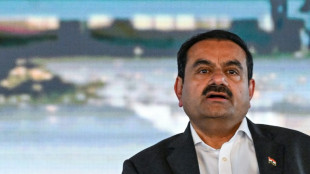 US judge ends graft case against India's Adani

 Anderson retires after 10 MLB seasons after 'too much pain'

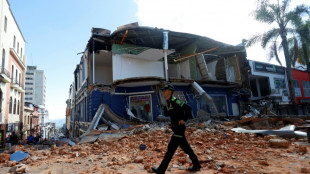
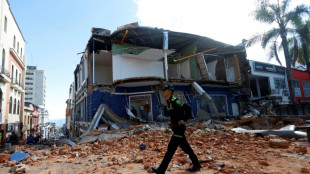 Colombia in state of emergency as quake kills 111

 Britain's Amy Hunt wins European women's 100m gold

 Trump order pushes for overhaul of childhood vaccine schedule

 Global stocks mixed while oil prices jump on Hormuz

 Turkey MPs back historic law on reintegrating Kurdish militants
 'Dreams disappear' as Gaza students await evacuation to Italy

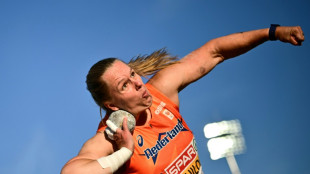 Third European gold for Schilder in women's shot put

 Golden relay double for Britain at Europeans as Marchand settles for silver
 US had hottest month on record in July
 Colombia quake leaves 69 dead, with more trapped under rubble
 Bookmap Announces Partnership with Plus500 to Expand Futures Trading Access
The EU on Wednesday unveiled its long-delayed target for cutting greenhouse gas emissions by 2040, but with contested new flexibilities built in to win over the most sceptical member states.
After months of tough negotiations with EU states, Brussels announced it would stick to the objective announced last year of cutting emissions by 90 percent by 2040, compared to 1990 levels.
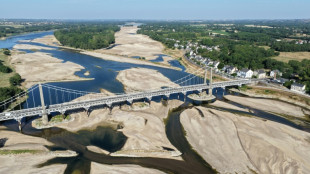
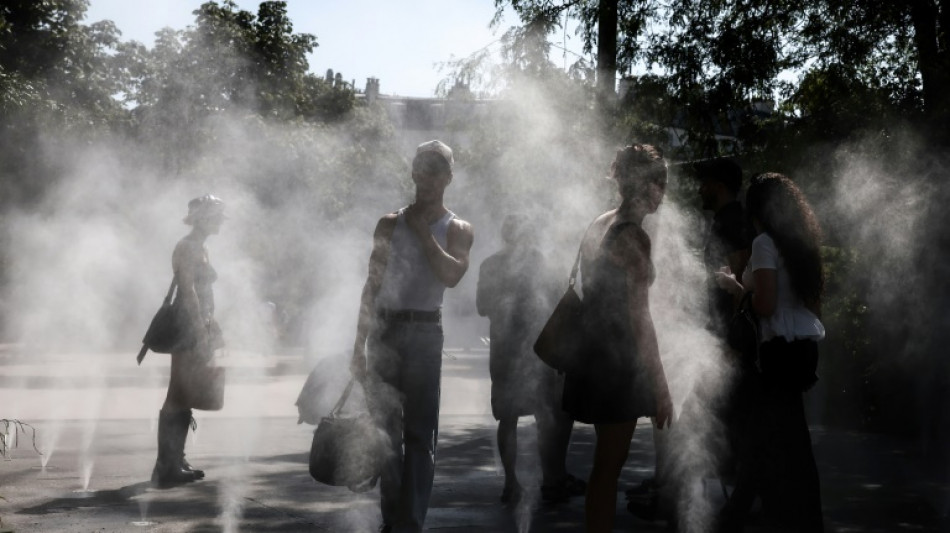
The proposal comes as much of Europe roasts in an early summer heatwave, which scientists say are becoming more intense, frequent and widespread due to human-induced climate change.
The 2040 target -- which needs the sign off from the European Union's member states and parliament -- is a key milestone towards the bloc's goal of becoming carbon neutral by 2050.
Brussels says the EU has cut climate-warming emissions by 37 percent relative to 1990 but its green agenda faces mounting pushback with a rightward shift and rising climate scepticism in many European countries.
EU climate chief Wopke Hoekstra acknowledged the "sensitive" debate, saying Brussels was keeping an "ambitious" goal while being "pragmatic and flexible on how to achieve it".
To sway resistant capitals, the European Commission proposes that from 2036, the bloc's 27 countries can count carbon credits purchased to finance projects outside Europe, for up to three percent of their emission cuts.
Climate groups are fiercely opposed to such a measure.
Backed by scientific studies and the commission's own science advisers, they say factoring in international credits -- for things like tree-planting or renewable-energy projects -- risks undermining the EU's own efforts to shift away from fossil fuels.
"Three percent is not insignificant. These are potentially considerable sums that will be spent abroad instead of financing the transition" in Europe, said Neil Makaroff, an expert at the climate-focused Strategic Perspectives think tank.
"But there's a political compromise to be found," he said. "The challenge will be for the EU to establish a standard so that these international credits truly help cut emissions and not leave individual states to their own devices."
- 'Don't strain ourselves' -
EU environment ministers will discuss the objective at a meeting in mid-July, ahead of an expected vote to approve the measures on September 18.
It will only become law after EU lawmakers also sign off on the target.
The commission's hope is that the 2040 objective will be approved before the UN climate conference (COP30) in November in the northern Brazilian city of Belem.
But that gives little time for negotiations with sceptical nations, with whom Hoekstra has already spent months trying to build a compromise.
For some states, including the Czech Republic, the 90-percent target is unrealistic.
Meanwhile, others including Italy and Hungary worry about the burden of decarbonising heavy industry at a time when Europe is working to strengthen its industry in the face of fierce competition from the United States and China.
Italian Prime Minister Giorgia Meloni has suggested a target of 80 or 85 percent, while France has expressed doubts over how the EU will reach its objective.
French President Emmanuel Macron wants guarantees for the decarbonisation of industry and support for nuclear energy, the largest source of power in France.
But the commission can count on the support of other countries including Spain and Denmark, which took over the rotating EU presidency this week.
And the three-percent "flexibility" -- which mirrors demands made in the new German government's coalition agreement -- should help keep the economic powerhouse on board.
When it comes to Europe's international commitments, Macron has also stressed that the bloc is only bound to present a midway target for 2035 at COP30 in Belem, and not the 2040 objective.
"Let's not strain ourselves," Macron told reporters last week. "If we have (a 2040 target) for Belem, great, but if it takes longer, let's take the time," he said.
B.Baumann--VB