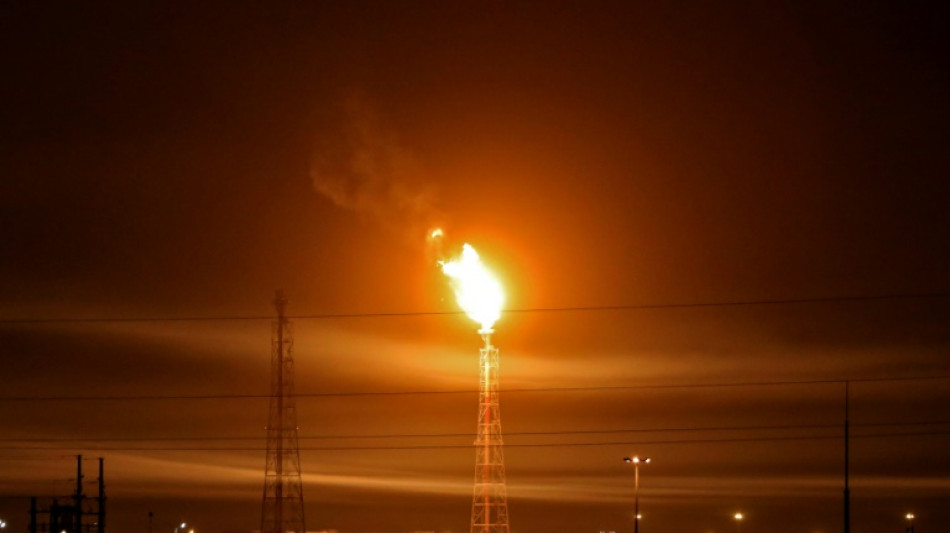
Global oil demand to dip in 2030, first drop since Covid: IEA / Photo: © AFP/File

 Venezuela govt, opposition wrap up round of post-Maduro talks

 Five things to know about Zambia as it goes to the polls

 Nakashima holds off Jodar to book first ATP Masters final in Montreal

 Trump 'low-key' bets on economic pressure against Iran

 Pitch invaders take selfies with Fernandes during Man Utd friendly

 No-stress Sabalenka won't fret over lackluster 2026 results

 Hometown hero Hudson-Smith basks in Euro glory

 PSG down Aston Villa to retain UEFA Super Cup

 Trump's spokesperson Karoline Leavitt to step down

 'Imposing ignorance': US climate science under siege

 As millions gazed in awe, a swathe of Spain plunged into darkness

 Xavi named first foreign Netherlands coach since 1978

 NBA triple-double king Westbrook to retire after 18 seasons

 'Trying to bury the science': US climate research under siege

 Eurovision to bar countries at war from hosting

 Italian teenager Curtis breaks 50m backstroke world record at Europeans

 New mum Sjostrom wins 50m butterfly for 18th European gold

 Solar eclipse darkens Arctic Russia on course for Spain

 Russian economy rebounds in second quarter despite Ukrainian strikes

 NBA's Los Angeles Lakers to be sold for $12.5 bn: ESPN

 Trump sued over sale of access to Truth Social posts

 Europe looks to the skies as solar eclipse cast its shadow
 At least 44 drown after ferry overturns on Zimbabwe's Lake Kariba

 Grieving Argentine icon Messi unsure about playing on 'much longer'

 Nigeria kidnap victims escape 'hellfire' captivity beaten, malnourished
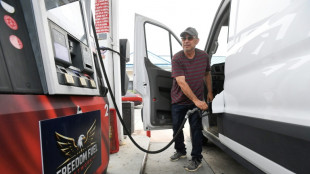
Global oil demand will fall slightly in 2030, its first drop since the 2020 Covid pandemic, the International Energy Agency said Tuesday.
In an annual outlook for the oil market, the Paris-based agency cited sluggish economic growth, global trade tensions, the rise of electric cars and the shift away from crude to produce power.
Annual demand growth will slow from around 700,000 barrels per day (bpd) in 2025 and 2026 "to just a trickle over the next several years, with a small decline expected in 2030", the IEA said.
Total demand is forecast to reach 105.5 million bpd in 2030 after peaking at 105.6 million bpd in 2029.
Oil demand dropped dramatically in 2020, when countries locked down and shut their borders during the Covid pandemic, falling to 91.7 million bpd before steadily growing again in the following years.
Demand in the world's top consumer, the United States, is expected to peak this year and start to decline in 2026 while consumption in China, the top importer of crude, will fall from 2028, according to the "Oil 2025" report.
Demand in the Middle East will also peak in 2027 and decline the following year.
Saudi Arabia will post the "single largest decline in oil demand for any country" in absolute terms through 2030 as the kingdom replaces crude with gas and renewable energy to produce power, the IEA said.
- US and Saudis to lead output -
The report comes as oil prices have surged since Israel launched air strikes against Iran last week, prompting Tehran to fire missiles back at its arch foe.
The price increases "are not driven by the fundamentals", IEA executive director Fatih Birol said in a news conference. "We have a lot of supply oil in the market. Demand is much weaker than the supply."
"We don't expect high oil prices to be with us for a very long time," Birol said, adding that the IEA stood ready to act if there are any supply disruptions.
While the conflict "focuses attention on immediate energy security risks", the IEA said oil supply growth will "far outpace" the increase in demand in coming years.
World oil production capacity is forecast to rise by 5.1 million bpd -- double the pace of demand -- to 114.7 million bpd by 2030, the report found.
"Combined, Saudi Arabia and the United States will contribute 40 percent to total global oil capacity growth in the forecast period," it said.
S.Gantenbein--VB