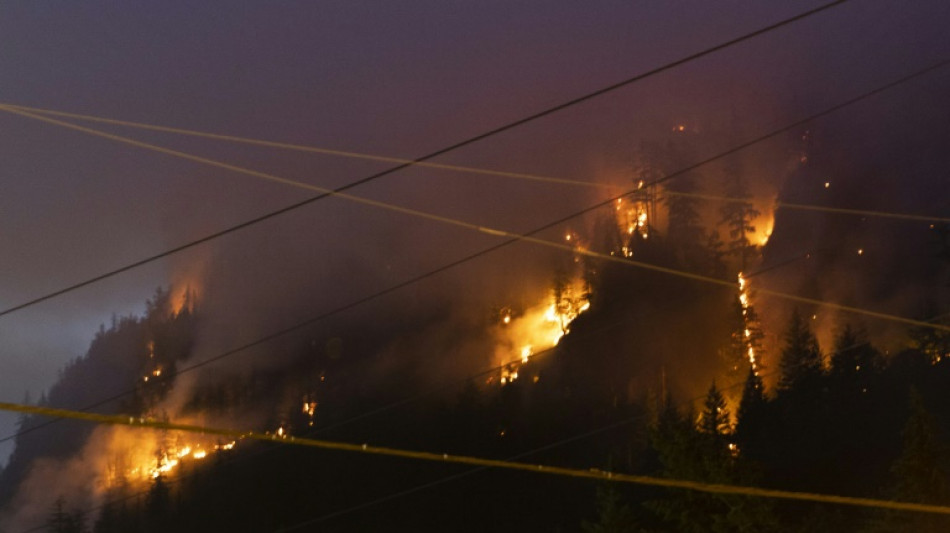
Canada town near Vancouver ready to evacuate as fire nears / Photo: © AFP

 Indicted Raul Castro reappears after months out of public view
 Italian teen Curtis breaks women's 50m backstroke world record for second time

 Taulagi steps out of 'comfort zone' with code switch to French Top 14 new boys

 Leicester's Thai owners put troubled club up for sale: reports

 Stocks steady as US inflation worries ease, oil slips

 Porsche to end production of flagship electric car: report

 Twitch sparks gamers' wrath with Amazon AI sharing deal

 Blaze forces families to abandon Turkish tour boat

 'If you can, move!' say Rome's viral dancing seniors

 Zambia voters weigh Hichilema's economic record

 SBCFX to Showcase Trading Innovation, Regional Growth Strategy, and Future Vision at iFX EXPO Asia 2026

 Hodgkinson sets up Werro showdown after Euro 800m drama

 'How many will die?': the mysterious ailment killing Kenyan elephants

 Arteta coy over Lewis-Skelly's Arsenal future after 'emotional' celebration

 Romania shuts down nuclear plant as Danube drops

 German steel giant Thyssenkrupp weighs options as Rhine drops

 US ambassador denounces settler siege as Israel dispatches troops

 Hasan takes 6-55 as Bangladesh claim opening day of Australia Test

 Taiwan says AI agents used in cyberattacks targeting island

 Japan protests Putin's first visit to disputed islands

 Kiss wants fit-again Wallabies playmaker Gordon to 'open up' Japan

 British eccentrics push humble garden shed to new heights

 Zambia votes with president's economic record on the line

 Germany's dry rivers spark battle on engineering vs restoration

 Senators demand inquiry into conditions aboard USS Abraham Lincoln

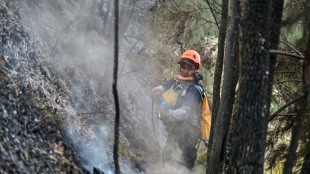
Residents of a town near Vancouver were on stand-by to evacuate Wednesday as Canada's devastating wildfire season worsened, with officials warning weather conditions through the summer were ripe for further blazes.
A state of emergency has been declared in Squamish, British Columbia, just 64 kilometres (40 miles) north of Vancouver, a city where the greater metropolitan area population exceeds three million.
British Columbia's emergency management department warned late Tuesday that some residents of Squamish district "must be ready to leave on short notice."
Max Whittenburg, a 19-year-old Squamish resident, told AFP he was "in shock" to see the fire encroach so close to the community.
"I've never seen a fire in Squamish, at all, ever," the skateboard coach said.
"We've already prepared most of the stuff in our house just in case we do have to evacuate," he added. "We'll be ready to go."
Luke Procter, also 19, said he was staying up late and rising early to prepare, including by helping his father "hook up the trailer to our jeep just in case we need to go."
Marc-Andre Parisien, a researcher at the Canadian Forest Service, said fires near the coast like the one threatening Squamish are particularly worrying because "these are areas that did not traditionally burn."
They remain less intense than fires further inland, but "we have more and more of them," he told AFP.
Two years after a historically devastating summer, Canada is once again facing a massive fire season, with burned areas already exceeding year-to-date averages from recent years.
More than 220 active fires were burning across the country Tuesday, with half of them considered out of control.
More than 3.3 million hectares (12,700 square miles) have already been consumed by flames -- an area equivalent to the country of Belgium.
Smoke from Canadian fires has reached Europe after drifting across the Atlantic Ocean.
- Increased risk -
Two provinces in central Canada -- Saskatchewan and Manitoba -- had rough starts to fire season, and had to declare a state of emergency at the end of May.
There was positive news in Saskatchewan on Wednesday after what provincial Premier Scott Moe called "a vicious couple of weeks" combatting wildfires "that in some cases have virtually been unstoppable."
Moe said that while the province is still confronting fires in northern Saskatchewan, roughly half of those who had been forced to evacuate are "gearing up" to return home.
Mega wildfires are still burning in western Alberta, British Columbia, and in northern Ontario, the country's most populous province.
In recent years, Canada has experienced warming at least twice as fast as the rest of the globe.
Linked to human-induced climate change, rising temperatures lead to reduced snow, shorter and milder winters, and earlier summer conditions that promote fires, experts say.
Environment Canada forecast this week that much of of the country was likely to see higher than normal temperatures throughout the summer.
That, combined with dry spring conditions in several areas, "could increase the risk of wildfires in the coming months," the weather and climate agency said.
Now, more than a dozen new fires are detected daily across Canada -- often started accidentally by humans, but sometimes ignited by lightning strikes.
T.Suter--VB