Africa faces disproportionate burden from climate change: UN / Photo: © AFP/File

 EU calls Russia 'reckless' after flares fired at Danish helicopter

 US Treasury chief says to meet Chinese counterpart at weekend

 Trump slams 'horrible' Supreme Court mail-in ballot ruling

 Brazil's crisis-hit Supreme Court probes judge's ties to jailed banker
 Sterling admits dangerous driving after Lamborghini crash

 Ambassador to Thailand plays down anti-Israeli protests
 BingX Evolves into a Multi-Asset Trading Platform, Connecting Users to Global Opportunities

 Flick supporting 'self-confident' Yamal Ballon d'Or bid

 As Ballon d'Or vote nears, stars campaign for the award
 Markets on edge as US Fed meets to tackle high inflation

 International Trading Institute Expands Professional Trader Development Beyond the Master’s in Trading

 Nairobi to host 2029 world athletics championships in African first

 Ukraine winemakers defy war to make a splash at home
 Prominent Greek neo-Nazi exits prison, vows return to politics: AFP

 Saudi Arabia vows to respond 'firmly' to Houthi attacks

 'We unleashed the beast': the world's fears and hopes about AI

 Carragher sees Manchester City’s winning start as challenge to Arsenal
 Oasis fans weigh ticket costs and reunion memories ahead of 2027 tour

 EastEnders previews Kat’s grief after Zoe’s death

 US military confirms Iran war has led to munitions shortfall

 SkySail Strategies Outperforms Wall Street's 30-Year Risk Standard With Proprietary AI Inference Model

 Canada ends refugee family sponsorship exemption over integrity concerns
 Berlin's run-down public spaces at heart of election campaign

 Ribeiro and Richie among celebrity birthdays for September 20–26

 Bob Mackie, costume designer for Cher and Madonna, dies aged 87
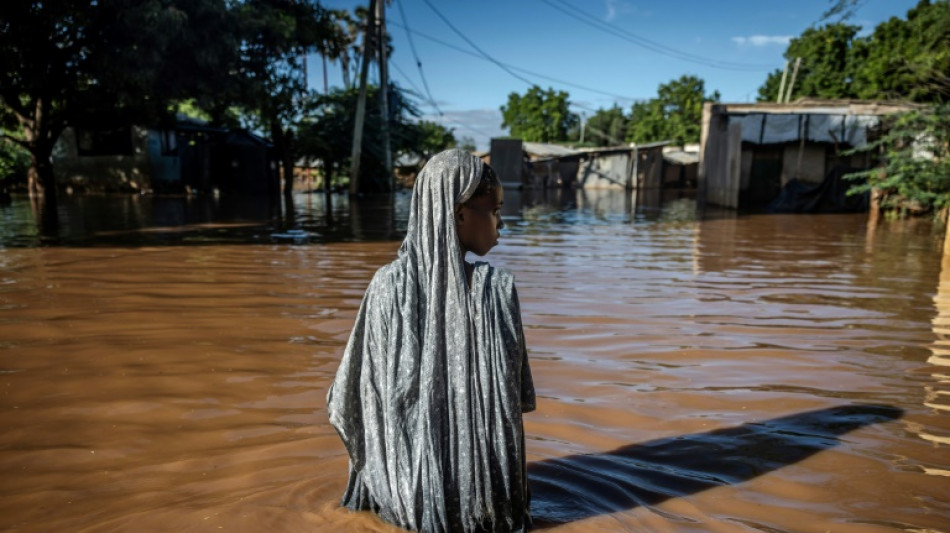
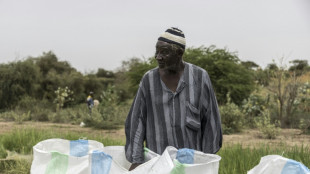
Africa faces a disproportionate burden from climate change and the costs of adapting, the World Meteorological Organization (WMO) said in a new report on Monday.
The African continent has been warming at a slightly faster rate than the global average -- at about 0.3 degrees Celsius per decade between 1991 and 2023, the WMO said in its report on the state of the climate in Africa last year.
North Africa experienced the most rapid warming, it said. The city of Agadir in Morocco reached a new maximum temperature of 50.4 degrees.
Other countries saw extreme rainfall leading to flooding.
Climate activists have long pointed out that Africa pays one of the highest prices for climate change while the continent is responsible for just a fraction of global greenhouse gas emissions.
The UN's COP29 climate summit, which will be hosted by Azerbaijan in November, will focus in large part on how much wealthy industrialised nations should contribute to help poorer countries adapt to climate change.
"Africa faces disproportionate burdens and risks arising from climate change related weather events and patterns," Josefa Leonel Correia Sacko, commissioner for agriculture, rural development, blue economy and sustainable environment at the African Union Commission, said in the WMO report.
They "cause massive humanitarian crises with detrimental impacts on agriculture, and food security, education, energy, infrastructure, peace, and security, public health, water resources, and overall socio-economic development," she said.
In September and October, around 300,000 people were affected by flooding across 10 countries, with Niger, Benin, Ghana and Nigeria most heavily impacted.
That came months after flooding hit Libya and parts of East Africa, the WMO, the United Nations' weather and climate agency, said.
Zambia faced its worst drought in 40 years, affecting around six million people, while a string of other nations also grappled with severe drought in 2023, WMO said.
"Climate extremes including floods and droughts had a major impact on food security," the report said.
African countries on average are losing two to five percent of gross domestic product and "many are diverting up to nine percent of their budgets responding to climate extremes", the WMO said.
If adequate measures to respond are not implemented, by 2030 an estimated up to 118 million people who live on less than $1.90 a day will be exposed to drought, floods and extreme heat in Africa, it said.
"This will place additional burdens on poverty alleviation efforts and significantly hamper growth," according to the report.
The UN agency highlighted the urgent need to invest in improved data collection and forecasting and early warning capabilities.
"Between 1970 and 2021, Africa accounted for 35 percent of weather, climate and water-related fatalities. Yet only 40 percent of the African population has access to early warning systems –- the lowest rate of any region of the world," the WMO said.
N.Schaad--VB