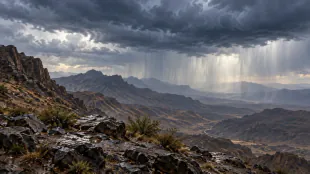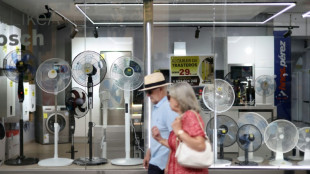
Mediterranean heatwave 'virtually impossible' without climate change: scientists / Photo: © AFP

 EU calls Russia 'reckless' after flares fired at Danish helicopter

 US Treasury chief says to meet Chinese counterpart at weekend

 Trump slams 'horrible' Supreme Court mail-in ballot ruling

 Brazil's crisis-hit Supreme Court probes judge's ties to jailed banker
 Sterling admits dangerous driving after Lamborghini crash

 Ambassador to Thailand plays down anti-Israeli protests

 BingX Evolves into a Multi-Asset Trading Platform, Connecting Users to Global Opportunities

 Flick supporting 'self-confident' Yamal Ballon d'Or bid

 As Ballon d'Or vote nears, stars campaign for the award

 Markets on edge as US Fed meets to tackle high inflation

 International Trading Institute Expands Professional Trader Development Beyond the Master’s in Trading

 Nairobi to host 2029 world athletics championships in African first

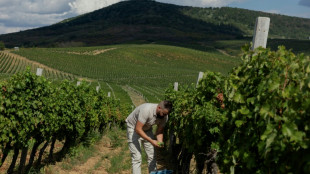 Ukraine winemakers defy war to make a splash at home

 Prominent Greek neo-Nazi exits prison, vows return to politics: AFP

 Saudi Arabia vows to respond 'firmly' to Houthi attacks

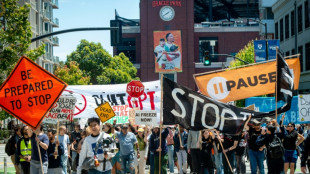 'We unleashed the beast': the world's fears and hopes about AI

 Carragher sees Manchester City’s winning start as challenge to Arsenal
 Oasis fans weigh ticket costs and reunion memories ahead of 2027 tour

 EastEnders previews Kat’s grief after Zoe’s death

 US military confirms Iran war has led to munitions shortfall

 SkySail Strategies Outperforms Wall Street's 30-Year Risk Standard With Proprietary AI Inference Model

 Canada ends refugee family sponsorship exemption over integrity concerns

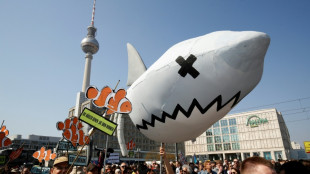 Berlin's run-down public spaces at heart of election campaign

 Ribeiro and Richie among celebrity birthdays for September 20–26

 Bob Mackie, costume designer for Cher and Madonna, dies aged 87

The punishing heat experienced around the Mediterranean in July would have been "virtually impossible" in a world without global warming, a group of climate scientists said Wednesday.
A deadly heatwave brought temperatures well above 40 degrees Celsius (104 Fahrenheit) to southern Europe and North Africa, where such extreme summer spells are becoming more frequent.
Scorching heat claimed more than 20 lives in a single day in Morocco, fanned wildfires in Greece and the Balkans, and strained athletes competing across France in the Summer Olympic Games.
World Weather Attribution, a network of scientists who have pioneered peer-reviewed methods for assessing the possible role of climate change in specific extreme events, said this case was clear.
"The extreme temperatures reached in July would have been virtually impossible if humans had not warmed the planet by burning fossil fuels," according to the WWA report by five researchers.
The analysis looked at the average July temperature and focused on a region that included Morocco, Portugal, Spain, France, Italy and Greece.
Scientists used this and other climate data to assess how the heat in July compared to similar periods in a world before humanity began rapidly burning oil, coal and gas.
They concluded the heat recorded in Europe was up to 3.3C hotter because of climate change.
Beyond the Mediterranean, intense heat reached Paris this week where athletes competing in the Olympic Games withered as temperatures hit the mid-30s this week.
"Extremely hot July months are no longer rare events," said Friederike Otto, a climate scientist at Imperial College London, a co-author of the study.
"In today's climate... Julys with extreme heat can be expected about once a decade," she said.
Scientists have long established that climate change is driving extreme weather and making heatwaves longer, hotter and more frequent.
This latest episode came in a month when global temperatures soared to their highest levels on record, with the four hottest days ever observed by scientists etched into the history books in July.
The past 13 months have been the warmest such period on record, exceeding a 1.5C limit that scientists say must be kept intact over the long term to avoid catastrophic climate change.
A.Ammann--VB