'It's unbearable': heatwaves scorch southern and eastern Europe / Photo: © AFP

 Trump Signals Willingness to Work With Democrats After Midterm Defeat

 Qatar media bodies discuss support for humanitarian initiatives

 No. 22 UCLA defeats No. 5 Arizona 84-75 despite Kharchenkov's 38 points

 Vessel operator seeks witnesses after Vancouver grounding

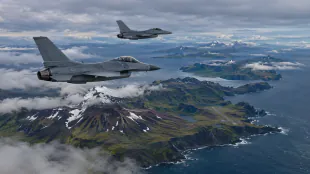 US Air Force deploys F-16 fighters to remote Aleutian base for readiness drill

 Bezos grant helps Seattle nonprofit move thousands of families toward housing

 Shrini Srivastava joins crew of Varanasi-Delhi Vande Bharat Sleeper service

 Nearly Half of Australian Workers Overqualified, Survey Finds

 RBI eases export-declaration compliance for individual service exporters
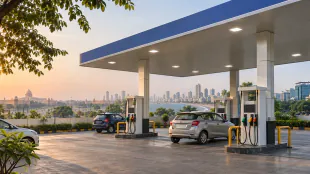
 India proposes more import entry points for drugs and medical devices

 Derek Tierney Outlines Ten-Year Strategy for National Digital Health System

 NBC’s Steve Kornacki Reveals Tech Habits Ahead of Midterm Elections

 India and Israel oppose UN draft on regional conventional arms control

 BLS Polymers shares open 65.3% above IPO price

 Capital-markets shares rally as Motilal Oswal and Angel One lead gains

 Latino Voters Defy ICE Fears, Turn Out in Record Numbers for Midterms

 ITC shares rise as analysts anticipate gradual cigarette-business recovery

 Reliance rally puts historical one-year return pattern in focus

 Kuwait edges Oman 1-0 in veterans Gulf Cup in Doha

 Saudi Aramco quarterly profit climbs 34.6% amid elevated oil prices
Unrelenting heat is blanketing swathes of southern and eastern Europe, with dozens of cities on red alert as scorching temperatures fuel wildfires, strain power grids, and make daily life unbearable.
There was no let up Thursday as the mercury again hovered near or above 40 degrees Celsius in many countries, with worse expected in the coming days.
Europe is no stranger to baking summer spells but climate change is making heatwaves longer, stronger and more frequent, sustaining dangerously high temperatures even at night.
Greece, which recorded its earliest-ever heatwave this summer, withered through its 11th-straight day above 40C on Thursday.
Nights in the capital Athens have hit 30C as heat rolls unbroken from one day to the next.
On Thursday, authorities closed the Acropolis, the country's most visited attraction, during the hottest hours for a second day in a row.
Some outdoor work, like construction and meal delivery, have also been suspended.
Cooler weather isn't expected until July 26.
In the heart of Athens, tourists sought precious shade as Sam Rizek, a waiter, drank chilled water to keep the heat at bay.
"It's not easy, it makes my work harder," the 19-year-old told AFP. "Here in Greece, we have to get used to it."
- 'We can't sleep' -
In Italy, zoo keepers gave animals ice blocks to ward off heat stroke as temperatures soared, while 14 cities including Florence, Palermo and Bologna were placed on red alert.
To make matters worse, swarms of locusts thriving in the hot conditions have invaded fields and orchards in the eastern region of Emilia Romagna.
"The high temperatures and the lack of rain have favoured the massive proliferation of one of the insects most feared by farmers," said Italy's main agricultural lobby Coldiretti.
In Hungary, which has been under a maximum heat warning since July 7, searing temperatures have warped an airport runway while the state-run train operator urged passengers to take air-conditioned buses instead of its outdated rail cars.
Croatia and Serbia this week consumed a record amount of electricity as residents switched on air conditioners to beat the heat.
It followed an early start to the Balkans summer in June when a sudden heatwave saw power grids overwhelmed in Albania, Bosnia, southern Croatia and Montenegro.
In Romania, gripped by a heatwave since Saturday, evening temperature records have tumbled as blistering daytime highs have carried into long, suffocating nights.
"Without air conditioning it's unbearable," 20-year-old Alexandru Tudor told AFP in Bucharest, which is on its highest state of alert.
"It's very hot in the evening too, and we can't sleep."
- Dangerous highs -
Ilan Kelman from University College London said prolonged heatwaves could turn deadly if the human body was not given ample chance to cool off at night.
"This is what we need to be worried about. Temperatures are not falling at night," said the professor of disasters and health.
The past 13 months have been the hottest ever recorded, and heatwaves have already this year hit North America, Mexico, India and Thailand, to name a few.
The EU's climate monitor Copernicus said the average temperature for June across Europe was 1.57C above the 1991–2020 average, making the month the joint-second warmest on record.
But this was largely felt in southeast regions and Turkey, with western Europe experiencing a slow start to summer, with near or below average temperatures for June.
Paco Pozo from Cordoba, a southern region of Spain, said the heat so far had been "completely bearable" compared to past years.
"At this time of year, normally, we would be asphyxiated. But so far, we are doing really well," he said.
But this doesn't look set to last.
Spain declared its first heatwave of the year on Thursday with temperatures forecast to hit 44C in some southern areas in coming days, accompanied by hot and uncomfortable nights.
A wall of heat from Africa driving up temperatures was also expected to bring sand and dust from the Sahara across Spain, the State Meteorological Agency said.
- 'We're worried' -
In all these regions, deadly wildfires have accompanied the tinder-dry conditions.
Two firefighters died on Wednesday battling a blaze near the southern Italian city of Matera, while a separate fire near Rome shrouded the capital in a choking yellow haze.
In Greece -- where 40 new blazes were recorded in the past 24 hours -- firefighters were stretched to the limit.
"We're worried," veteran firefighter Konstantinos Goularas told AFP in Athens as a small group of comrades rallied outside parliament for more resources.
"We don't have enough firefighters for the summer."
Hans-Martin Fussel, from the European Environment Agency, said western Europe was often better prepared for heatwaves than southern or eastern regions where the threat was much greater.
"Cities in Europe are clearly waking up but most of them are not yet ready for the threat," the climate change adaptation expert told AFP.
burs-np/rl
J.Marty--VB