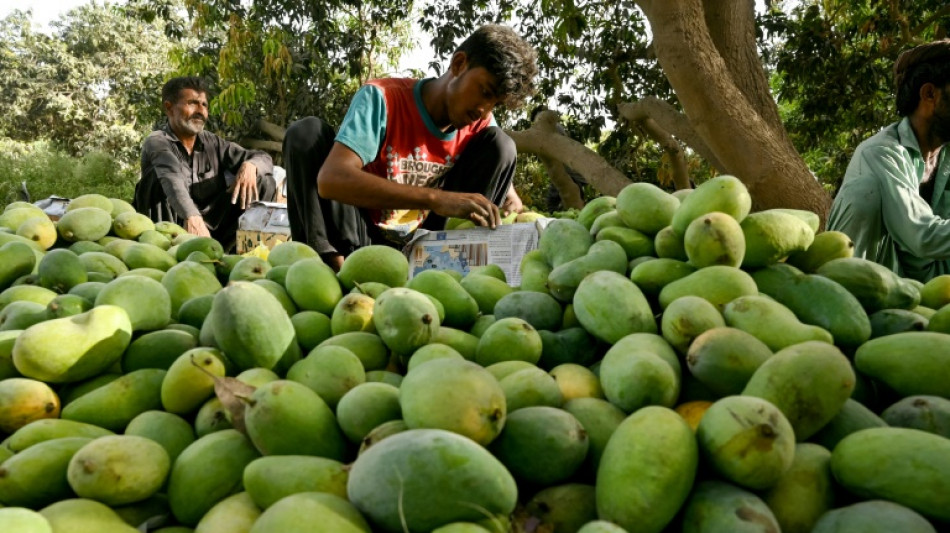
Pakistan farmers pin poor mango crop on climate change / Photo: © AFP

 BingX Evolves into a Multi-Asset Trading Platform, Connecting Users to Global Opportunities

 Flick supporting 'self-confident' Yamal Ballon d'Or bid

 As Ballon d'Or vote nears, stars campaign for the award

 Markets on edge as US Fed meets to tackle high inflation

 International Trading Institute Expands Professional Trader Development Beyond the Master’s in Trading

 Nairobi to host 2029 world athletics championships in African first

 Ukraine winemakers defy war to make a splash at home

 Prominent Greek neo-Nazi exits prison, vows return to politics: AFP

 Saudi Arabia vows to respond 'firmly' to Houthi attacks

 'We unleashed the beast': the world's fears and hopes about AI

 Carragher sees Manchester City’s winning start as challenge to Arsenal
 Oasis fans weigh ticket costs and reunion memories ahead of 2027 tour

 EastEnders previews Kat’s grief after Zoe’s death

 US military confirms Iran war has led to munitions shortfall

 SkySail Strategies Outperforms Wall Street's 30-Year Risk Standard With Proprietary AI Inference Model

 Canada ends refugee family sponsorship exemption over integrity concerns
 Berlin's run-down public spaces at heart of election campaign

 Ribeiro and Richie among celebrity birthdays for September 20–26

 Bob Mackie, costume designer for Cher and Madonna, dies aged 87

 Mahomes makes triumphant return as Chiefs rout Broncos 31-10

 Belgium completes outer structure of offshore energy island

 Video documents rescue of injured US airman from Iran

 Asian Games: Bigger than Olympics, young stars and a cruise ship

 Asian Games set for liftoff but will have everyone have a bed?

 Most markets drop as oil extends gains ahead of expected US rate hike
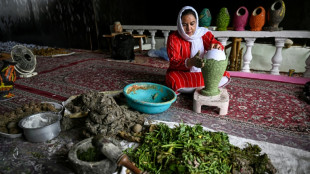
Pakistan's mangoes are normally a source of national pride and much-needed income, but farmers are blaming climate change for the parasites and extreme weather ruining much of this season's crop.
A white and orange scarf wrapped around his head in the scorching heat, farmer Muhammad Yusuf lamented the erratic weather.
An abnormally long winter was followed by the wettest April in decades, while the country is now experiencing a heatwave with temperatures hitting up tp 52 degrees Celsius (126 degrees Fahrenheit).
"Buds didn't flower on time, many buds just died. Those that started growing were infected with (parasite) black hopper," said Yusuf, who has worked half his life growing mangoes.
Now over 60 years old, Yusuf said "climate change has wreaked havoc" in his village of Tando Allahyar, around 200 kilometres (124 miles) northeast of economic hub Karachi.
Pakistan is the world's fourth-largest mango producer and agriculture accounts for almost a quarter of its GDP.
Further south in Tando Ghulam Ali, Arsalan, who manages a 900-acre mango orchard, noticed the damage as soon as the harvest started this week.
"We have production losses of 15 to 20 percent, and the picking has only just started so this figure will surely increase," said the 32-year-old.
Exports will be slashed as a result warned Arsalan, who only goes by one name.
"The mangoes turn yellow from the outside but remain underripe or overripe inside," he explained.
Ziaul Haq, a mango grower and exporter from Tando Ghulam Ali, said the "many attacks on fruit" by pests were unprecedented.
"This, in our history, has never happened before," he told AFP.
- 'Feed our families' -
The proliferation of parasites has led to an explosion in spending on pesticides.
This uptick was confirmed by several farmers in Sindh province, where Tando Allahyar and Tando Ghulam Ali are located, as well as those in the leading agricultural province of Punjab further north.
They told AFP that chemicals are now used six to seven times per year, compared to just twice three years ago.
Farmers in Sindh said they have been struggling since 2022 when a series of severe heatwaves were followed by unprecedented flooding, while those in Punjab said the declining crops yields date back several years more.
"The losses in Punjab reached 35 to 50 percent and in Sindh, 15 to 20 percent" compared to last year, said Waheed Ahmed, head of the Pakistan Federation of Fruit and Vegetable Exporters Association (PFVA).
Speaking to local media, he said that last year Pakistan had only managed to export 100,000 of the 125,000 tonnes of mangoes it planned to sell abroad.
Pakistan's 20 varieties of mangoes come second only to oranges as the most-produced fruit in the country.
The income loss from a poor harvest could have a significant impact on the country, which is in talks to secure a loan from the International Monetary Fund (IMF).
Mashooq Ali, a 30-year-old labourer in Tando Ghulam Ali, wants the government to help farmers cope.
"Landowners will earn less this year," said Ali, whose wife has started trading clothes to earn extra cash.
"And even if they paid us as much as last year, with inflation, we won't be able to feed our families."
G.Frei--VB