Scientists in UK set fusion record / Photo: © POOL/AFP

 International Trading Institute Expands Professional Trader Development Beyond the Master’s in Trading

 Nairobi to host 2029 world athletics championships in African first

 Ukraine winemakers defy war to make a splash at home

 Prominent Greek neo-Nazi exits prison, vows return to politics: AFP

 Saudi Arabia vows to respond 'firmly' to Houthi attacks

 'We unleashed the beast': the world's fears and hopes about AI

 Carragher sees Manchester City’s winning start as challenge to Arsenal
 Oasis fans weigh ticket costs and reunion memories ahead of 2027 tour

 EastEnders previews Kat’s grief after Zoe’s death

 US military confirms Iran war has led to munitions shortfall

 SkySail Strategies Outperforms Wall Street's 30-Year Risk Standard With Proprietary AI Inference Model

 Canada ends refugee family sponsorship exemption over integrity concerns

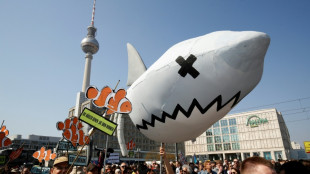 Berlin's run-down public spaces at heart of election campaign

 Ribeiro and Richie among celebrity birthdays for September 20–26

 Bob Mackie, costume designer for Cher and Madonna, dies aged 87

 Mahomes makes triumphant return as Chiefs rout Broncos 31-10

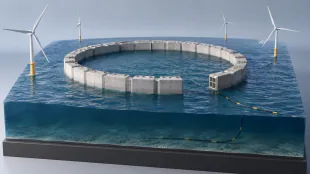 Belgium completes outer structure of offshore energy island

 Video documents rescue of injured US airman from Iran

 Asian Games: Bigger than Olympics, young stars and a cruise ship

 Asian Games set for liftoff but will have everyone have a bed?

 Most markets drop as oil extends gains ahead of expected US rate hike

 Kate Beckinsale challenges assumptions about her beauty routine

 Sri Lanka's famed beach shack battles demolition

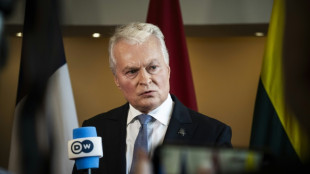 Drone shot down by NATO over Lithuania

 Vserv targets ₹1,000 crore revenue by 2030 through AI expansion

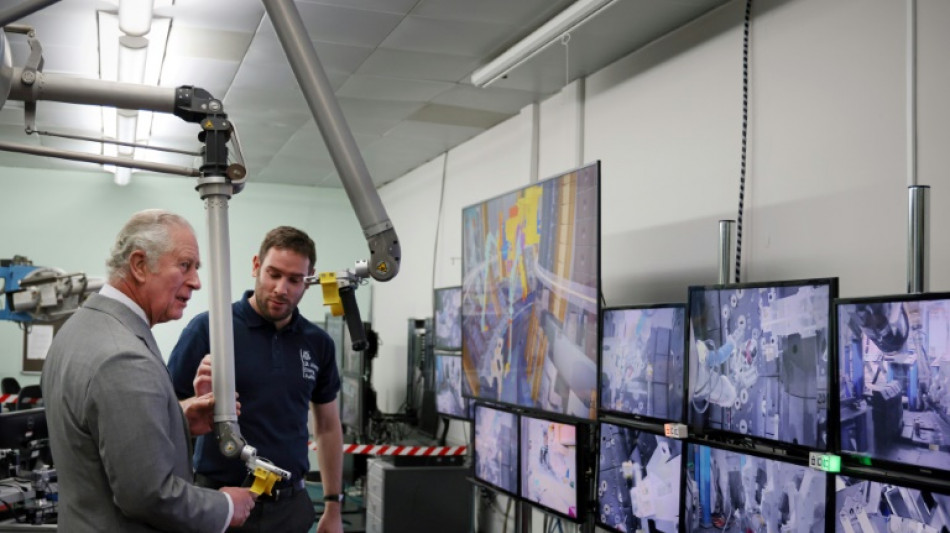
Scientists in Britain announced Thursday they had smashed a record for generating fusion energy in the final experiment using the Joint European Torus (JET) machines.
Nuclear fusion is the same process that the sun uses to generate heat. Proponents believe it could one day help tackle climate change by providing an abundant, safe and clean source of energy.
A team at the JET facility near Oxford in central England generated 69 megajoules for five seconds using 0.2 milligrams of fuel, beating its previous record set in 2022 by 10 megajoules, the UK Atomic Energy Authority (UKAEA) said.
That is enough to power around 41,000 homes for five seconds.
It is the final experiment to be conducted at the JET site using a donut-shaped machine called a tokamak.
"JET has operated as close to power-plant conditions as is possible with today's facilities, and its legacy will be pervasive in all future powerplants," said Ian Chapman, UKAEA CEO.
"JET's research findings have critical implications not only for ITER -– a fusion research mega-project being built in the south of France -– but also for ... other global fusion projects, pursuing a future of safe, low-carbon, and sustainable energy," he added.
Over 300 scientists and engineers from EUROfusion, a consortium of researchers across Europe, contributed to JET's landmark experiments over 40 years.
Inside JET's tokamak, 0.1 milligrammes each of deuterium and tritium -- both isotopes of hydrogen -- were heated to temperatures 10 times hotter than the centre of the sun to create plasma.
This mixture was held in place using magnets as it spun around, fusing and releasing tremendous energy as heat.
Fusion is inherently safe in that it cannot start a run-away process.
Deuterium is freely available in seawater, while tritium can be harvested as a byproduct of nuclear fission.
Using equivalent weights, it releases nearly four million times more energy than burning coal, oil or gas, and the only waste product is helium.
Despite the new record, JET did not generate more energy than was put into producing it.
The Lawrence Livermore National Laboratory in the United States became the only facility to achieve this feat -- the holy grail of nuclear fusion -- in late 2022, using a different process involving lasers.
JET conducted its first deuterium-tritium experiments in 1997.
The results announced Thursday demonstrated the ability to create fusion for five seconds, as longer than that would cause JET's copper wire magnets to overheat.
ITER will be equipped with superconductor electromagnets which will allow the process to continue for longer, hopefully longer than 300 seconds.
If all goes well at ITER, a prototype fusion power plant could be ready by 2050.
International cooperation on fusion energy has historically been close because, unlike the nuclear fission used in atomic power plants, the technology cannot be weaponised.
The France-based megaproject also involves China, the EU, India, Japan, South Korea, Russia and the US.
I.Stoeckli--VB