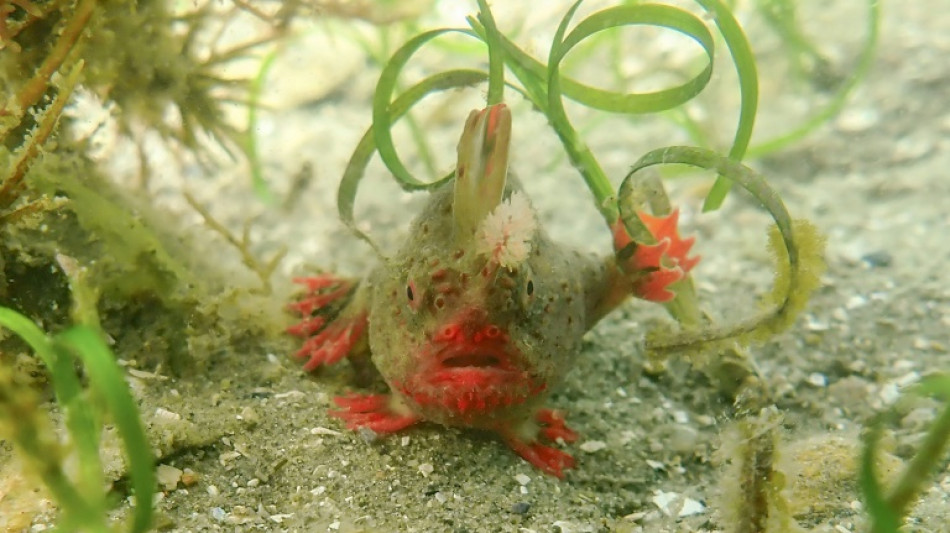
Australia scientists pluck rare handfish from ocean due to climate risk / Photo: © UNIVERSITY OF TASMANIA/AFP

 Lake Energy Secures $80 Million for U.S. Renewable Energy Expansion

 Carragher sees Manchester City’s winning start as challenge to Arsenal
 Oasis fans weigh ticket costs and reunion memories ahead of 2027 tour

 EastEnders previews Kat’s grief after Zoe’s death

 US military confirms Iran war has led to munitions shortfall

 SkySail Strategies Outperforms Wall Street's 30-Year Risk Standard With Proprietary AI Inference Model

 Canada ends refugee family sponsorship exemption over integrity concerns

 Berlin's run-down public spaces at heart of election campaign

 Ribeiro and Richie among celebrity birthdays for September 20–26

 Bob Mackie, costume designer for Cher and Madonna, dies aged 87

 Mahomes makes triumphant return as Chiefs rout Broncos 31-10

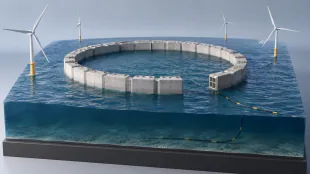 Belgium completes outer structure of offshore energy island

 Video documents rescue of injured US airman from Iran

 Asian Games: Bigger than Olympics, young stars and a cruise ship

 Asian Games set for liftoff but will have everyone have a bed?

 Most markets drop as oil extends gains ahead of expected US rate hike

 Kate Beckinsale challenges assumptions about her beauty routine

 Sri Lanka's famed beach shack battles demolition

 Drone shot down by NATO over Lithuania

 Vserv targets ₹1,000 crore revenue by 2030 through AI expansion

 India prohibits bank fees on UPI payments up to ₹2,000

 Air India CEO summoned over alleged departure immigration lapse

 New Zealand agencies missed red flags in child kidnapping case: inquiry

 Brazil's Amazon defender Raoni has cancer

 HFCL expands planned fibre investment to ₹1,800 crore

Scientists have collected 25 extremely rare red handfish from the ocean off Australia, hoping to protect the struggling species from warming seas, human-caused habitat changes and ravenous urchins.
Only about 100 red handfish -- which have the appearance of a crimson and brown goldfish with stubby arms and webbed hands -- are left in the wild, living in a small section of reef off southeast Tasmania.
About eight centimetres (three inches) long, they "walk" along the sea floor on their pectoral and pelvic fins rather than swimming.
But overgrazing urchins, run-off from urban areas, disturbances from boats and rising sea temperatures have resulted in "severe habitat loss and degradation", according to the University of Tasmania's Institute for Marine and Antarctic Studies.
Scientists at the institute recently made the difficult and risky decision to take dozens of the fish out of the wild for safekeeping.
"This summer has already well exceeded previous temperature maximums," said marine scientist Jemina Stuart-Smith.
"We can only assume that this additional stressor will impact the already fragile population," she said.
On Wednesday, scientists said the 25 specimens were doing well in their temporary aquarium homes and were being closely monitored for stress or ill health.
"We have highly experienced staff looking after the fish seven days a week, and a 24-hour call-out roster," said the institute's Andrew Trotter.
"We believe they are quite safe with us -- but there is certainly a feeling of heightened responsibility among our team, given how small the wild population is."
Trotter and his colleagues are hoping to return the fish to their natural habitat when temperatures drop with the onset of the austral winter in June.
Sea temperatures off Australia have been increasing steadily since records began at the beginning of the 1900s.
Experts believe the change is being fuelled by the emission of carbon dioxide and other greenhouse gases into the atmosphere.
H.Kuenzler--VB