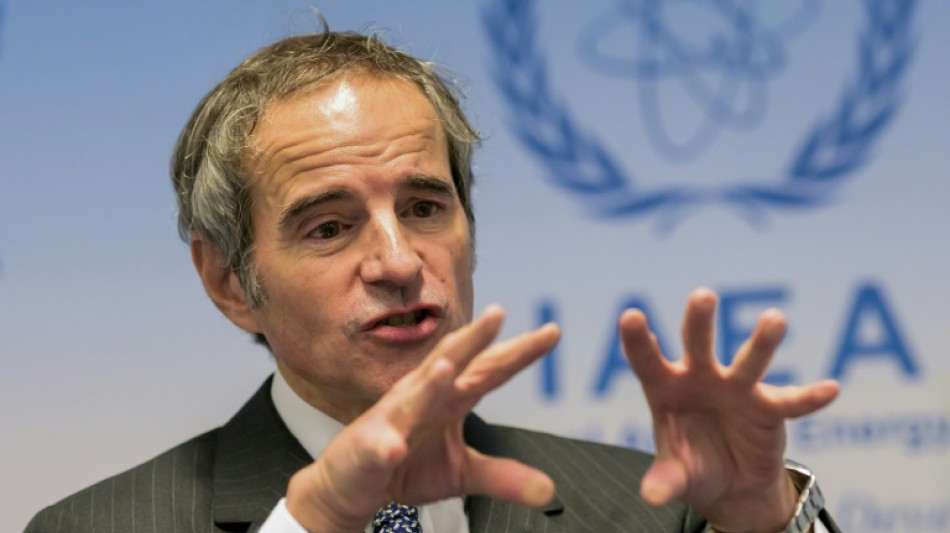
Nuclear power has role to play, atomic energy head tells AFP at COP28 / Photo: © AFP

 SkySail Strategies Outperforms Wall Street's 30-Year Risk Standard With Proprietary AI Inference Model

 Canada ends refugee family sponsorship exemption over integrity concerns
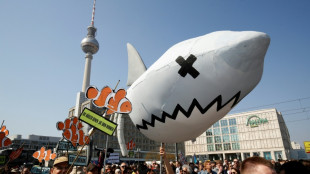 Berlin's run-down public spaces at heart of election campaign

 Ribeiro and Richie among celebrity birthdays for September 20–26

 Bob Mackie, costume designer for Cher and Madonna, dies aged 87
 Mahomes makes triumphant return as Chiefs rout Broncos 31-10

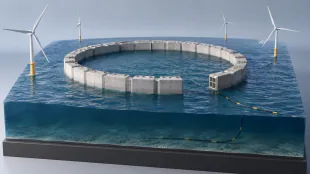 Belgium completes outer structure of offshore energy island
 Video documents rescue of injured US airman from Iran

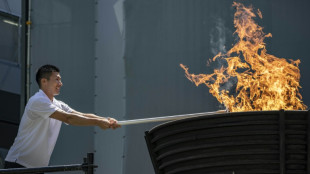 Asian Games: Bigger than Olympics, young stars and a cruise ship
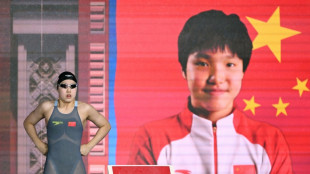
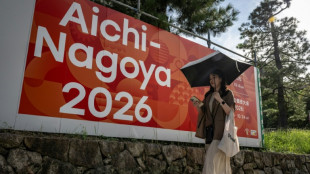 Asian Games set for liftoff but will have everyone have a bed?
 Most markets drop as oil extends gains ahead of expected US rate hike
 Kate Beckinsale challenges assumptions about her beauty routine
 Sri Lanka's famed beach shack battles demolition

 Drone shot down by NATO over Lithuania
 Vserv targets ₹1,000 crore revenue by 2030 through AI expansion

 India prohibits bank fees on UPI payments up to ₹2,000

 Air India CEO summoned over alleged departure immigration lapse

 New Zealand agencies missed red flags in child kidnapping case: inquiry

 Brazil's Amazon defender Raoni has cancer

 HFCL expands planned fibre investment to ₹1,800 crore
 Emmy Awards begin as 'Widow's Bay' and 'The Pitt' vie for top prizes
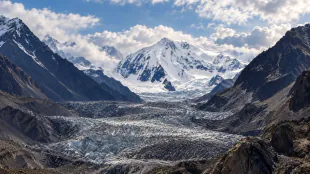 Himalayan glacier study warns of flood and water-supply risks

 Kuwait schools restore classroom routines after remote learning
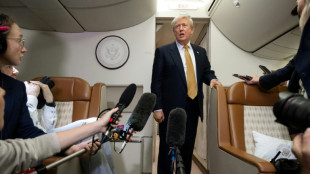
 US designer Bob Mackie, known for Hollywood glamour, dies at 87
 BIS flags debt and profitability risks in AI-driven market rally

It would be a mistake to reject nuclear power because of problems at a handful of projects, Rafael Grossi, head of the International Atomic Energy Agency said in an interview with AFP.
Grossi was speaking at the COP28 conference in Dubai, where on Saturday a group of large countries are expected to call for nuclear power capacity to be tripled by 2050 as part of the fight against global warming.
Supporters of atomic power say it is an essential source of reliable emissions-free energy.
But detractors point to the risks and high costs of massive nuclear projects at a time when the price of renewable energies continues to fall.
"There is work to do," Grossi admitted, citing the financing needs of countries that wish to extend their nuclear fleets, such as Brazil, Argentina, and South Africa.
Grossi said countries tempted to take the nuclear leap, including Morocco, Senegal, Kenya and the Philippines, face similar challenges.
"There are statutes in some international lending organisations that exclude financing for nuclear," the Argentinian director general said.
"I think that is completely obsolete. It does not correspond to any scientific or technological criteria."
The World Bank, for instance, has not financed a nuclear project since 1959.
"I think, and I hope there will be an evolution" in their thinking, Grossi said.
- Proliferation risk 'should not exist' -
Some environmentalists argue that with certain nuclear projects already 10 years behind schedule, they are simply too costly and will not be ready in time to respond to climate challenges.
But rejecting all nuclear projects because of these setbacks would be "an error", Grossi insisted.
"Look, here in the Emirates... there was no nuclear here a decade ago and now there are four reactors," meeting about a quarter of the country's electricity demands.
The nuclear industry is resting much of its hopes on small modular reactors (SMR), which are less powerful but easier to construct.
There are concerns that less developed countries might not have the means to keep these installations safe and avoid proliferation.
"It is a legitimate question, but that is why we were created," Grossi responded, pointing to the flag of his agency, which carries atomic symbols on a United Nations blue background.
"Any country wanting to develop a nuclear programme must follow a full procedure and draw up an agreement with the Agency," he said.
"In principle, that means the risk of proliferation should not exist."
For example, the Emirates had to complete 19 steps while developing its civil nuclear programme, including setting up an independent supervisory body.
Grossi said he does not think the dangers faced by Ukraine's reactors since the start of Russia's invasion are an argument against nuclear power, either.
"The problem is war, not nuclear," he said without hesitation.
However, he could not hide his concern as winter approaches.
"The ground will harden, the tanks can move, the rivers will freeze, we see a lot of military equipment on both sides. Yes, that obviously worries us."
H.Weber--VB