World can't 'unplug' existing energy system: COP28 head / Photo: © AFP

 Mahomes makes triumphant return as Chiefs rout Broncos 31-10

 Belgium completes outer structure of offshore energy island
 Video documents rescue of injured US airman from Iran

 Asian Games: Bigger than Olympics, young stars and a cruise ship

 Asian Games set for liftoff but will have everyone have a bed?
 Most markets drop as oil extends gains ahead of expected US rate hike

 Kate Beckinsale challenges assumptions about her beauty routine
 Sri Lanka's famed beach shack battles demolition
 Drone shot down by NATO over Lithuania
 Vserv targets ₹1,000 crore revenue by 2030 through AI expansion

 India prohibits bank fees on UPI payments up to ₹2,000
 Air India CEO summoned over alleged departure immigration lapse

 New Zealand agencies missed red flags in child kidnapping case: inquiry

 Brazil's Amazon defender Raoni has cancer

 HFCL expands planned fibre investment to ₹1,800 crore
 Emmy Awards begin as 'Widow's Bay' and 'The Pitt' vie for top prizes

 Himalayan glacier study warns of flood and water-supply risks

 Kuwait schools restore classroom routines after remote learning
 US designer Bob Mackie, known for Hollywood glamour, dies at 87

 BIS flags debt and profitability risks in AI-driven market rally

 Qatar Chamber and Maltese envoy consider business forum
 Spanish PM denies being blackmailed by Morocco

 Doha Islamic finance forum names AlRayan firms as co-lead partners

 Leeds thrash Newcastle to go third in the Premier League

 Zelensky says Ukraine ready for 'de-escalatory steps'

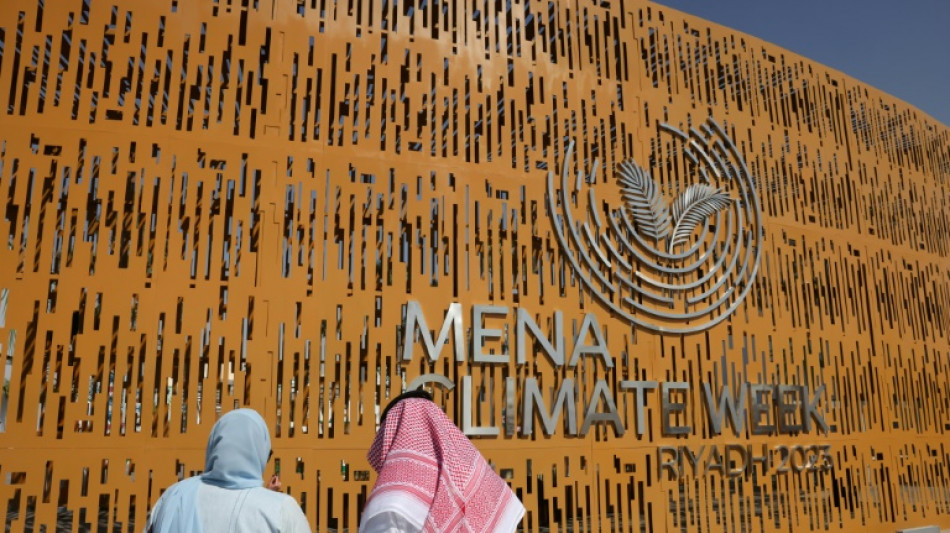
The president of the upcoming COP28 climate talks in Dubai called on Sunday for governments to abandon "fantasies" such as hastily ditching existing energy infrastructure in pursuit of climate goals.
"We cannot unplug the energy system of today before we build the new system of tomorrow. It is simply not practical or possible," Sultan Al Jaber said during the opening session of Middle East and North Africa (MENA) Climate Week, a UN-organised conference hosted in the Saudi capital Riyadh.
"We must separate facts from fiction, reality from fantasies, impact from ideology, and we must ensure that we avoid the traps of division and distraction."
Much of international climate diplomacy revolves around the thorny issue of how and when to quit fossil fuels.
At COP26 in Glasgow in 2021, countries agreed to phase down "unabated coal", the first time a fossil fuel was explicitly mentioned in a final text.
But efforts since then to extend such a target to all fossil fuels have foundered, most recently at last month's G20 summit in India.
Climate activists have criticised the appointment of Jaber to lead the COP28 talks which kick off in Dubai in November, given that he is also head of the Emirati state-owned oil firm ADNOC.
But Jaber has garnered the support of COP parties including US climate envoy John Kerry, partly by emphasising his belief that "the phase-down of fossil fuels is inevitable".
Energy officials in the United Arab Emirates and other oil-producing countries -- notably Saudi Arabia, the world's biggest oil exporter -- have argued for continued investments in fossil fuels to ensure energy security even as they eye an eventual transition away from them.
- Finding funds -
The vast and fractured landscape of climate finance is the other major stumbling block in climate negotiations.
Developing countries least responsible for climate change are seeking money from richer polluters to adapt to its increasingly destructive and expensive consequences.
In 2009, rich countries pledged to supply $100 billion of climate finance every year to developing nations but failed to meet the 2020 deadline. There are hopes the goal will be met this year.
"Old promises must be kept, including the $100 billion pledge made over a decade ago," Jaber said on Sunday.
Last year's COP27 talks in Sharm el-Sheikh, Egypt, ended with the first ever creation of a "loss and damage" fund into which countries would pay to support poorer nations suffering the most from more intense and frequent storms, floods and droughts.
The fund's operation, governance, location, contributors, beneficiaries and a timeline for payouts are all up in the air ahead of COP28.
"We must make the fund for loss and damage that was promised in Sharm el-Sheikh a reality in Dubai," Jaber said.
- Climate 'crossroads' -
The talks in Riyadh are intended to "shine a spotlight on challenges and solutions in a region that is among the most vulnerable to the effects of climate change," organisers said in a press release on Sunday.
The region must already grapple with high temperatures and water scarcity, with more than 60 percent of the population having "very little if any access to potable water", the statement said.
"Increasing temperatures are predicted to lead to more persistent and acute drought," it added.
Jaber also highlighted challenges facing the region, referring to extreme events like hurricane-strength Storm Daniel, which last month caused two dams in eastern Libya to burst and flood the city of Derna.
"Climate change isn't a threat waiting around the corner -- the MENA region knows this from first-hand experience with fierce heatwaves and water shortages," said Inger Andersen, executive director of the UN Environment Programme.
Simon Stiell, executive secretary of UN Climate Change, said the region was "at a crossroads, facing not only the devastating impacts of climate change but also the challenge of transitioning their economies to ensure prosperity in a 1.5C aligned world."
The goal of limiting warming to 1.5 degrees Celsius above pre-industrial levels was set at the 2015 climate talks in Paris.
H.Kuenzler--VB