September was hottest on record by 'extraordinary' margin: EU monitor / Photo: © AFP

 Mahomes makes triumphant return as Chiefs rout Broncos 31-10

 Belgium completes outer structure of offshore energy island

 Video documents rescue of injured US airman from Iran

 Asian Games: Bigger than Olympics, young stars and a cruise ship

 Asian Games set for liftoff but will have everyone have a bed?

 Most markets drop as oil extends gains ahead of expected US rate hike

 Kate Beckinsale challenges assumptions about her beauty routine

 Sri Lanka's famed beach shack battles demolition

 Drone shot down by NATO over Lithuania

 Vserv targets ₹1,000 crore revenue by 2030 through AI expansion

 India prohibits bank fees on UPI payments up to ₹2,000

 Air India CEO summoned over alleged departure immigration lapse

 New Zealand agencies missed red flags in child kidnapping case: inquiry

 Brazil's Amazon defender Raoni has cancer

 HFCL expands planned fibre investment to ₹1,800 crore

 Emmy Awards begin as 'Widow's Bay' and 'The Pitt' vie for top prizes

 Himalayan glacier study warns of flood and water-supply risks

 Kuwait schools restore classroom routines after remote learning

 US designer Bob Mackie, known for Hollywood glamour, dies at 87

 BIS flags debt and profitability risks in AI-driven market rally

 Qatar Chamber and Maltese envoy consider business forum

 Spanish PM denies being blackmailed by Morocco

 Doha Islamic finance forum names AlRayan firms as co-lead partners

 Leeds thrash Newcastle to go third in the Premier League

 Zelensky says Ukraine ready for 'de-escalatory steps'

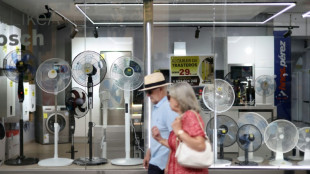
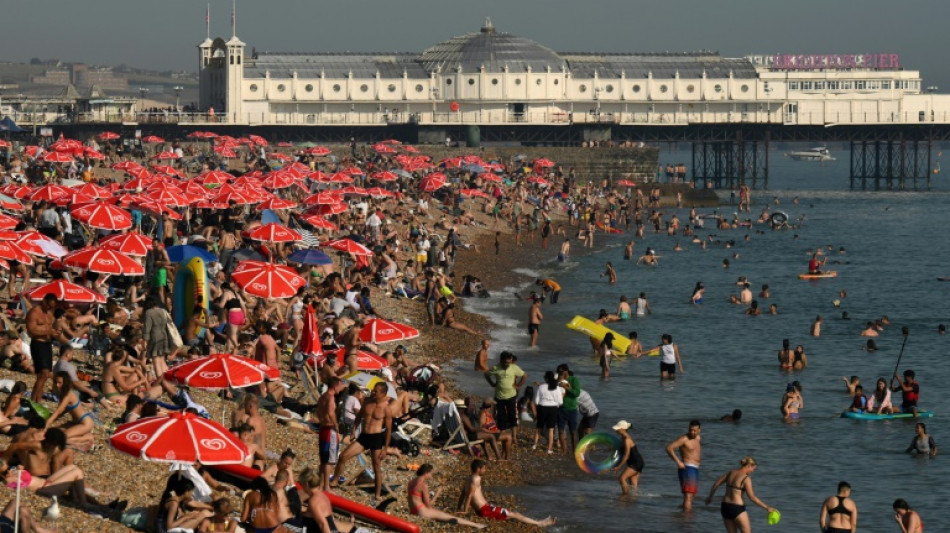
Last month was the hottest September on record by an "extraordinary" margin as the world flirts dangerously with breaching a key warming limit, the EU climate monitor said on Thursday.
Much of the world sweltered through unseasonably warm weather in September, in a year expected to be the hottest in human history and after the warmest-ever global temperatures during the Northern Hemisphere summer.
September's average surface air temperature of 16.38 degrees Celsius (61.5 degrees Fahrenheit) was 0.93C above the 1991-2020 average for the month and 0.5C above the previous 2020 record, the Copernicus Climate Change Service (C3S) said in a report.
Temperature records are normally broken by much smaller margins closer to one-tenth of a degree.
The report said the figure was "the most anomalous warm month" in its dataset going back to 1940 and around 1.75C hotter than the September average in the 1850-1900 pre-industrial period.
"We've been through the most incredible September ever from a climate point of view. It's just beyond belief," C3S director Carlo Buontempo told AFP.
"Climate change is not something that will happen 10 years from now. Climate change is here."
The unprecedented September temperatures "have broken records by an extraordinary amount", added C3S deputy director Samantha Burgess.
- On course for hottest year -
Global average temperatures from January to September were 1.4 degrees Celsius higher than 1850-1900, almost breaching the 1.5C warming goal of the 2015 Paris Agreement, C3S reported.
That threshold was the more ambitious target of the accord and is seen as essential to avoid the most catastrophic consequences of climate change.
The January-September average global temperature was 0.05C higher than the same nine-month period in 2016, the warmest year recorded so far.
The El Nino phenomenon -- which warms waters in the southern Pacific and stokes hotter weather beyond -- is likely to see 2023 becoming the hottest year on record in the next three months.
Scientists expect the worst effects of the current El Nino to be felt at the end of 2023 and into next year.
Although El Nino played a role in the warming, "there's no doubt that climate change has made it much worse", Buontempo told AFP.
- Action 'never more critical' -
Europe experienced its hottest September on record at 2.51C higher than the 1991-2020 average, with many countries smashing national temperature records for the month.
The average sea surface temperature for the month excluding the polar regions also reached all-time highs for September, at 20.92C.
Scientists say warmer sea surface temperatures driven by climate change is making extreme weather events more intense, with Storm Daniel sparking devastating floods in Libya and Greece in September.
Antarctic sea ice remained at a record low level for the time of year, while monthly Arctic sea ice was 18 percent below average, C3S added.
Oceans have absorbed 90 percent of the excess heat produced by human activity since the dawn of the industrial age, according to scientists.
Warmer oceans are also less capable of absorbing carbon dioxide, exacerbating the vicious cycle of global warming as well as disrupting fragile ecosystems.
"This kind of event is in line with projections made over the last couple of decades," said Doug McNeall, a climate scientist and statistician at the UK Met Office's Hadley Centre.
"It's shocking when you see these records being broken, and the impact that's having on people's lives and ecosystems," he told AFP.
"Our climate is out of control," Bill McGuire, a climate scientist and professor at UCL university in London, wrote on X, formerly known as Twitter.
World leaders will gather in Dubai from November 30 for crunch UN climate talks known as COP28 as the consequences of global warming accelerate.
Finding a consensus on slashing the greenhouse gas emissions responsible for climate change, financing for adaptation and mitigation and boosting renewable energy will be key negotiating topics.
The United Nations on Wednesday said there were "divergent views" among parties over how to reach the Paris goals, even if they agreed that past climate action has been insufficient.
Pope Francis had earlier warned the world "is collapsing" due to global warming, urging COP28 participants to agree to binding policies on phasing out fossil fuels.
"Two months out from COP28 -- the sense of urgency for ambitious climate action has never been more critical," said Burgess.
R.Fischer--VB