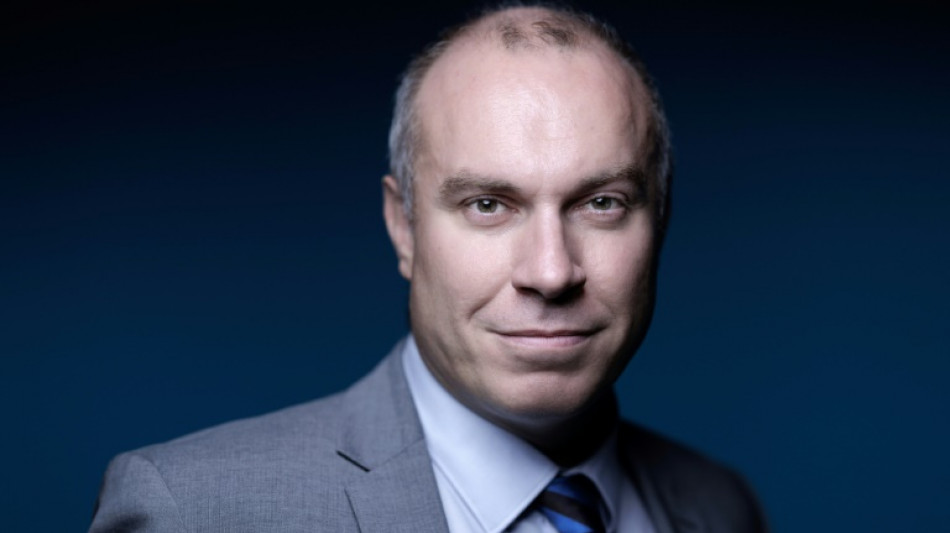
Politicians failing to grasp 'scientific reality' of climate: expert / Photo: © AFP

 Mahomes makes triumphant return as Chiefs rout Broncos 31-10

 Belgium completes outer structure of offshore energy island
 Video documents rescue of injured US airman from Iran

 Asian Games: Bigger than Olympics, young stars and a cruise ship

 Asian Games set for liftoff but will have everyone have a bed?

 Most markets drop as oil extends gains ahead of expected US rate hike

 Kate Beckinsale challenges assumptions about her beauty routine

 Sri Lanka's famed beach shack battles demolition

 Drone shot down by NATO over Lithuania
 Vserv targets ₹1,000 crore revenue by 2030 through AI expansion

 India prohibits bank fees on UPI payments up to ₹2,000

 Air India CEO summoned over alleged departure immigration lapse

 New Zealand agencies missed red flags in child kidnapping case: inquiry

 Brazil's Amazon defender Raoni has cancer

 HFCL expands planned fibre investment to ₹1,800 crore
 Emmy Awards begin as 'Widow's Bay' and 'The Pitt' vie for top prizes

 Himalayan glacier study warns of flood and water-supply risks

 Kuwait schools restore classroom routines after remote learning
 US designer Bob Mackie, known for Hollywood glamour, dies at 87

 BIS flags debt and profitability risks in AI-driven market rally

 Qatar Chamber and Maltese envoy consider business forum
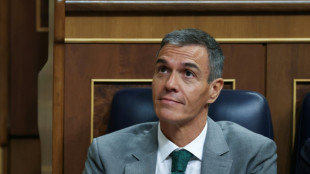 Spanish PM denies being blackmailed by Morocco

 Doha Islamic finance forum names AlRayan firms as co-lead partners

 Leeds thrash Newcastle to go third in the Premier League

 Zelensky says Ukraine ready for 'de-escalatory steps'

Wavering ambition by governments and a growing belief that science is politically subjective are great causes for concern in a rapidly escalating climate crisis, an expert told AFP.
A cascade of extreme weather events have inflicted devastation in 2023, which the European Union's climate monitor says is likely to be the hottest in human history.
It underscores the urgency of slashing planet-heating greenhouse gas emissions to avert the catastrophic impacts of greater global warming.
Yet several countries have drawn criticism for moves to weaken their climate policies in recent weeks, including Sweden and Britain, which has also approved a new oil project.
Meanwhile in the United States, climate-sceptic presidential candidates -- notably Donald Trump -- are Republican frontrunners.
For Francois Gemenne, a political scientist who contributed to the last report series of the UN's expert advisory panel, the Intergovernmental Panel on Climate Change (IPCC), the trends are worrying.
"I am very concerned by a whole series of climbdowns we are seeing from a political or economic point of view," the Belgian told AFP.
The IPCC lead author cited British Prime Minister Rishi Sunak's latest policy changes and leading Republican politicians in the United States "who do not recognise the scientific reality of climate change".
"What bothers me is the fact that science, for a part of the population that might be growing, is becoming a matter of belief, opinion, even ideology," said Gemenne.
Current climate-related damage is happening with global temperatures at around 1.2 degrees Celsius above pre-industrial levels and as the world lurches towards breaching the key 1.5C target agreed in Paris in 2015.
Gemenne warned that climate trends may even exceed the predictions of some modelling, describing the situation as a "merciless machine".
The climate chaos may prove that humanity has not yet fully grasped the "deeply structural character" of climate change, he added.
"Until we reach carbon neutrality, heat records are going to be systematically broken week after week, month after month, year after year. It's possible that reality goes a little beyond the models."
- Fighting 'climate inertia' -
One of the trickiest challenges governments face is weighing the urgency of climate action and the investments needed for the green transition against short-term challenges: global inflation, an energy crisis driven by Russia's invasion of Ukraine and squeezed household budgets.
There is a perception that fighting climate change implies giving up on luxuries taken for granted in much of the wealthier parts of the world, such as high levels of consumption, air travel or eating meat.
But in the face of this "climate inertia", Gemenne believes people must be shown how climate action is in their interest.
"We always describe it as a list of efforts to make, sacrifices, giving up, things we do not really feel like doing," he said.
"We must show why it is in our interests and therefore how life can change for the better."
H.Weber--VB