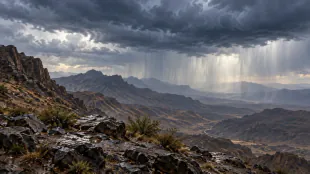
Tuvalu will always be a state, even if underwater, says PM / Photo: © AFP/File

 Mahomes makes triumphant return as Chiefs rout Broncos 31-10

 Belgium completes outer structure of offshore energy island

 Video documents rescue of injured US airman from Iran

 Asian Games: Bigger than Olympics, young stars and a cruise ship

 Asian Games set for liftoff but will have everyone have a bed?

 Most markets drop as oil extends gains ahead of expected US rate hike

 Kate Beckinsale challenges assumptions about her beauty routine

 Sri Lanka's famed beach shack battles demolition

 Drone shot down by NATO over Lithuania

 Vserv targets ₹1,000 crore revenue by 2030 through AI expansion

 India prohibits bank fees on UPI payments up to ₹2,000

 Air India CEO summoned over alleged departure immigration lapse

 New Zealand agencies missed red flags in child kidnapping case: inquiry

 Brazil's Amazon defender Raoni has cancer

 HFCL expands planned fibre investment to ₹1,800 crore

 Emmy Awards begin as 'Widow's Bay' and 'The Pitt' vie for top prizes

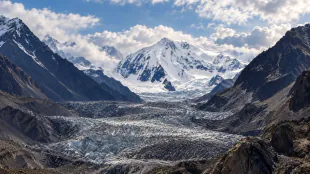 Himalayan glacier study warns of flood and water-supply risks

 Kuwait schools restore classroom routines after remote learning
 US designer Bob Mackie, known for Hollywood glamour, dies at 87

 BIS flags debt and profitability risks in AI-driven market rally
 Qatar Chamber and Maltese envoy consider business forum
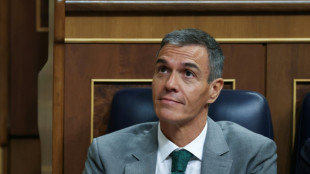 Spanish PM denies being blackmailed by Morocco

 Doha Islamic finance forum names AlRayan firms as co-lead partners
 Leeds thrash Newcastle to go third in the Premier League

 Zelensky says Ukraine ready for 'de-escalatory steps'

Tuvalu could be one of the first nations to sink beneath the sea as a result of climate change, but that doesn't mean its statehood is up for discussion, the tiny Pacific archipelago's prime minister said Thursday.
Speaking on the sidelines of the UN General Assembly, Kausea Natano said there had been "unnecessary" conversations in academic and diplomatic circles centered on the definition of a country under international law.
"Our sovereignty is not negotiable," Natano told AFP, adding that his country would be working with the international community to "bring a close to these distractions."
Tuvalu's population of 11,000 is spread across nine islands that rise less than five meters above sea level, underscoring the extraordinary challenges it faces from sea-level rise.
Two of the atolls represented on its flag of 11 stars have already disappeared, and even the higher lying areas could become uninhabitable by 2100 as a result of salt contaminating its land and water supply.
The 1933 Montevideo Convention on the Rights and Duties of States holds that a state consists of a defined territory, a permanent population, a government and the capacity to interact with other states.
If the territory is swallowed up, or no one can live on what is left of it, then at least one of the criteria is no longer met.
But while Tuvalu’s land mass accounts for just 26 square kilometers (10 square miles) -- around the size of seven Central Parks -- its maritime territory covers a vast 800,000 square kilometers.
The convention is ambiguous on the question of whether territory is wet or dry, and there is no precedent for revoking the status of a UN member state, leaving the matter fuzzy.
- Land reclamation, and the metaverse -
Tuvalu isn't taking an underwater future as a given, and -- along with pleading with the world to end its addiction to fossil fuels -- has begun work on a Coastal Adaptation Project that aims to reclaim around 3.8 kilometers of land from the ocean and raise land levels in the most vulnerable spots.
It has been financed with $36 million in international assistance channelled through the Green Climate Fund, and $2.9 million from Tuvalu's own government.
The situation is dire, says Natano. Around 40 percent of the capital Funafuti already gets submerged during periodic "king" tides that wash away root crops, including former island staples taro and cassava.
While he is pleased that the project's first phase is nearing completion, Natano said the scope is too small to help all of his people.
"We need more, faster action from whoever is in a position to support us, urgently," he said.
To this end, the country has been at the forefront of the major climate action calls: a global tax on fossil fuels, and the activation of a "loss and damages" fund -- international climate jargon for climate compensation owed by rich polluting countries to the most impacted nations.
This fund was agreed to in principle at the last major climate talks in Egypt, but -- like so many other vows from the rich world -- has yet to be fulfilled.
"It's a matter of life and death -- it's a matter of disappearing from the surface of this Earth," said Natano, urging countries to keep their promise.
Should the worst come to pass, Tuvalu has been moving its cultural heritage to the digital sphere, in what some have called a model for how "Nation-States 2.0" might work.
But what happens to Tuvalu will merely be a harbinger of what cities around the world threatened by sea-level rise will experience -- from Miami to Manila, said Natano.
"More and more citizens of the world will have to relocate," he said. "Use us a model to preserve the entire world."
F.Fehr--VB