Heat-struck Mediterranean is climate change 'hot spot' / Photo: © AFP

 Himalayan glacier study warns of flood and water-supply risks

 Kuwait schools restore classroom routines after remote learning

 US designer Bob Mackie, known for Hollywood glamour, dies at 87

 BIS flags debt and profitability risks in AI-driven market rally

 Qatar Chamber and Maltese envoy consider business forum

 Spanish PM denies being blackmailed by Morocco

 Doha Islamic finance forum names AlRayan firms as co-lead partners

 Leeds thrash Newcastle to go third in the Premier League

 Zelensky says Ukraine ready for 'de-escalatory steps'

 In-form Malen fires Roma to Serie A summit, Inter on their heels

 Lebanese agency reports Israeli shelling and gunfire in south

 Expert proposes phased digital reform for Arab business schools

 Trump rejects 'hoax' warnings that AI could destroy humanity
 Houthis say Saudi Arabia hits Yemen with 54 strikes after attack on bases

 Why the far right is losing ground in Sweden
 Ex-Ireland fly-half O'Gara extends deal as La Rochelle coach

 Russian attacks on Ukraine railways escalating every week: rail CEO to AFP

 France, Iraq deepen energy, defence ties during Zaidi visit

 Trump says Ukraine, Russia agree not to hit energy targets

 Nigeria's Dangote refinery launches continent's biggest IPO

 Trump blasts 'sick conspiracy' against AI as warnings mount

 For Laura Linney, role in Parkinson's-themed movie marked a turning point

 Doctors face life sentence over Greek pop star's death

 Trump moves to axe power plant climate rules

 Slow the AI race? Investors weigh the potential cost

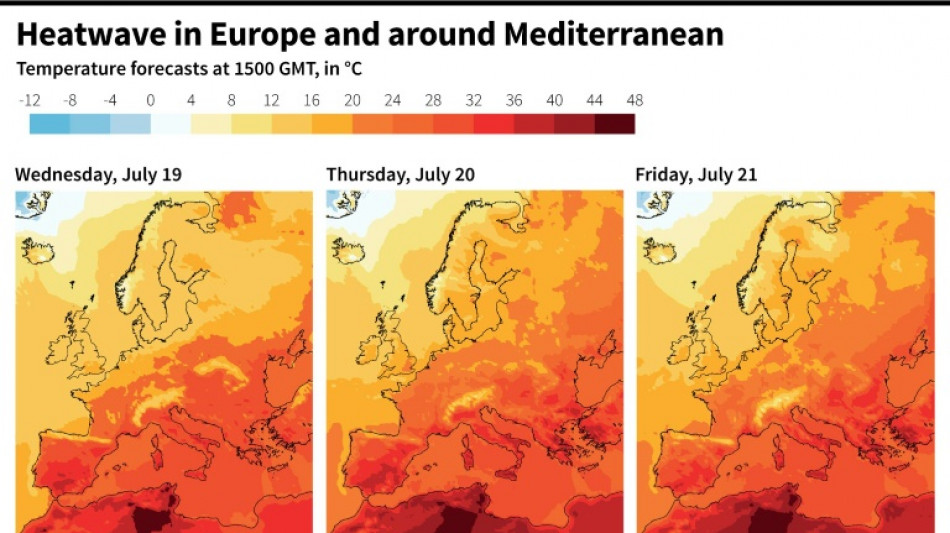
Struck by near-record temperatures and wildfires during this week's heatwave, the Mediterranean region is ranked as a climate-change "hot spot" by scientists.
The beaches, seafood and heritage sites in the region spanning parts of southern Europe, northern Africa and western Asia are under threat.
Here are five key threats to the region flagged by the United Nations' Intergovernmental Panel on Climate Change (IPCC). Its reports are the most comprehensive summary of scientific knowledge on global warming.
- Deadly heatwaves -
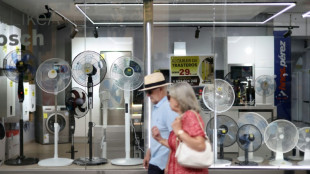
Like parts of the United States and Asia, the Med has been hit by extreme heat in recent weeks. The Italian islands of Sardinia and Sicily are forecast to possibly top a continent-wide record of 48.8C (119.8F).
"Heatwaves are increasing due to climate change in the Mediterranean, and are amplified in cities due to urbanisation practices," causing illness and death, the IPCC said in its 2022 report on impacts of climate change and how to adapt to them.
One study published in 2010 led by scientists at the University of Bern calculated that the intensity, length and number of heatwaves in the eastern Mediterranean had increased by about six or seven times since the 1960s.
- Wheat and olives -
A drought in North Africa has left farmers bracing for a terrible harvest. "We've never seen a drought this bad," Tunisian wheat farmer Tahar Chaouachi told AFP. "It's been dry for the last four years but we expected some rain this season. Instead, it's become worse."
With hotter weather drying up groundwater for irrigating farms, the IPCC said that with global warming of more than 1.5C olive yields could fall by a fifth in the northern Mediterranean. The world has warmed more than 1.1C since the 19th century.
Researchers at Stanford University found "the Mediterranean experiencing significant adverse impacts on most crops".
- Water and politics -
A drought in Spain has raised political tensions over water management ahead of a general election on July 23. The European Drought Observatory said groundwater tables across half the Mediterranean region were running low already in June.
The IPCC report warned climate change will worsen water shortages "in most locations" in the region. Lakes and reservoirs are expected to decline by up to 45 percent this century, and surface water availability by up to 55 percent in North Africa.
Meanwhile "terrestrial and freshwater ecosystems are impacted by climate change in the Mediterranean, resulting in loss of habitats and biodiversity," it added.
- Rising seas -
The sea level in the Mediterranean basin has risen 2.8mm a year over recent decades, threatening shorelines and cities such as Venice, which regularly suffers tidal floods.
"Sea level rise already impacts extreme coastal waters around the Mediterranean and it is projected to increase coastal flooding, erosion and salinisation risks," said the IPCC.
"These impacts would affect agriculture, fisheries and aquaculture, urban development, port operations, tourism, cultural sites and many coastal ecosystems."
- Invasive species -
As well as its cherished beaches, climate change threatens the Mediterranean sea and the food produced by its fisheries.
"A shift in Mediterranean marine ecosystems, characterised by biodiversity decline and invasive species, has occurred since the 1980s" due to climate change and other human impacts, the IPCC said.
With global warming of more than 1.5C, more than 20 percent of exploited fish and invertebrates in the Eastern Mediterranean could become locally extinct by 2060 and fishing revenues could decrease up to 30 percent by 2050, it said.
E.Schubert--BTB