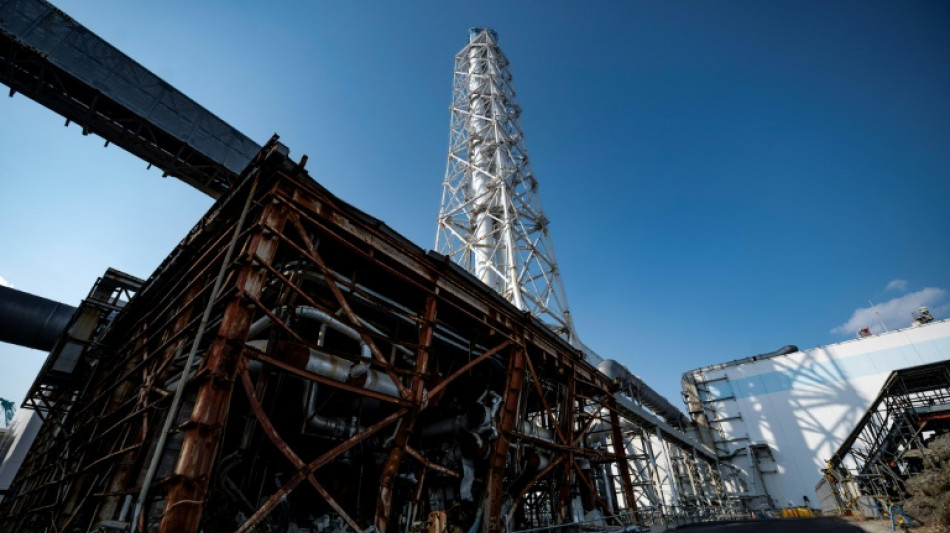
Japan allows nuclear plants to operate beyond 60 years / Photo: © AFP/File

 England No 8 Pollock could move abroad or switch sports amid contract stand-off

 Canada makes pitch as safe place to invest in 'uncertain world'

 In-form Malen fires Roma to Serie A summit

 IOC visits Lyon amid leadership turmoil for 2030 Winter Olympics

 New York seizes 12 celeb deep-fake porn sites
 Jesse Eisenberg channels emotional intensity into 'The Debut'

 Alarm over AI grows as divided US Congress struggles to act

 PopDEX Surpasses $61M TVL and $2B Trading Volume in Closed Beta

 Oasis announce new 2027 world tour

 Women athletes condemn 'sexualised' Sydney Sweeney commercial

 UN calls for 'urgent action' to rein in AI in face of 'unprecedented risks'

 Russia intensifies attacks seeking to intimidate Ukraine, Europe

 Richarlison not in Spurs League Cup squad: De Zerbi

 French defence group Thales calls on governments to regulate AI

 Three talking points from the Spanish Grand Prix

 Saudi football body vows action against Jota chants, Ronaldo urges life ban

 North Korea win 10-0 in Asian Games football mismatch

 Nigerian oil refinery Dangote launches IPO

 Houthis target Saudi base as Iran denies involvement in Yemen war

 Sweden faces political uncertainty after election thriller

 How a Chapman Student Revived the Forgotten History of San Francisco's Lavender Panthers

 Philippine Muslim enclave heads to polls after deadly shooting

 New coach won't use AI in bid to make South Korea fans happy
 J-VISIONS Vol. 4 Now Online: Read English Articles on Japanese Corporate IR

 In DR Congo streets, ex-hoods get tough on litter -- and locals

Japan on Wednesday passed a law allowing nuclear reactors to operate beyond 60 years, as it tries to reinvigorate the sector to meet energy challenges and climate targets.
The bill intends to "establish an electricity supply system that will achieve a carbon-free society", a parliament spokesman told AFP.
Under the new rules, the age cap technically remains 60 years but exceptions are allowed for reactors that have had to pause operations for "unforeseeable" reasons.
Those might include changes to safety guidelines, or provisional injunctions by a court.
The new rules allow operators to exclude periods of shutdown when calculating the total years of operation.
However, operators require approval from Japan's nuclear safety watchdog for the exemption, and the law also includes measures intended to strengthen safety checks at ageing reactors.
The government wants to "ensure a stable supply of electricity while promoting the use of carbon-free electricity resources," Japan's ministry of economy, trade and industry said in a statement.
The move comes as Japan's government looks to reinvigorate a nuclear sector that was taken offline after the 2011 Fukushima disaster caused by a deadly tsunami.
Most of Japan's nuclear reactors remain out of action today, but the global energy crisis has reopened debate on the subject and polls show that public views on nuclear power are softening.
J.Fankhauser--BTB