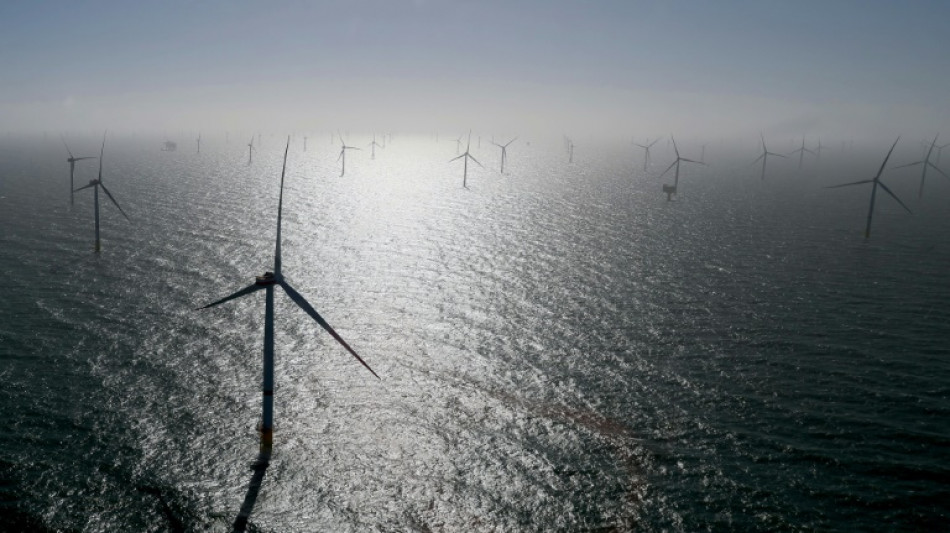
European countries aim to boost wind energy production / Photo: © POOL/AFP

 England No 8 Pollock could move abroad or switch sports amid contract stand-off
 Canada makes pitch as safe place to invest in 'uncertain world'
 In-form Malen fires Roma to Serie A summit
 IOC visits Lyon amid leadership turmoil for 2030 Winter Olympics
 New York seizes 12 celeb deep-fake porn sites
 Jesse Eisenberg channels emotional intensity into 'The Debut'
 Alarm over AI grows as divided US Congress struggles to act
 PopDEX Surpasses $61M TVL and $2B Trading Volume in Closed Beta
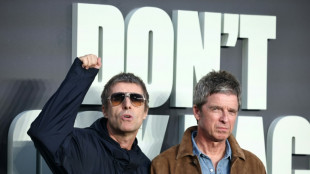 Oasis announce new 2027 world tour
 Women athletes condemn 'sexualised' Sydney Sweeney commercial
 UN calls for 'urgent action' to rein in AI in face of 'unprecedented risks'

 Russia intensifies attacks seeking to intimidate Ukraine, Europe
 Richarlison not in Spurs League Cup squad: De Zerbi
 French defence group Thales calls on governments to regulate AI

 Three talking points from the Spanish Grand Prix
 Saudi football body vows action against Jota chants, Ronaldo urges life ban
 North Korea win 10-0 in Asian Games football mismatch

 Nigerian oil refinery Dangote launches IPO
 Houthis target Saudi base as Iran denies involvement in Yemen war

 Sweden faces political uncertainty after election thriller
 How a Chapman Student Revived the Forgotten History of San Francisco's Lavender Panthers

 Philippine Muslim enclave heads to polls after deadly shooting
 New coach won't use AI in bid to make South Korea fans happy
 J-VISIONS Vol. 4 Now Online: Read English Articles on Japanese Corporate IR
 In DR Congo streets, ex-hoods get tough on litter -- and locals
Nine European countries were holding a summit Monday aimed at scaling up wind power generation in the North Sea, spurred by the fallout of the Ukraine war and the push for renewables.
Hosted by Belgium in the coastal town of Ostend, the meeting will gather the leaders of EU members France, Germany, Ireland, Denmark, the Netherlands and Luxembourg, with European Commission chief Ursula von der Leyen also attending.
Norway and Britain will participate, too, though the UK's energy minister was leading his delegation and not Prime Minister Rishi Sunak, who stayed in London on another engagement.
"We need offshore wind turbines -- and we need a lot of them," the leaders of the countries, including French President Emmanuel Macron, German Chancellor Olaf Scholz and Sunak, said in a joint op-ed published in Politico.
"We need them to reach our climate goals, and to rid ourselves of Russian gas, ensuring a more secure and independent Europe."
The collective goal, they said, was to boost offshore wind power generation to 120 gigawatts by 2030 -- from just 30 GW now -- and at least 300 GW by 2050.
The North Sea summit is the second one to be held, after the four countries in the inaugural gathering last year -- Belgium, Denmark, Germany and the Netherlands -- decided it was necessary to broaden cooperation.
They recognised this was "a massive undertaking" requiring "huge investments in infrastructure".
Belgian Prime Minister Alexander De Croo said ahead of the summit that it would be focused on "speed of execution" and standardising equipment to build the offshore wind farms faster and cheaper.
Around 100 bosses of companies in the wind turbine supply chain were also participating in the summit.
The leaders' op-ed emphasised the need to source expertise and parts from Europe rather than elsewhere.
"We need to make space for European value chains when it comes to green tech and diversify our sources of critical raw materials for wind turbines, batteries and the like," they said.
China currently dominates the supply of critical components such as rare earths, and the United States is heavily subsidising industry to onshore that sector.
"We are bolstering our energy security and sending a strong signal to (President Vladimir) Putin's Russia that the days of his dominance over global power markets are well and truly over," British Energy Security Secretary Grant Shapps said as he headed to the summit.
Security of the offshore installations was also a topic of the summit, given recent reports of a Russian spy ship in the North Sea and the sabotage of Nord Stream gas pipelines in the Baltic Sea in September 2022. A NATO official was taking part to discuss the topic.
- Industry criticism -
WindEurope, the federation representing Europe's wind energy industry, believes the summit's ambitions are doable.
But it highlighted a lack of "adequate funding mechanisms" and recruitment in the sector.
Current policy, aimed at getting to a carbon-neutral future in Europe, "is overly focused on technological breakthroughs, rather than actual scaling up of existing supply chains", WindEurope said in a statement.
It also criticised "uncoordinated market interventions, price caps and national clawback measures" that "deterred investments".
The organisation says Europe needs to build the offshore infrastructure to add 20 GW in output per year, yet the sector currently has capacity for just seven GW annually, with supply chain bottlenecks for cables, substations and foundations, and in the availability of offshore wind vessels.
Investment to get Europe where it wants to be is massive: the EU has calculated the cost of getting to 300 GW in offshore energy production by 2050 at 800 billion euros ($900 billion).
Britain has the biggest fleet of offshore wind farms, 45 of them, currently producing 14 GW, with plans to expand capacity to 50 GW by 2030.
Germany's 30 wind farms produce eight GW, followed by the Netherlands with 2.8 GW and Denmark and Belgium both with 2.3 GW.
The other participating countries produce less than a gigawatt from their existing installations but share ambitions to greatly ramp up wind energy capacity.
The European Union recently set a goal to double the proportion of renewables in its energy mix, to 42.5 percent, notably by making it easier to get permits to install the infrastructure.
O.Krause--BTB