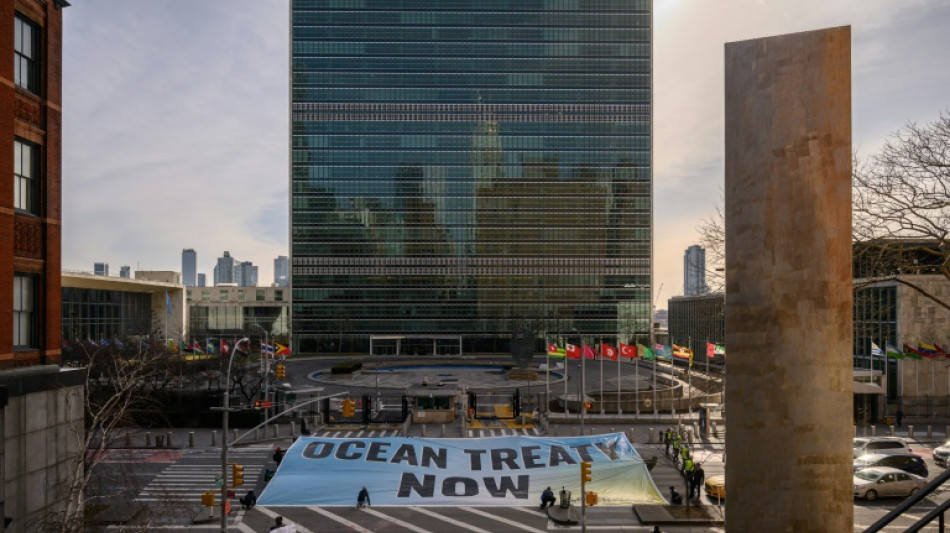
After sleepless night, marathon UN high seas talks continue / Photo: © AFP/File

 Ex-Ireland fly-half O'Gara extends deal as La Rochelle coach

 Russian attacks on Ukraine railways escalating every week: rail CEO to AFP

 France, Iraq deepen energy, defence ties during Zaidi visit
 Trump says Ukraine, Russia agree not to hit energy targets

 Nigeria's Dangote refinery launches continent's biggest IPO

 Trump blasts 'sick conspiracy' against AI as warnings mount

 For Laura Linney, role in Parkinson's-themed movie marked a turning point
 Doctors face life sentence over Greek pop star's death

 Trump moves to axe power plant climate rules

 Slow the AI race? Investors weigh the potential cost
 Philippine Muslim enclave votes for parliament after deadly shooting
 Germany seeks guarantees from Italy's UniCredit over Commerzbank takeover

 Liverpool will have to accept 'ups and downs', says Iraola

 Inaugural Ultimate a hit with the athletes, says Coe
 Oil gains on Mideast supply fears, AI warnings rattle tech firms
 Mourinho praises 'incredible' Guler amid battle for minutes
 Ozempic-maker Novo Nordisk slims down to 'Novo'
 STARCARES-Renovated Court In Thailand Grows Into a Shared Space for School and Community

 Oil prices extend gains on Mideast supply fears, tech leads losses

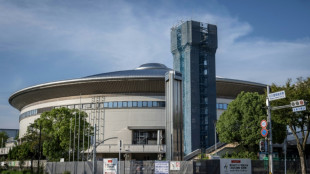 Beds too short in 'worst-ever' Asian Games rooms, say South Korea

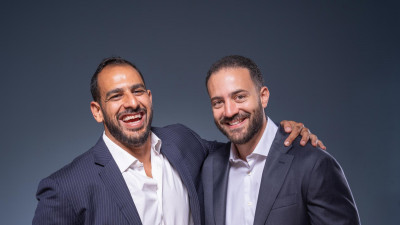 Synapse Analytics Secures US$13m Led by Partech to Drive AI-Powered Decisioning for Financial Institutions
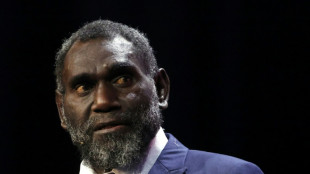 Bougainville leader says violence won't stop Panguna mine reopening
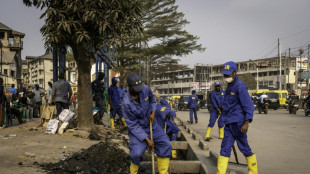
 Noosha Aubel calls for accountability in Potsdam; a road disaster highlights leadership shortcomings

 نوشا آوبل دم از مسئولیت میزند؛ خرابی خیابانهای پوتسدام گواه ضعف مدیریت اوست
 Noosha Aubel sorumluluk dersi veriyor, Potsdam’ın bozuk yolları yönetim zaafını ele veriyor
UN member states struggled Saturday to nail down a long-awaited agreement on the high seas, after a sleepless night of negotiations on a treaty to protect a fragile and vital treasure that covers nearly half the planet.
After more than 15 years of informal and formal talks, negotiators have reached the end of two more weeks of discussions -- the third "final" session in less than a year.
But as of early Saturday in New York, participants were still wrangling over the highly political issue of benefit-sharing for research derived from marine genetic resources collected on the high seas.
"Global High Seas Treaty. I have now officially been in a negotiations at the UN for 24 hours," New Zealand's deputy foreign secretary Victoria Hallum wrote on Twitter. "That’s a new record for me. So close now!"
On Friday night, conference chair Rena Lee had said there was still "a window of opportunity to seal the deal, and we mustn't let this opportunity slip through our hands."
A draft text seen hours later by AFP did not contain the section on genetic resources, but appeared to be far from finished.
"It still has a lot of brackets in, which raises the question at this late stage of how they plan to go through it all," said Nathalie Rey of the High Seas Alliance, a grouping of around 40 NGOs.
"But it's clear at 4 am, they are still really trying very hard to land the treaty today, otherwise they would have thrown in the towel."
- 'A massive step'? -
Even if compromises are found on all the remaining disputes, the treaty cannot be formally adopted at this session, Lee said on Friday.
But it could be "finalized" without the possibility of reopening discussions on substantive sections, before a formal adoption at a later date, she added.
Even without adoption Friday, "It's a massive step," said Veronica Frank of Greenpeace.
Disputes include the procedure for creating marine protected areas, the model for environmental impact studies of planned activities on the high seas and the sharing of potential benefits of newly discovered marine resources.
The high seas begin at the border of countries' exclusive economic zones, which extend up to 200 nautical miles (370 kilometers) from coastlines. They thus fall under the jurisdiction of no country.
While the high seas comprise more than 60 percent of the world's oceans and nearly half the planet's surface, they have long drawn far less attention than coastal waters and a few iconic species.
Only about one percent of the high seas are currently protected.
Ocean ecosystems create half the oxygen humans breathe and limit global warming by absorbing much of the carbon dioxide emitted by human activities.
But they are threatened by climate change, pollution and overfishing.
- North-South 'equity' -
For many, any agreement hinges on equity between the rich global North and poorer global South.
Developing countries, without the means to afford costly research, say they fear being left behind while others profit from the potential commercialization of substances discovered in the international waters.
In a move seen as an attempt to build trust between rich and poor countries, the European Union pledged 40 million euros ($42 million) in New York to facilitate the ratification of the treaty and its early implementation.
Delegates to a global conference in Panama on saving the world's oceans also pledged $19 billion this week, including $6 billion from the United States and $860 million from the EU for marine conservation.
Observers interviewed by AFP say that resolving these politically sensitive financial issues could help ease other sticking points.
If an agreement is reached, it remains to be seen whether the compromises made will result in a text robust enough to protect oceans effectively.
"The text is not perfect, but it's got a clear path towards 30 by 30," said Greenpeace's Frank, referring to world governments' commitment to protect 30 percent of the world's land and ocean by 2030, as agreed in Montreal in December.
R.Adler--BTB