-
 Lebanese leaders rebuke Iran as Israel, Hezbollah trade attacks
-
Argentine rock legend Carlos 'Indio' Solari dies at 77

-
 FIFA ups payments to clubs who send players to World Cup
-
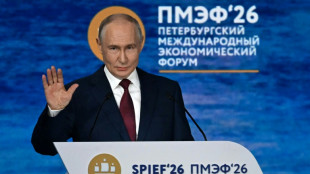
Russian economy has not collapsed, Putin says at key forum
-
 Ukrainian sea drone explodes in Romanian port, no casualties
-
AI fever spreads, but are markets masking economic cracks?

-
 MEXC "Pizza Day: Urban Run" Draws Over 82,000 Participants and Rewards Nearly 75,000 Users
-
MEXC Lists YOM (YOM) with 200,000 YOM and 40,000 USDT in Airdrop+ Rewards

-
 Blockbuster US job gains ruffle Wall Street
-
Strong US job growth beats expectations in May, firming recent gains

-
 Nvidia's Huang arrives in South Korea with 'surprises', bets on robotics
-
'No hope': Indian crew stranded off Turkey for months

-
 Kenyans fearful and furious over US Ebola centre
-
From Siberia to French Open final, Andreeva living 'dream'

-
 Chwalinska, the 'tennis freak' making Roland Garros history
-
Leclerc beats Hamilton as Ferrari shine in Monaco F1 practice

-
 Dutch court jails trio over Romanian golden helmet theft
-
Lawsuit seeks to stop US 'third-country' deportations to Eq.Guinea
-
 Man City chairman will 'say everything' after verdict on financial charges
-
Celtic fans oppose potential Keane move over Israel stay

-
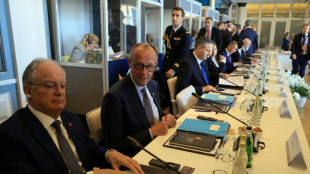 Balkan integration in the spotlight at EU summit
-
Feared global hunger crisis 'coming to pass' as Mideast war lingers: UN

-
 Israel strikes south Lebanon after warning to several areas
-
Macron blasts 'unacceptable' lapses over girl's suspected murder

-
 Chwalinska bidding to take final step at French Open against Andreeva
-
Sea drone explodes in the Romanian port of Constanta, no casualties

-
 Irish slump drags eurozone economy into red in first quarter
-
Nearly 1.5 million displaced in Haiti: UN

-
 England's Robinson takes five wickets as New Zealand all out for 113
-
Former France rugby coach Saint-Andre eyes making history with Aix

-
 Spanish PM denies links to plot to disrupt probes into allies
-
France probes judicial 'dysfunction' after girl's suspected murder

-
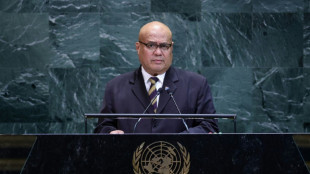 Tuvalu says fossil fuel holdings revealed by AFP 'not a good look'
-
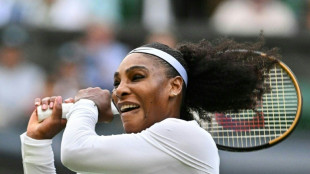
Serena Williams' comeback to continue in Berlin
-
 France's data centre ambitions bump up against rural fears
-
Norway crown princess put on waitlist for lung transplant

-
 Disgraced ex-prince Andrew sublet royal cottages, UK auditors reveal
-
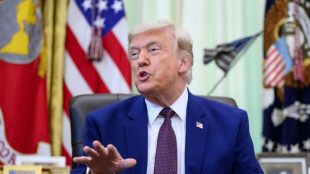
US Senate approves $70 billion for Trump immigration crackdown
-
 Pro-apartheid past of former boss roils Dutch climate group
-
France questions judicial system after girl's suspected murder

-
 Ireland head coach Farrell extends contract until 2031
-
Israel strikes Lebanese village after warning to several areas

-
 Hurricanes hammer hapless Brumbies to make Super Rugby semi-finals
-
UN doubles appeal for Lebanon aid to nearly $640 mn amid Israel war

-
 Sicily braces for post-wedding blowout of Dua Lipa, Callum Turner
-
Sooryavanshi, 15, in line for maiden India call-up: report

-
 Japan change World Cup training sites in Mexico over conditions
-
Rescued orphaned elephant highlights Nigeria's conservation fight

-
 Crypto scammers prey on French victims from Albania
-
Turkmenistan's 'heavenly' horses at the heart of fervent state cult

Watch Live: Trump or Harris? America votes!
"The Potential Impact of a Trump Victory on the European Union: Opportunities and Challenges"
As the United States approaches the pivotal 2024 Presidential Election, the world watches with anticipation. The outcome of this election will have far-reaching implications, especially for the European Union. A victory for Donald Trump, following the election on November 5th, could bring significant changes to transatlantic relations. While a second Trump presidency presents both opportunities and risks for Europe, the impact of a Democratic loss also poses challenges that the EU must carefully navigate.
Recalibrating Transatlantic Relations: Opportunities for Independence
A renewed Trump presidency would almost certainly usher in a period of recalibration in transatlantic relations. During his previous term, Trump prioritized an "America First" approach, often expressing skepticism about multilateral institutions, including NATO, and emphasizing fairer burden-sharing among allies. Should Trump reclaim office, the European Union might find itself with an opportunity to redefine its own strategic autonomy.
For years, European leaders have discussed reducing their dependency on the United States in defense and security matters. Under Trump's leadership, this necessity may be reinforced, encouraging the EU to enhance its military capabilities and cohesion as a geopolitical entity. A Trump administration that remains indifferent to European security concerns could accelerate efforts within Europe to pursue a stronger defense policy, particularly under initiatives such as the Permanent Structured Cooperation (PESCO) and the European Defence Fund (EDF). This would help the EU establish itself as a more self-reliant global power.
Further, Trump's potential economic policies might create space for Europe to strengthen its partnerships elsewhere. During his previous administration, Trump's preference for bilateral trade agreements over multilateral accords led to tensions with trading partners, including the EU. Should Trump return, the EU may seek to solidify and diversify trade relationships with emerging economies and other key markets, fostering partnerships that could reduce reliance on U.S. economic cooperation.
Economic Uncertainty and Regulatory Divergence
However, a Trump victory is likely to create significant economic uncertainties. In a second term, Trump might be inclined to revisit trade conflicts and tariffs that previously put the transatlantic economy under strain. Such policies could undermine EU-U.S. economic relations, particularly if Trump continues to question the value of existing trade agreements or imposes new tariffs on European goods. A weakened trade relationship would undoubtedly create ripples across European markets, especially for sectors such as automotive, agriculture, and technology.
Moreover, Trump's stance on climate policies diverges significantly from the EU's green agenda. While the Biden administration worked in lockstep with Europe on climate change, supporting the Paris Agreement and promoting green initiatives, Trump has previously downplayed climate science and rolled back environmental regulations. A renewed Trump presidency could therefore complicate global efforts to tackle climate change, making it harder for the EU to find common ground on pressing environmental issues and necessitating Europe to act as the principal advocate for international climate agreements.
Geopolitical Challenges and Strategic Implications
A Trump win would likely have substantial ramifications for the EU's strategic posture. The previous Trump administration’s unpredictable approach to foreign policy saw strained relations with traditional allies while displaying overtures towards autocratic regimes, such as Russia and North Korea. A similar pattern could leave the EU more vulnerable, as a Trump administration might deprioritize NATO, questioning the value of collective defense. Such a shift would place a heavier burden on Europe to guarantee its own security, especially amid ongoing tensions with Russia following the invasion of Ukraine.
In the face of these challenges, European nations may need to take a more unified stance on defense, with stronger commitments from member states to meet NATO's defense spending targets. While this could foster a more cohesive EU defense policy, it may also expose divisions within the Union, particularly between countries more inclined towards U.S. alignment and those preferring an independent EU security strategy.
Another aspect to consider is the relationship with China. Under Trump, the U.S. took an aggressive stance on confronting Beijing, and a renewed emphasis on economic decoupling might force Europe to navigate a delicate balance. European nations, many of which have significant trade ties with China, could face pressures to align more closely with the U.S. position, risking economic fallout or diplomatic tensions with Beijing.
The Consequences of a Democratic Defeat for Europe
A Democratic loss would signal a broader shift in American politics, one that Europe cannot ignore. The Biden administration’s tenure was marked by efforts to restore alliances, re-engage with international institutions, and support liberal democratic values. A defeat of the Democrats would likely symbolize a repudiation of these principles by the American electorate, potentially emboldening populist and nationalist movements within Europe itself.
The EU may find itself needing to take on the mantle of championing liberal democracy on the world stage. With Washington potentially shifting towards a more isolationist posture, Europe would need to double down on diplomatic efforts to uphold international norms, promote human rights, and counterbalance the influence of autocratic regimes. Additionally, European nations that are increasingly challenged by internal populist movements may struggle to maintain unity in the face of rising skepticism towards liberal democratic institutions.
Navigating the Path Forward
While the potential re-election of Donald Trump could create significant challenges for the European Union, it also presents an opportunity for Europe to assert its role as an independent geopolitical actor. The EU must prepare for the possibility of a more transactional and less predictable relationship with Washington. Strengthening internal cohesion, investing in defense capabilities, and diversifying global partnerships are essential steps the EU should take in response to a potential second Trump presidency.
At the same time, Europe should engage diplomatically with a Trump-led administration, seeking avenues of cooperation on issues of shared interest, such as counterterrorism and energy security. Navigating this complex landscape will require deft diplomacy, resilience, and a clear strategic vision. The European Union, if united and proactive, can mitigate risks while seizing the opportunities presented by a changing global order—regardless of the outcome of the American presidential election.

Israel escalates War to crush Hamas
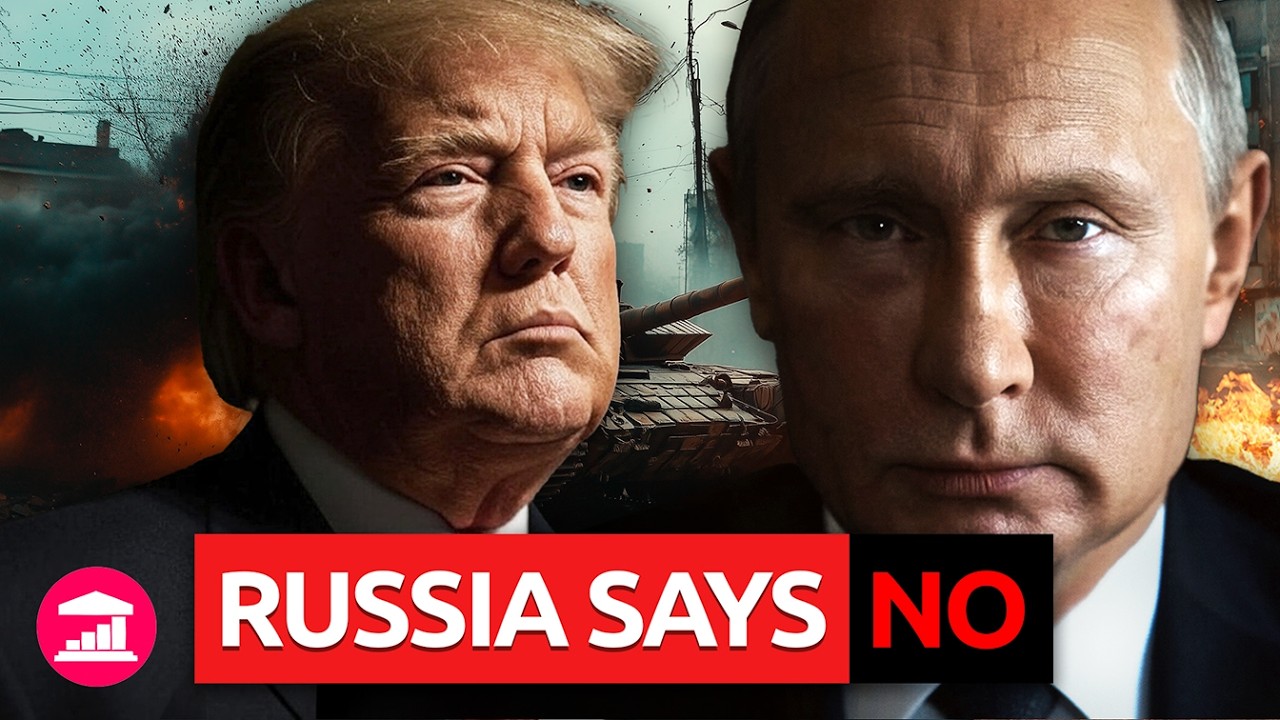
Trump, Putin and the question: What now?
Canada challenges Trump on Tariffs
Nuclear weapons for Poland against Russia?
Rebellion against Trump: "Ready for War?"
Ukraine: Problem with the ceasefire?

Ukraine Loses Kursk: A Collapse?
Russia's "Alliance" in the Balkans is sinking
US Federal Reserve with “announcement”

Germany doesn't want any more migrants?

Wealth that Brazil is not utilizing!