-
 Late Mbappe goal sends Lille top of Ligue 1
-
Trump chastises Zelensky over Russian refinery strikes during Ireland visit

-
 Five-star Brighton crush 10-man Coventry
-
World championship leader Antonelli wins Spanish GP

-
 Team Europe beat United States to reclaim Solheim Cup
-
Resurgent Marquez powers to San Marino win to take MotoGP lead

-
 US House Speaker warns curbing AI too sharply could leave China ahead
-
Vuelta finale neutralised after rider safety concerns

-
 張國榮70歲誕辰音樂會西九舉行 唐鶴德錄音致意
-
鏈球選手周柏言身形被質疑 教練指出其香港青年紀錄成績

-
 Iran's economic ties to Dubai hard to break despite war
-
NFL Week 1 Predictions: Dave Blezow’s Best Bets Against the Spread for Every Game

-
 iPhone 18預購後出現可疑扣款 四間銀行調查未授權交易
-
Alabama Legislature Passes Weakened Utility Reform Bill Amid Allegations of Alabama Power Influence

-
 《浪花男女》辦特別謝票場 馮志強談票房與導演客串拍攝
-
World Athletics stance on Russia unchanged, says Coe

-
 Former captain De Villiers hails 'fantastic' Springboks
-
Can We Predict Volcanic Eruptions Like Weather? Scientists Seek Unified Physics

-
 Galaxy Tab S12系列效果圖曝光 Ultra擬配雙鏡頭及瀏海螢幕
-
Macron, Carney to visit French islands after Trump's map post

-
 اليورو يستقر في البنوك المصرية وأعلى سعر للبيع 59.85 جنيه
-
بزشكيان يؤكد رفض الاستسلام وسلطات إيران تعلن مقتل شخص في استهداف سفينة

-
 حمزة قورقماز يناقش العلاقة بين وضوح المبادئ واحترام الاختلاف
-
فليك يضم حمزة عبد الكريم إلى قائمة برشلونة بعد أربعة أهداف في الإعداد

-
 Altman tells Fortune OpenAI will not go public in 2026
-
Myanmar says UN envoy illegitimate ahead of credentials decision
-
 China, Russia, India seek economic cooperation at BRICS
-
Philippine rescuers pull more victims from charred ferry
-
 ستاندرد آند بورز تثبت تصنيف السعودية عند A+
-
الأرصاد السعودية تتوقع سيولاً وأمطاراً رعدية في خمس مناطق

-
 دول عربية ومنظمات تدين استهداف خط أنابيب في السعودية
-
Crash and burn: Pakistan cricket at a new low after England humiliation

-
 One dead, 102 rescued from stricken ferry off Indonesia's Java
-
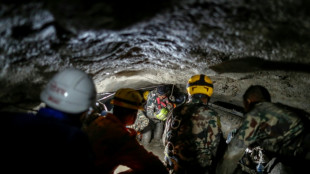
'Second life': Nepal tunnel survivor recalls ordeal
-
 Garcia keeps WBC welterweight title by stopping Benn
-
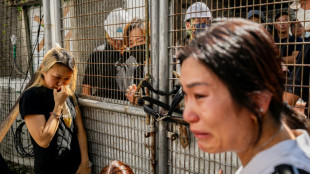
Hong Kong homes flattened for US$28 bn high-tech hub
-
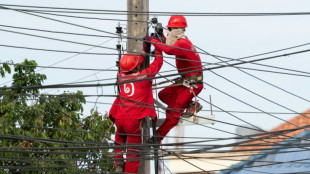 Lights out in Laos as electricity exports surge
-
'Be careful what you wish for': 'Obsession' director and star reflect on success

-
 'This is the test': All eyes on US Fed to tackle high inflation
-
Messi scores but Miami held by Nashville

-
 Scars of Marawi siege linger as Philippines poll nears
-
US Open champ Rybakina on top of world after injury scare

-
 Trump turns to golf, family business on Irish visit's second day
-
Rybakina reigns serene as new world number one

-
 Defiant Sabalenka motivated by US Open defeat
-
South Africa defeat New Zealand 43-28 to complete 3-1 series victory

-
 Houthis say hit Saudi base after renewed fighting with Yemeni govt forces
-
Rybakina triumphs in US Open, denies Sabalenka three-peat

-
 Steven Strogatz weighs AI mathematics advances and their consequences for researchers
-
Fifth Circuit upholds dismissal of Jackson residents' constitutional water claims

Germany under Weidel
An AfD-led government would seek a far-reaching break on migration, taxation, energy and Europe. Its advance in Saxony-Anhalt makes the question more immediate, but winning votes and acquiring the power to rewrite Germany are different things.
Alice Weidel’s ambition to reshape Germany now rests on more than opinion polls. In the Saxony-Anhalt election on 6 September 2026, the Alternative for Germany secured 43.8 per cent of the vote in the provisional result. Its 39 seats in the 83-member state parliament left it short of an outright majority, but brought the party much closer to a position from which it could turn its programme into government decisions.
The result followed the AfD’s 20.8 per cent share in the February 2025 federal election. Yet neither an electoral breakthrough in one state nor a strong national showing makes Weidel chancellor. A federal government would need parliamentary support; a state administration cannot decide Germany’s currency, foreign policy or national tax system. The distinction matters because the AfD’s ambitions extend well beyond the powers it might first acquire.
Its project combines tighter immigration controls with lower taxes, a reversal of climate policy, closer relations with Russia and a fundamental challenge to European integration. Some measures could be pursued through ordinary legislation or administrative priorities. Others would require international negotiations, constitutional changes or agreement from institutions the party could not simply command. The likely transformation is therefore best understood as a sequence of political confrontations, not a single overnight rupture.
Migration would lead the programme
Immigration is where an AfD-led government would face the greatest pressure from its own supporters to demonstrate immediate results. Its proposals envisage stronger border restrictions, more deportations and a tighter separation between temporary protection and permanent settlement. In Saxony-Anhalt, the party has proposed a dedicated mechanism to accelerate removals, illustrating how a state administration could act even without control of federal legislation.
The term “remigration” remains central to the dispute. In the Bundestag on 9 September, Chancellor Friedrich Merz accused the AfD of promoting a policy equivalent to ethnic cleansing. The party rejected that accusation and said its objective was the lawful removal of foreigners required to leave. These are opposing political claims, not interchangeable descriptions of an established government policy.
Weidel has also said that people who work, contribute and obey the law should not fear an AfD administration. The practical test would be whether legislation and administrative conduct reflected that assurance. A government must distinguish between rejected applications, recognised protection, lawful residence and citizenship; treating these categories as though they conferred identical rights would misrepresent both the law and the scope for political action.
An intensified removal programme would also encounter practical constraints. A political instruction cannot itself produce travel documents, establish a person’s identity or secure cooperation from a destination country. Faster casework might change outcomes in some cases. In others, legal safeguards or practical obstacles would remain. German citizenship, meanwhile, cannot simply be disregarded because a government disapproves of someone’s ancestry or religion.
The economic appeal — and its limits
The AfD’s economic offer is recognisably different from a programme of state-led redistribution. Its 2025 manifesto proposed raising the basic income-tax allowance to €15,000, abolishing the remaining solidarity surcharge and removing inheritance tax. It also advocates lower business taxation and a reduction in regulatory burdens. For households and employers dissatisfied with the cost of working, investing or transferring a family business, that is a substantial offer.
But “tax relief” is not a single benefit distributed equally across society. Someone with little taxable income cannot gain as much from an income-tax reduction as a household paying a large bill. Abolishing inheritance tax directly benefits those receiving taxable inheritances, not those with no assets to inherit. Economic modelling of the party’s proposals has accordingly identified particularly large gains for higher-income households.
That does not mean every lower-income voter would necessarily lose. Changes to energy charges or consumption taxes could benefit a wider group. The relevant question is the combined effect of taxes, benefits and public services, rather than the most attractive individual promise. A household might welcome a smaller tax bill yet be worse off if the services it needs became more expensive or less accessible.
The financing problem would arrive quickly. Lower revenues have to be matched by higher growth, reduced expenditure, other taxes or additional borrowing. The party’s opposition to loosening borrowing restraints makes that trade-off more demanding. Savings from migration policy or bureaucracy cannot be assumed, without a detailed budget, to cover an extensive permanent reduction in tax receipts. Promising a smaller state is easier than identifying which functions should become smaller.
Energy policy would change direction
On energy, the AfD proposes more than an adjustment to the speed of decarbonisation. It rejects the prevailing approach to climate policy and wants Germany to leave the Paris Agreement. Its programme favours renewed nuclear generation, continued reliance on coal and gas, and the restoration of Russian pipeline supplies. Carbon-related charges are presented as costs to be removed rather than tools to influence investment and consumption.
The immediate appeal is clear: cheaper energy is an easily understood promise to households and industrial employers. Its delivery would be less straightforward. Reducing a tax or levy can lower one component of a bill, but it does not establish the price of fuel, finance new infrastructure or eliminate other costs. Nor does a political commitment to nuclear power determine which installations could operate, under what conditions and on what timetable.
The central economic risk would be uncertainty during the change of course. A manufacturer deciding on an investment needs to know not only today’s energy price but also the rules likely to apply over the life of its equipment. Businesses that had committed capital under one set of incentives could face another. Some would benefit from deregulation; others could find that the assumptions behind their investment had changed.
A return to Russian supplies would raise a separate question about dependence. Buying gas on attractive terms and establishing a secure long-term relationship are not the same achievement. An AfD government would have to explain how it would protect consumers and industry if its preferred commercial arrangement again became entangled in geopolitical conflict.
Europe would be the largest gamble
The party’s European agenda reaches beyond resisting individual regulations. Its federal programme calls for departure from the euro system and the restoration of a national currency. It also seeks a new association of sovereign European nations in place of the existing model of integration. Those objectives should not be softened into a routine argument for administrative reform in Brussels.
Equally, a manifesto does not amount to an executable exit agreement. Berlin could not unilaterally require its neighbours to accept a replacement European order on German terms. A government pursuing such a project would need to establish what cooperation it wanted to retain, which obligations it intended to end and what concessions it was prepared to make in return.
Currency change would bring particularly difficult choices. Wages, savings, pensions, mortgages and business contracts would all require rules governing their treatment. If a new German currency appreciated, it could make imports cheaper while making some exports more expensive for foreign buyers. That is a possible mechanism, not a forecast of an inevitable exchange rate. The distribution of gains and losses would depend on the arrangements negotiated and the response of markets.
There is also a distinction between leaving institutions and challenging them from within. An AfD-led government could seek to obstruct or renegotiate particular European initiatives without immediately pursuing withdrawal. This would be a less dramatic route, but potentially a consequential one. For businesses, the question would be whether promised regulatory freedom compensated for the uncertainty created around Germany’s future relationship with its largest neighbouring markets.
A different relationship with Moscow
The AfD’s preference for closer relations with Russia and reduced support for Ukraine would be among the clearest changes in Germany’s international posture. Its federal programme envisages Ukraine as a neutral country outside both NATO and the European Union. Supporters present accommodation with Moscow as a means of reducing confrontation and restoring commercially useful relations.
The strategic objection is that improved bilateral relations are not the same thing as a durable European settlement. A policy judged beneficial in Berlin could be viewed very differently by governments closer to Russia. A Weidel-led administration would therefore have to weigh its desired relationship with Moscow against the confidence of Germany’s existing partners.
It would be inaccurate, however, to describe immediate withdrawal from NATO as a settled first step in the party’s federal programme. The document retains membership as a central security element until an independent and effective European military alliance exists. The nearer-term change would be more likely to concern Germany’s positions within its alliances, its approach to Ukraine and its willingness to maintain pressure on Russia.
That could alter European calculations even without a formal treaty break. Governments plan around what they expect their partners to do. A change in those expectations can have consequences before any institution is dissolved or agreement terminated.
Social policy would reward a particular model
The AfD’s domestic agenda also seeks to influence how Germans live, work and raise children. Its family policies favour a traditional parental household, with financial incentives for having children and support for care provided at home. Its welfare proposals place greater emphasis on work obligations and more restrictive access to assistance for some foreign nationals.
These choices could appeal to families who feel that unpaid care receives too little recognition. They also create a policy tension. Encouraging more people into employment while making it financially easier to remain at home requires careful design. Neither objective is inherently impossible, but they cannot both be treated as automatic solutions to the same staffing problem.
The broader issue would be how support was allocated among different households. A family with secure earnings, substantial tax liabilities and the option of reducing paid work could experience the programme differently from a single parent dependent on reliable childcare. The balance between cash payments, services and eligibility rules would matter at least as much as the language of family support.
The states could change institutions first
Saxony-Anhalt demonstrates why the federal chancellery is not the only important prize. State governments possess substantial powers over education, culture and domestic administration. The AfD’s regional plans seek changes to curricula, migration enforcement and cultural priorities. Such measures could affect daily public life long before the party acquired the ability to pursue a national currency change.
The significance would lie partly in decisions that attract less attention than a major parliamentary bill. Grant criteria, appointments, departmental instructions and the selection of institutional priorities can change the way an administration operates. That does not make every disputed decision unlawful. It does mean that the character of government cannot be assessed solely by counting the statutes it repeals.
Here the distinction between democratic change and institutional capture becomes important. An elected administration may legitimately change policy. It must still observe legal limits, equal treatment and the independence of functions that are not supposed to serve a governing party. The practical question would be whether an AfD government treated those restraints as part of its mandate or as obstacles to be overcome.
The constitutional limits are real
The legal controversy surrounding the AfD requires precision. In February 2026, the Cologne Administrative Court provisionally prevented the federal domestic intelligence agency from treating the national party as a confirmed right-wing extremist organisation pending the relevant first-instance proceedings. That did not erase the legally established suspected-case status. Nor did the court conclude that no anti-constitutional tendencies existed within the party.
The distinction also matters geographically. The legal treatment of the national organisation is not identical to that of every state branch. Conflating those positions obscures the actual controversy and makes it harder to judge subsequent government decisions on their merits.
An electoral mandate would not remove Germany’s constitutional structure. Ordinary parliamentary majorities cannot amend the Basic Law at will: amendments require two-thirds support in both the Bundestag and Bundesrat. The constitution also protects core principles, including human dignity and the basic democratic and federal order, against amendment. Policy ambitions would therefore remain subject to institutions with their own authority.
Such protections are consequential, but they are not a prediction that nothing could change. Much government activity takes place within the discretion allowed by existing law. A determined administration could alter priorities substantially while disputes over individual measures moved through parliament and the courts.
The difference between ambition and power
An AfD-led Germany would not be defined only by more restrictive immigration policy. The party proposes a different distribution of tax burdens, a different energy strategy and a different relationship with Europe and Russia. Its social programme would favour particular household arrangements, while its institutional agenda could reshape the way public authorities understand their role.
Whether that became a comprehensive national transformation would depend on parliamentary arithmetic, administrative competence, constitutional limits and the response of Germany’s partners. The Saxony-Anhalt result makes the question more urgent, but does not answer it. The decisive test would begin when campaign promises had to become budgets, enforceable decisions and agreements that other governments were prepared to accept.

Israel’s Haredi Challenge
Australian economy Crisis
Europe’s power shock

New York’s lost Luster

Hidden Cartel crisis in USA

Argentina's radical Shift

Al-Qaida’s growing ambitions

Saudi shift shakes Israel
BRICS-Dollar challenge
Trap laid, Ukraine walked in

AI bust: Layoffs & Rent surge